
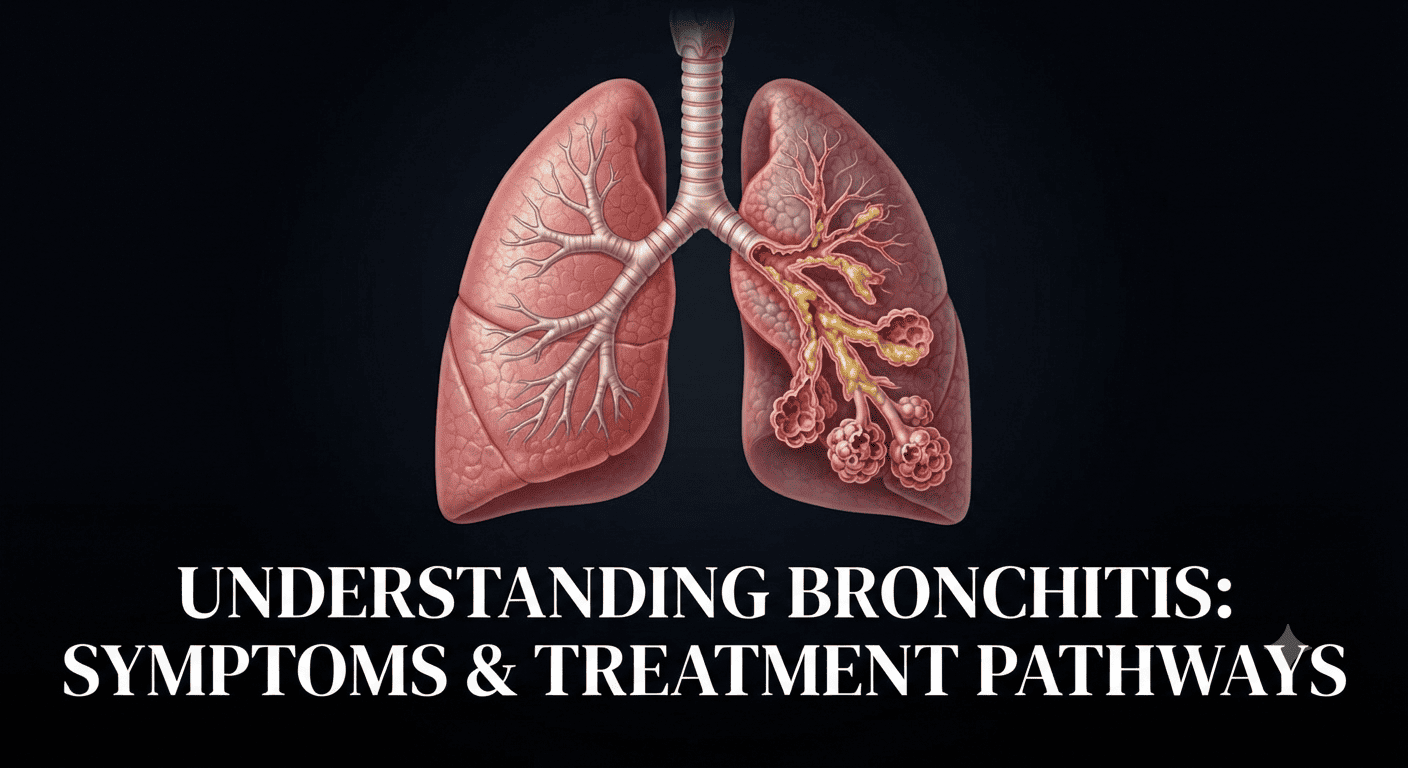
Bronchitis is an inflammation of the lining of the bronchial tubes, which carry air to and from your lungs, often resulting in a persistent cough and mucus production.
Bronchitis may be either acute or chronic:
- Acute bronchitis: A prevalent lower respiratory infection and a significant medical concern, particularly among adult patients. It involves inflammation of the bronchi without evidence of pneumonia, typically affecting individuals without underlying chronic obstructive pulmonary disease (COPD). Characterized by an acute onset of a persistent cough with or without sputum production, it is a self-limiting condition that resolves spontaneously over 1 to 3 weeks due to an inflammatory response often triggered by viral infections.
- Chronic bronchitis: In adults, this is defined by a persistent cough producing sputum for at least 3 months annually over 2 consecutive years. Goblet cell hyperplasia leads to excessive mucus production and reduced clearance, causing airway inflammation, structural changes, and obstruction. In children, it is typically due to persistent neutrophilic airway inflammation driven by a chronic bacterial infection termed “protracted bacterial bronchitis” (PBB), characterized by an isolated chronic wet cough lasting over 4 weeks.
Signs and Symptoms
Patients with bronchitis experience varying clinical features depending on whether the condition is acute, chronic, or presenting in children.
Acute Bronchitis
- Cough: Usually starts dry and irritating before transitioning into a persistent productive cough lasting 10 to 20 days (and occasionally over 4 weeks). Paroxysms with an inspiratory whoop may indicate pertussis.
- Sputum Production: Involves clear, white, or yellowish-green sputum. A purulent appearance occurs in about 50% of cases but does not automatically mean a bacterial infection.
- Fever and Chills: Mild, low-grade fevers may occur; high-grade fevers are unusual and need evaluation.
- Fatigue and Discomfort: General malaise, fatigue, and chest wall discomfort from forceful coughing are common.
- Physical Findings: Wheezing or rhonchi may be heard, which can sometimes clear after coughing.
Chronic Bronchitis (Adults)
- Productive Cough: Characterized by a chronic productive cough, typically with clear or white sputum (though purulent sputum can signal a concurrent infection like sinusitis or acute bronchitis).
- Associated Symptoms: Patients may experience dyspnea, wheezing, chest tightness, fatigue, weight changes, and psychological impacts like depression and anxiety.
- Physical Examination Findings: Mild cases show faint wheezing or a prolonged expiratory phase, while moderate-to-severe disease exhibits signs of hyperinflation and basilar crackles. Acute exacerbations can lead to tachypnea and respiratory distress.
Protracted Bacterial Bronchitis (Children)
- Persistent Wet Cough: Children present with an isolated, persistent wet cough lasting for at least 4 weeks.
- Clinical Presentation: Generally lack upper respiratory disease signs, while physical exams more often reveal coarse breath sounds or crackles rather than active wheezing.
Causes
Bronchitis is primarily triggered by infections or prolonged exposure to environmental irritants. Common causes include:
- Acute Bronchitis: Primarily caused by viral infections (accounting for about 90% to 95% of cases in healthy adults), including influenza viruses, rhinovirus, adenovirus, and coronavirus. Because antibiotics do not kill viruses, they are generally ineffective. Bacterial pathogens (such as Mycoplasma pneumoniae, Chlamydia pneumoniae, and Bordetella pertussis) account for roughly 10% or less of cases. Other contributing factors include environmental irritants, smoke, dust, allergens, and seasonal transmission dynamics.
- Chronic Bronchitis: Most commonly caused by cigarette smoking, though 4% to 22% of individuals have never smoked. Additional contributing factors include occupational or environmental exposure to gases, mineral dust, fumes, solvents, and biomass fuel burning (such as wood or dung). Other triggers encompass air pollution, asthma, genetic predispositions, gastroesophageal reflux, recurrent infections, and allergies. (In children, chronic bronchitis—or protracted bacterial bronchitis—is typically driven by persistent bacterial infections linked to impaired mucociliary clearance).
Risk Factors
Factors that increase your risk of bronchitis include:
- Cigarette smoke: People who smoke or live with a smoker have a much higher risk of both acute and chronic bronchitis.
- Resistance lowered: This can result from another acute illness, such as a cold, or from chronic conditions that compromise your immune system.
- Older age, infants and young children: These populations have a higher vulnerability to infections.
- Job exposure to irritants: Your risk is higher if you work around certain lung irritants, such as grains or textiles, or are exposed to chemical fumes.
- Gastric reflux: Repeated bouts of severe heartburn can irritate your throat and make you more prone to developing bronchitis.
Diagnosis
Diagnosing bronchitis involves a clinical evaluation combining patient history, physical examination, and targeted testing:
- Clinical Assessment & Physical Examination: Doctors evaluate vital signs, patient history, and listen to the lungs with a stethoscope to gauge severity and rule out pneumonia.
- Chest X-ray: Used to rule out pneumonia or other conditions explaining a cough. In acute cases, it is ordered if specific vital signs or exam findings are elevated (such as high fever, rapid heart rate, or abnormal breath sounds), while a chronic cough lasting over 8 weeks warrants a radiograph.
- Sputum & Laboratory Tests: Mucus analysis and tests (like multiplex PCR) check for bacterial or viral pathogens when clinically indicated (such as during pandemics or for suspected pertussis), while procalcitonin levels can help guide antibiotic use.
- Pulmonary Function Tests (Spirometry): Measures lung capacity and airflow speed using a spirometer to check for asthma, emphysema, or COPD. Transient bronchial hyperresponsiveness may appear in acute cases and typically resolves within 6 weeks.
- Diagnosis of PBB in Children: Diagnosed clinically by an isolated chronic wet cough lasting more than 4 weeks, normal baseline imaging, absence of alternative causes, and complete resolution after a 2-week course of appropriate antibiotics.
Complications
While a single episode of acute bronchitis usually clears up without lasting effects, bronchitis (both acute and chronic) can lead to various complications:
- Acute Bronchitis Complications: Can lead to secondary pneumonia, acute respiratory distress syndrome, prolonged symptoms, spontaneous pneumothorax, and spontaneous pneumomediastinum.
- Chronic Bronchitis Complications: In addition to worsening lung function, development of COPD, and all-cause mortality, it may cause anxiety and depression, asthma, bronchiectasis, cor pulmonale, death, dyspnea, hemoptysis, increased risk of cardiac disease, increased susceptibility to respiratory infections (like influenza, pneumonia, and the common cold), osteoporosis due to immobility and corticosteroid use, pneumothorax, polycythemia, and pulmonary hypertension.
Treatment Approaches
Treatment approaches for bronchitis are designed to effectively reduce mucus production, enhance mucus clearance, minimize airway inflammation, and support natural breathing mechanisms. A comprehensive clinical management plan typically integrates lifestyle modifications, evidence-based natural care, individualized homoeopathic support, and standard conventional medical interventions.
1. Conventional Approach
Management of bronchitis relies on a tailored medical regimen depending on symptom severity. Medications often include cough medicine if coughing disrupts sleep, bronchodilators to open up bronchial tubes, and anti-inflammatory agents or steroids when swelling is severe. Antibiotics are prescribed exclusively if a bacterial infection is confirmed or strongly suspected. For chronic cases, pulmonary rehabilitation is frequently recommended as a structured breathing exercise program designed to help patients breathe more easily and increase their overall capacity for exercise.
2. Yoga Management
It includes controlled breathing techniques like Anulom Vilom and Kapalabhati to help strengthen respiratory muscles and improve lung capacity, alongside gentle chest-opening asanas to relieve chest tightness.
3. Diet & Nutrition
It includes staying well-hydrated with warm water, herbal teas, and clear broths to help thin mucus, while incorporating anti-inflammatory foods rich in vitamin C and antioxidants—such as citrus fruits, ginger, garlic, and turmeric—to bolster immune defense. Additionally, it involves temporarily avoiding dairy products and processed foods if they tend to thicken mucus production.
4. Homoeopathy Approach
Homoeopathy aims to treat the individual constitutionally while addressing specific respiratory symptoms to reduce recurrence, minimize airway inflammation, and clear the bronchial passages naturally. Remedies are selected based on the totality of symptoms, individual constitution, and the specific stage of the condition. Common medicines include:
1. Dilutions
Homoeopathic dilutions are highly potentized liquid medicines prepared through serial dilution and succussion. They act deeply on vital force to stimulate the body’s self-healing mechanism, modifying the underlying constitutional tendency and clearing specific localized symptoms of bronchitis.
- Antimonium Tartaricum: Antimonium Tartaricum is indicated for respiratory conditions marked by a great rattling of mucus with very little expectoration, accompanied by rapid, difficult breathing that makes the patient feel as if they will suffocate. The clinical picture includes an overloaded bronchial tree, coughing excited by eating with chest and larynx pain, and characteristic drowsiness, debility, and sweat. Symptoms and dyspnea are notably relieved by lying on the right side.
- Bryonia Alba: Bryonia Alba acts predominantly on serous membranes and viscera, producing characteristic stitching and tearing pains that are significantly aggravated by any motion and relieved by rest or pressure. The mucous membranes are characteristically dry, and patients often experience excessive thirst, a bitter taste, and a dry, hacking cough. Respiratory symptoms include soreness in the larynx and trachea, a dry cough that worsens after eating or drinking or upon entering a warm room, and sharp stitches in the chest that make breathing difficult.
- Arsenicum Album: Arsenicum Album is a profoundly acting remedy characterized by all-prevailing debility, exhaustion, and restlessness, with distinct nightly aggravations and burning pains that are notably relieved by heat. In respiratory affections, it is indicated when the patient is unable to lie down due to a fear of suffocation, accompanied by constricted air-passages and an asthma presentation that worsens around midnight. The clinical picture features a dry cough—often resembling the sensation of sulphur fumes or occurring after drinking—along with wheezing respiration, scanty and frothy expectoration, and a tendency to worsen after midnight or when lying on the back.
- Phosphorus: Phosphorus is indicated for a hard, dry, tight, and racking cough triggered by a violent tickling in the throat, which significantly worsens from talking, laughing, cold air, or lying on the left side. The clinical picture is characterized by intense burning pains, heat, and a sensation of heavy weight or tightness across the chest, often accompanied by rusty, blood-colored, or purulent expectoration. Patients typically present with great nervous debility and a distinct thirst for very cold water, finding their respiratory symptoms and chest oppression noticeably relieved by lying on the right side.
- Ipecacuanha: Ipecacuanha acts primarily on the ramifications of the pneumogastric nerve, producing spasmodic irritation in the chest and stomach alongside persistent nausea and vomiting as chief guiding symptoms. Respiratory indications feature constant constriction in the chest, dyspnea, and an incessant, violent wheezing cough with every breath. The chest feels full of phlegm, yet expectoration does not easily yield to coughing, and suffocative coughing spells may cause a child to become stiff and blue in the face. Additionally, patients may experience bubbling rales, bleeding from the lungs accompanied by nausea, and hoarseness or complete aphonia.
- Hepar Sulphur: Hepar Sulphur is indicated for respiratory conditions when the patient loses their voice and coughs upon exposure to dry, cold wind. The clinical picture features a dry, hoarse, or choking cough that is triggered whenever any part of the body becomes cold, uncovered, or from eating anything cold. It presents with a croupous presentation marked by a loose, rattling cough that is worse in the morning, along with anxious, wheezing, moist breathing and suffocative attacks where the patient has to rise up and bend their head backwards.
- Carbo Vegetabilis: Carbo Vegetabilis is characterized by disintegration and imperfect oxidation, presenting in states of lowered vital power, collapse, or venous stasis where the body is blue and icy-cold. In respiratory affections, it is indicated for conditions featuring deep, rough voices that fail on slight exertion, hoarseness that worsens in the evenings and from talking, and evening oppression of breathing with a sore and raw chest. The clinical picture includes wheezing and rattling of mucus in the chest, spasmodic coughing attacks with burning in the chest and offensive expectoration, neglected pneumonia, and asthma in the aged accompanied by a blue skin and air hunger where the patient’s breath is cool and they must be fanned hard.
- Kali Bichromicum: Kalium Bichromicum is particularly indicated for affections of the mucous membranes, producing a tough, stringy, and viscid secretion that acts as a strong guiding symptom for the remedy. In respiratory conditions, it presents with a hoarse voice that worsens in the evening, along with a metallic, hacking cough or a brassy-sounding cough from catarrhal laryngitis. The clinical picture is characterized by profuse, yellow expectoration that is very glutinous and sticky, coming out in long, stringy, and tenaciously held masses, accompanied by pain in the sternum extending to the shoulders, pain at the bifurcation of the trachea upon coughing, and symptoms that are typically worse in the morning.
2. Mother Tinctures
Mother tinctures (MT) are the foundational, concentrated alcoholic extracts of raw medicinal substances. In respiratory disorders, they act quickly on a functional level to relieve localized congestion, promote smooth expectoration, and ease acute distress in the bronchial tree.
- Blatta Orientalis Q: Blatta Orientalis is a prominent homoeopathic remedy specifically indicated for asthma, particularly when associated with bronchitis and copious pus-like mucus. Clinical picture is especially suited for stout and corpulent patients experiencing a cough accompanied by significant dyspnea in bronchitis and phthisis. It is often employed when arsenic is insufficient, with lower potencies utilized during an acute attack and higher potencies used for the remaining cough after the spasm subsides.
- Justicia Adhatoda Q: It is highly efficacious homoeopathic remedy for acute catarrhal conditions of the respiratory tract, particularly when used at the very beginning of the presentation. Clinical picture is characterized by a dry cough originating from the sternal region spreading across the chest, hoarseness with a painful larynx, and paroxysmal coughing spells accompanied by suffocative obstruction of respiration, severe dyspnea, sneezing, and tight constriction across the chest that makes it impossible for the patient to endure a close, warm room.
- Senega Q: Mainly, characterized by catarrhal symptoms of the respiratory tract and distinct usefulness in the asthenic bronchitis of older individuals. It is used in sore chest walls, marked oppression and weight in the chest as though it feels too narrow or as if the lungs were being forced back to the spine, and difficulty in raising tough, profuse mucus. Additionally, patients experience hoarseness that makes talking painful, a hacking cough that frequently ends in a sneeze, and respiratory discomfort that worsens when walking in the open air or during rest, but finds relief by bending the head backward or through sweating.
- Grindelia Robusta Q: It acts on the cardio-pulmonary distribution of the pneumogastric nerve, making it highly efficacious for wheezing, chest oppression, and asthmatic conditions. The clinical picture is marked by a sensation of smothering right as the patient falls asleep, causing them to wake up with a start and gasp for breath while being forced to sit up. Patients typically experience chronic bronchitis and bronchorrhea with profuse, tenacious, and sticky mucus that is very difficult to detach, accompanied by sibilant rales, weak heart and respiration, and an inability to breathe when lying down.
- Lobelia Inflata Q: Lobelia Inflata is a homoeopathic mother tincture acting mainly upon the pneumogastric nerve to produce a relaxed condition accompanied by oppression of the chest and epigastrium, impeded respiration, nausea, and vomiting. The respiratory clinical picture features dyspnea arising from constriction of the chest that worsens with any exertion, a sensation of pressure or weight in the chest that finds relief from rapid walking, and asthmatic attacks accompanied by profound weakness originating in the pit of the stomach and preceded by prickling all over.
- Eriodictyon Californicum Q: It indicated for asthmatic and bronchial affections, including chronic bronchitis and whooping cough. The clinical picture is characterized by wheezing respiration, asthma accompanied by coryza and mucous secretions, and bronchial tuberculosis marked by night-sweats, emaciation, and a profuse, easily raised bronchial secretion that brings noticeable relief.
3. Bio-Chemic Medicines
Bio-chemic medicines are tissue salts based on Dr. Wilhelm Heinrich Schüssler’s biochemical system of medicine. They supply essential inorganic cell-salts directly to the tissues to correct cellular functional imbalances, regulate moisture distribution, and resolve inflammation without side effects.
- Ferrum Phosphoricum: Ideal for the initial, acute inflammatory stage of bronchitis. It is prescribed when there is a mild fever, accelerated pulse, early chest soreness, and the onset of congestion before heavy mucus accumulation begins.
- Kali Muriaticum: Best suited for the second, exudative stage of bronchitis when thick, white or grayish-white mucus begins to form and obstruct the air passages. It helps resolve glandular swellings and aids in the clearing of fibrinous exudates within the bronchial tree.
- Kali Sulphuricum: Indicated for the later, desquamative stage of bronchitis when the discharge transitions to a yellow, greenish, or slimy mucus. Symptoms typically worsen in warm, stuffy rooms and improve in cool, fresh open air.
- Natrum Sulphuricum: The premier remedy for chronic catarrhal conditions and hydrogenoid constitutions where symptoms are strongly aggravated by damp weather, humidity, and near bodies of water. It helps clear greenish or brownish mucus, relieves chest oppression, and supports recovery in chronic bronchitis and asthma.
Beyond these, homoeopathy offers numerous other unique remedies that work on individual symptom profiles to effectively cure cases like bronchitis.
In managing respiratory ailments like bronchitis, suppressing symptoms temporarily is rarely enough. In acute emergencies, conventional medical interventions are essential to stabilize the patient and manage severe distress. However, for sustainable, long-term healing, true recovery lies in restoring the structural resilience of the bronchial mucosa and strengthening the patient’s underlying immunity.
In my clinical practice, I have observed that homoeopathy offers an exceptional and profound treatment approach, effectively addressing both the acute manifestation and the deep-seated constitutional tendency toward chronic recurrence. By combining individualized homoeopathic care with mindful lifestyle modifications—such as targeted breathing exercises (Yoga), proper hydration, and anti-inflammatory nutrition—we can achieve a comprehensive, safe, and lasting recovery.
Conclusion
Bronchitis requires a comprehensive clinical approach that extends far beyond the temporary suppression of symptoms. Conventional medical interventions remain critical for stabilizing acute emergencies and managing severe distress, achieving sustainable, long-term healing depends on restoring the structural resilience of the bronchial mucosa and strengthening overall immunity. An integrated model—combining individualized homoeopathic care with targeted lifestyle modifications such as therapeutic yoga, proper hydration, and anti-inflammatory nutrition—provides an exceptional pathway. This multi-faceted strategy effectively addresses both acute flare-ups and deep-seated constitutional tendencies toward chronic recurrence, ensuring a safe, comprehensive, and lasting recovery.
Medical Disclaimer: The content provided herein is intended solely for educational and informational purposes and should not be construed as professional medical advice, diagnosis, or treatment. Always consult a qualified physician or healthcare provider regarding any questions or concerns pertaining to a medical condition. Never disregard professional medical counsel or delay seeking treatment based on information contained in this material.
Frequently Asked Questions (FAQs)
In homoeopathy, remedies like Antimonium Tartaricum, Bryonia Alba, and Arsenicum Album are frequently prescribed depending on specific symptom profiles, such as rattling mucus or dry cough.
There is no single “best” medicine; treatment depends on whether the condition is acute or chronic, and may include conventional bronchodilators, individualized homoeopathic remedies, or tissue salts.
Lungs can be cleared by staying well-hydrated with warm fluids, practicing therapeutic breathing exercises, and using prescribed expectorants or targeted remedies to thin and expel mucus.
No, acute bronchitis typically lasts from 1 to 3 weeks as the airway inflammation naturally runs its course.
Yes, since the vast majority of acute bronchitis cases are viral, they resolve on their own without antibiotics, which are only required if a bacterial infection is confirmed.
- StatPearls: Acute Bronchitis
- StatPearls: Chronic Bronchitis
- PubMed: Homeopathic treatment of acute bronchitis
- National Heart, Lung, and Blood Institute (NHLBI): Bronchitis Overview
- PMC: Protracted Bacterial Bronchitis in Children
- Homeoint: Boericke’s Repertory – Respiratory System
- PubMed: Efficacy of Homeopathic Treatment in Respiratory Conditions
- PubMed: Clinical Research on Bronchial Inflammation and Management
- PubMed: Therapeutic Approaches and Mucus Clearance in Bronchitis
