
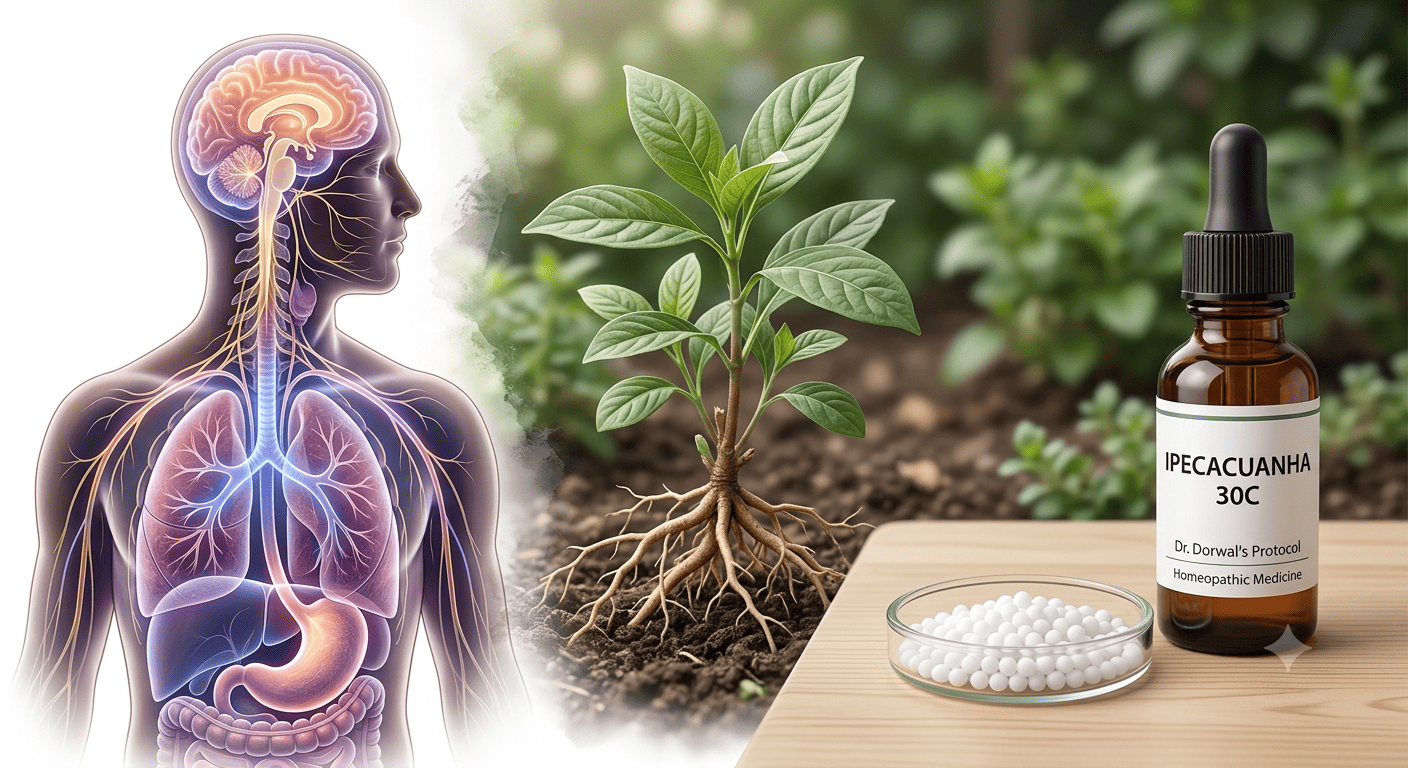
Ipecacuanha, derived from the Ipecac-root, is a vital homoeopathic agent with a primary action on the ramifications of the pneumogastric nerve. Its clinical application is characterized by persistent nausea, spasmodic irritation in the chest and stomach, and profuse, bright-red hemorrhages.
Clinical Indications & Benefits
In clinical practice, Ipecacuanha is utilized for several specific scenarios:
- Persistent Nausea & Vomiting: It is the principal remedy for constant nausea and vomiting, often occurring after the ingestion of indigestible foods such as raisins or cakes. The stomach frequently feels relaxed, as if hanging down.
- Respiratory & Asthmatic Conditions: Frequently indicated for dyspnea, constant chest constriction, and incessant, violent coughing. It is highly useful in cases of whooping-cough, croup, and asthma, particularly where the chest feels full of phlegm that does not yield to coughing.
- Gastrointestinal Disturbances: Clinically indicated for amebic dysentery with tenesmus, where the pain during straining is so great that it induces nausea. Stools are often slimy, pitch-like, or green as grass.
- Haemorrhagic States: Utilized for profuse, bright-red uterine haemorrhages, often accompanied by nausea, and haemoptysis that may occur from the slightest exertion.
- Fevers: Employed for irregular intermittent fevers, especially those following quinine use, characterized by slight chills and significant heat, nausea, and vomiting.
Administration & Therapeutic Modalities
- Potency & Dosage: Practitioners typically employ potencies ranging from the 30C to the 200C.
- Clinical Observation: The remedy is particularly indicated for feeble individuals who are sensitive to warm, moist weather. Modalities include aggravation from moist, warm winds, lying down, and periodic recurrence, with symptoms often accompanied by pale, lax skin and blue rings around the eyes.
Dr. Dorwal’s Perspective
In my clinical practice, Ipecacuanha serves as a primary intervention for cases of acute spasmodic irritation where nausea is the guiding symptom. I have observed that it is highly effective for patients—including both children and adults—who exhibit a “relaxed” constitution and suffer from respiratory or gastrointestinal distress exacerbated by environmental humidity. It is a cornerstone remedy in my protocol for managing intense, non-productive coughs and dysenteric conditions where the patient’s nausea is a constant, defining feature. By addressing the underlying irritation of the pneumogastric nerve, Ipecacuanha helps restore balance to the system during these acute, spasmodic episodes.
Disclaimer: This content is for informational purposes only. Homoeopathic medicines should be taken under the guidance of a qualified homeopathic physician. Do not self-medicate for chronic or serious medical conditions, and always seek professional advice for any health concerns.
Frequently Asked Questions (FAQs)
The principal feature is persistent nausea and vomiting, which serves as the chief guiding symptom for the remedy.
Yes, it is indicated for asthma, constant chest constriction, and violent coughs where the chest feels full of phlegm.
Stools are often dysenteric, slimy, pitch-like, or frothy and green like grass.
Symptoms are generally worsened by moist, warm winds and “relaxing” atmosphere, and the remedy is particularly indicated for those who are feeble.
