
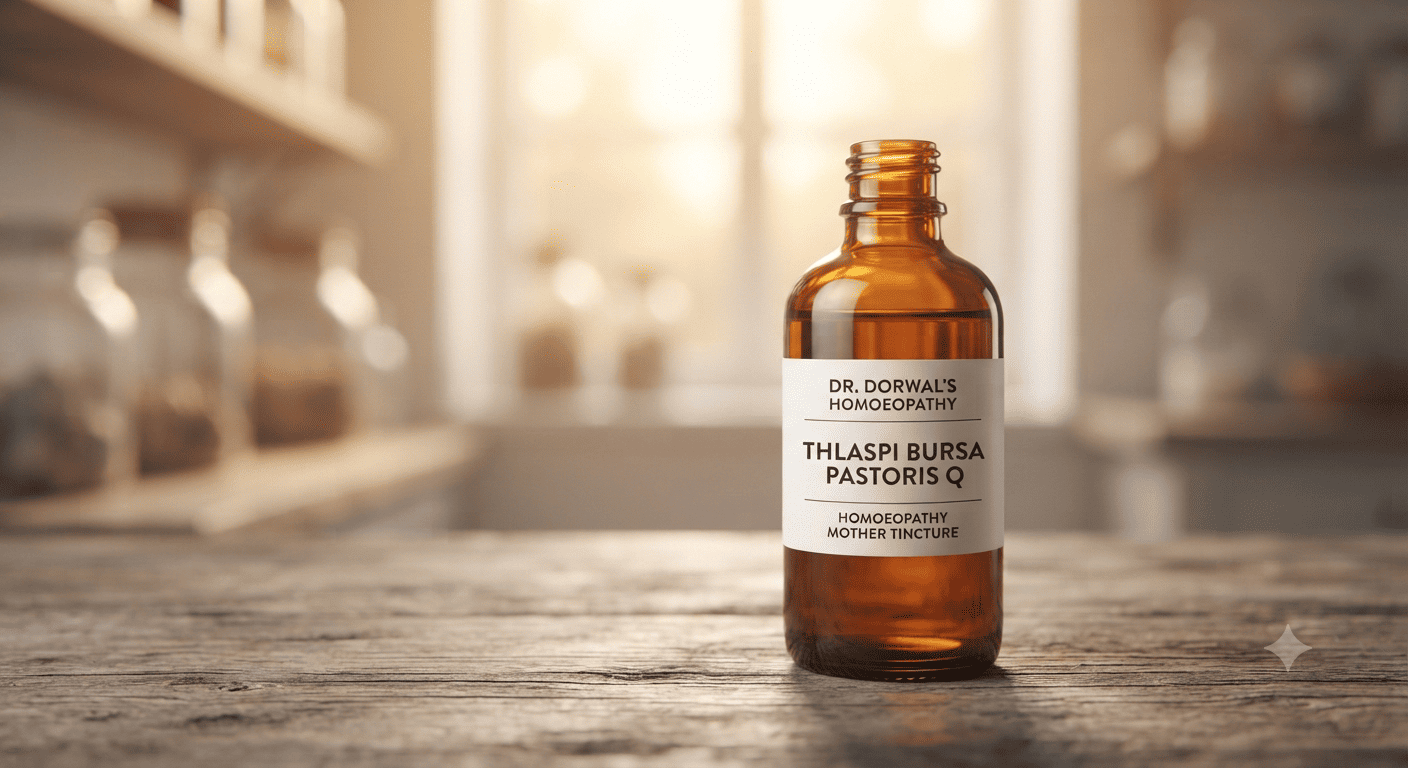
Thlaspi Bursa Pastoris (Shepherd’s Purse) is a highly valued remedy in the homoeopathic pharmacopoeia, recognized primarily for its profound anti-haemorrhagic and anti-uric-acid properties. It acts as a specialized restorative agent for conditions involving both the reproductive and urinary systems.
Key Clinical Indications & Uses
The therapeutic profile of Thlaspi is characterized by its efficacy in managing active or passive bleeding and metabolic disturbances:
- Uterine Haemorrhage and Reproductive Health: This remedy is indicated for metrorrhagia (too frequent and copious menses) and uterine haemorrhages, often accompanied by violent uterine colic or the expulsion of clots. It is particularly useful when a patient barely recovers from one period before the next begins. It is also indicated for haemorrhages stemming from uterine fibroids, often accompanied by backache or general bruised soreness.
- Urinary Tract Support: Thlaspi is a potent remedy for chronic cystitis, dysuria, and spasmodic retention. It effectively addresses cases of haematuria (blood in the urine), the accumulation of gravel, and renal colic. It may be indicated when the urine is heavy, phosphatic, or contains a “brick-dust” sediment. In some instances, its action on the bladder is so profound that it can replace the use of a catheter.
- Haemorrhagic Tendencies: Beyond the reproductive tract, it is indicated for frequent epistaxis (nosebleeds), including passive haemorrhages that may occur during nasal operations.
- Other Symptomatology: It addresses albuminuria during gestation, chronic neuralgia, and localized symptoms such as a puffy face/eyes and a white-coated tongue.
Administration and Therapeutic Modalities
- Dose: Remedy is commonly administered in the form of Mother tincture (Q).
Dr. Dorwal’s Perspective
In my clinical practice, Thlaspi Bursa Pastoris is my first consideration when faced with persistent, exhausting menstrual haemorrhages or complex urinary tract disorders. Its ability to manage “brick-dust” sediment and renal colic makes it a versatile tool for those struggling with chronic uric-acid-related issues. I have found it particularly useful in cases where the patient’s recovery between menstrual periods is incomplete, leading to a state of chronic debility. While it is a powerful haemorrhagic agent, its gentle action in restoring normal bladder function—often helping to avoid the need for invasive catheterization—is a testament to the depth of homoeopathic intervention.
Disclaimer: This content is for informational purposes only. Homoeopathic medicines should be taken under the guidance of a qualified homoeopathic physician. Do not self-medicate for chronic or serious medical conditions, and always seek professional advice for any health concerns.
Frequently Asked Questions (FAQs)
It is primarily used as an anti-haemorrhagic remedy for uterine bleeding and as an anti-uric-acid remedy for urinary conditions like gravel and cystitis.
It is indicated when menses are too frequent and profuse, often with violent colic, or when the patient suffers from metrorrhagia where one period follows another quickly.
It helps with chronic cystitis, dysuria, renal colic, and haematuria, often helping to clear gravel and restore normal bladder evacuation.
It is typically utilized in form of Mother tincture (Q).
