
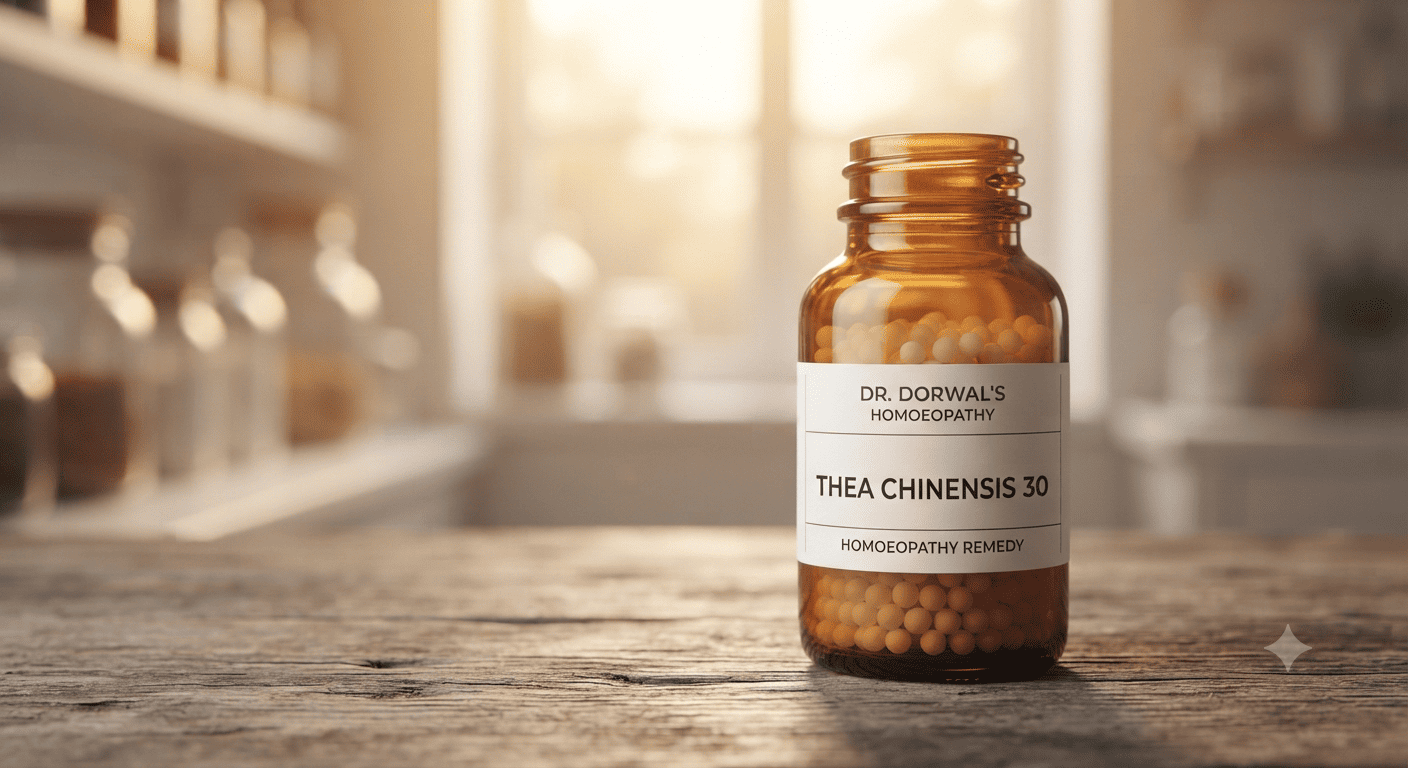
Thea Chinensis (Tea) is a significant homoeopathic remedy, particularly indicated for individuals experiencing symptoms resulting from chronic overconsumption of tea. It is primarily recognized for its impact on the nervous system, heart function, and digestive health.
Key Clinical Indications & Uses
The therapeutic profile of Thea Chinensis focuses on restoring balance in patients who exhibit signs of chronic stimulation and subsequent depletion:
- Nervous and Mental States: It is indicated for nervous sleeplessness characterized by restless nights and vascular excitement. Patients may experience periods of mental exaltation followed by irritability, and are prone to sick headaches that radiate from a single point. Some individuals may report auditory hallucinations.
- Heart and Circulatory Health: The remedy addresses various cardiac disturbances, including palpitations, fluttering sensations, and irregular or intermittent rapid pulses. A characteristic distress is a feeling of anxious oppression in the precordial region, where the patient is unable to lie on the left side.
- Digestive Function: It is a remedy for the dyspepsia associated with chronic tea consumption, manifesting as a “sinking” or “gone” feeling in the epigastrium. Patients often crave acids and may experience sudden, large-scale production of wind (flatulence) and borborygmi (stomach rumbling).
- Sleep Disturbances: Symptoms include excessive daytime sleepiness contrasted with restless, sleepless nights. Despite having “horrible” dreams, the patient may not experience the associated feeling of horror.
Administration and Modalities
- Dose: The remedy is commonly administered in 30C potency. Theine, a derivative, has been used hypodermically in specific doses for conditions like sciatica and supra-orbital neuralgia.
- Modalities:
- Worse: Symptoms are generally aggravated at night, after meals, and while walking in the open air.
- Better: Patients typically find relief from warmth, such as a warm bath.
Dr. Dorwal’s Perspective
In my clinical experience, Thea Chinensis serves as a crucial remedy when I encounter the classic “tea-drinker’s” profile—patients presenting with a combination of nervous irritability, heart palpitations, and that distinct, empty, sinking feeling in the stomach. It is vital to recognize when a patient’s chronic symptoms, especially their sleeplessness and cardiac distress, are rooted in this habitual stimulant. While often overlooked, this remedy provides a necessary corrective for the nervous exhaustion that follows the initial mental exaltation caused by excessive tea consumption.
Disclaimer: This content is for informational purposes only. Homoeopathic medicines should be taken under the guidance of a qualified homoeopathic physician. Do not self-medicate for chronic or serious medical conditions, and always seek professional advice for any health concerns.
Frequently Asked Questions (FAQs)
It is considered when a patient has a history of excessive tea consumption and presents with nervous sleeplessness, palpitation, and dyspepsia.
The remedy addresses palpitations, a rapid/irregular pulse, and precordial distress where the patient cannot lie on their left side.
It helps with a “sinking” feeling in the epigastrium, excessive flatulence, and a craving for acids.
Symptoms are notably worse at night, after meals, and when walking in the open air.
