
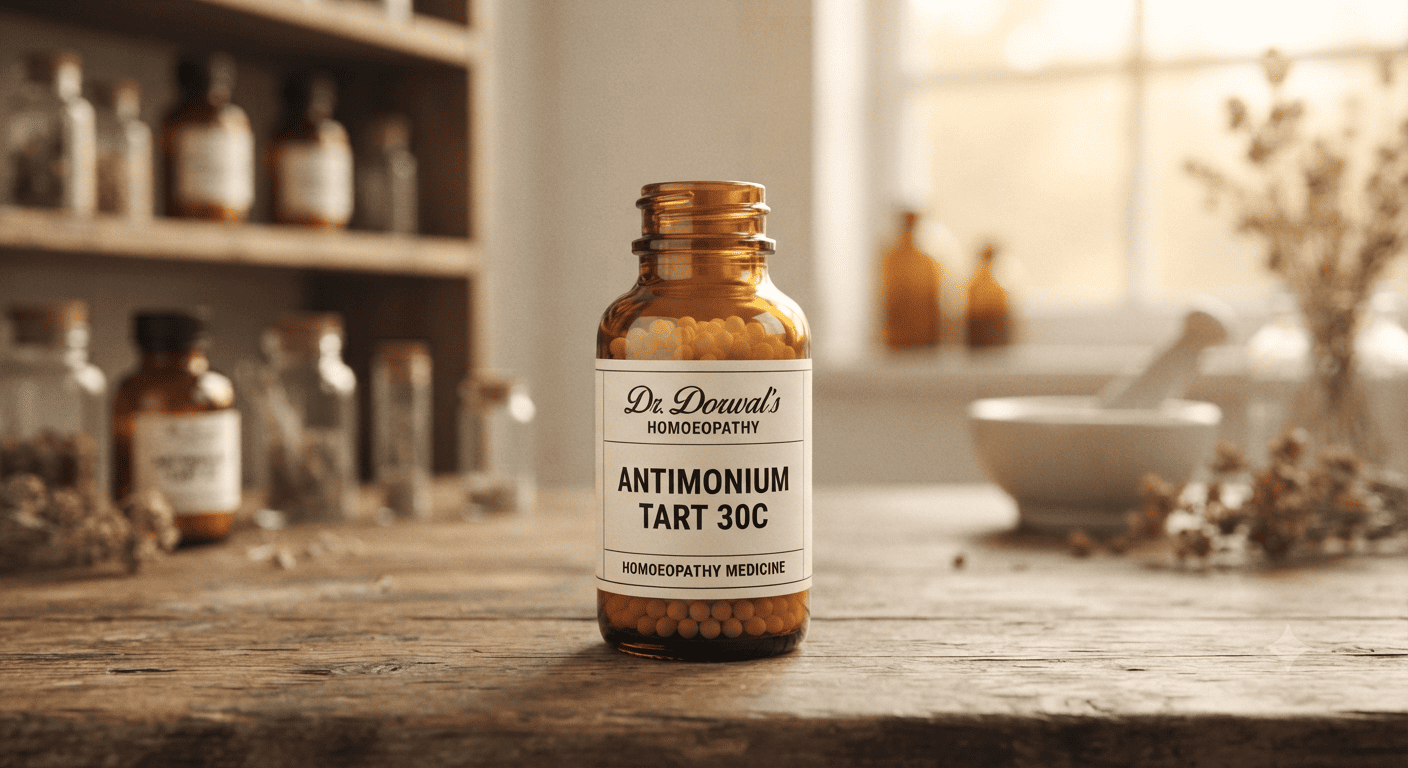
Antimonium Tartaricum (Tartar Emetic) is one of the most vital remedies in the homoeopathic emergency and acute care repertoire. It is an agent of profound physiological impact, particularly indicated in states of advanced respiratory distress, circulatory collapse, and toxic accumulation.
Key Clinical Indications & Uses
Therapeutic profile of Antimonium Tartaricum is defined by a triad of symptoms: rattling mucus, profound drowsiness, and extreme prostration.
- Respiratory Failure and Catarrh: This is the quintessential remedy for “drowning” chest. Bronchial tubes are overloaded with thick, rattling mucus that the patient is too weak to expectorate. Breathing is rapid, short, and labored, often leading to impending paralysis of the lungs. Patient feels as though they will suffocate unless they sit upright.
- Gastric and Circulatory Collapse: It is a key remedy for states of “deathly faintness” accompanied by nausea, retching, and cold, clammy sweat. Face often appears pale, sunken, and cyanotic (blue/cold). It is specifically useful in cholera morbus and the aftermath of acute poisoning or systemic infections.
- “Ant-Tart” Modality Triad is:
- Drowsiness: An irresistible, lethargic inclination to sleep accompanies nearly all complaints.
- Position: Respiratory distress is typically better when sitting erect or lying on the right side; worse when lying down at night.
- Tongue: It is characterized by a thick, pasty, white coating, sometimes with red edges or a red, dry center.
Administration & Dosage
- Dose: In clinical practice, it is typically utilized in 30C & Higher potencies. Practitioners must exercise caution, as the lower potencies can occasionally trigger an aggravation in highly sensitive patients.
Dr. Dorwal’s Perspective
In my clinical practice, Antimonium Tartaricum is a life-saving tool. When I see a patient—whether a child with severe bronchiolitis or an elderly patient with congestive bronchitis—who is drowsy, pale, and struggling to breathe while their chest sounds like a “sea of mucus” that they cannot clear, Antimonium Tartaricum is almost always the remedy.
What I want the student and the practitioner to notice is the vibe of the patient: they are not just sick; they are “sinking.” They have lost the vital energy required to cough up the mucus that is obstructing their airway. The physical sign of the incessant quivering of the chin or lower jaw, combined with that cold, clammy sweat, is a clear signal that the vital force is failing. It is a remedy that demands the physician’s full attention, as it is often needed in most precarious of acute situations. Never underestimate the speed with which this remedy can alter the course of an impending respiratory or circulatory crisis.
Disclaimer: This content is for informational purposes only. Homoeopathic medicines should be taken under the guidance of a qualified homoeopathic physician. Do not self-medicate for chronic or serious medical conditions, and always seek professional advice for any health concerns.
Frequently Asked Questions (FAQs)
Great rattling of mucus in the chest, with an inability to expectorate it, leading to a sense of impending suffocation.
Extreme lethargy, irresistible drowsiness, great prostration, and faintness.
It is worse when lying down and in the evening; better when sitting erect or lying on the right side.
A thick, pasty, white coating, sometimes with red edges or a dry, red center.
