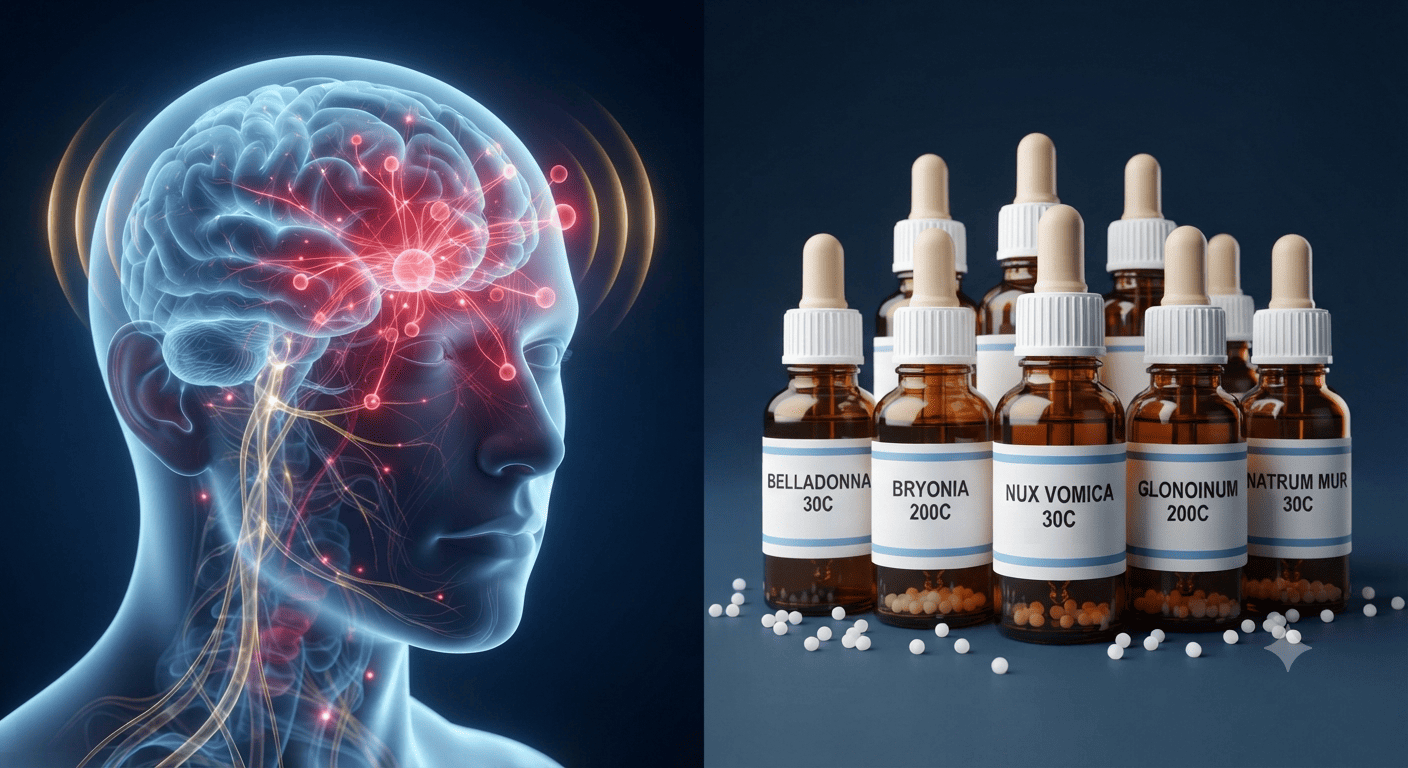
Quick Overview: Common homeopathic medicines for headache include Belladonna, Bryonia alba, Natrum Muriaticum, Spigelia, Gelsemium, Nux vomica, Glonoinm, Ferrum Phosphoricum etc. Homeopathic medicines are chosen on the basis of the causation, modalities, symptom totality and sensitivity of the patient.
Headache is a common disorder characterized by the pain or discomfort in the head or scalp region. Common types include Tension Headaches, Migraines, Cluster Headaches, and Sinus headaches. It is harmless and often linked to stress, poor sleep, too much sun, sinus trouble, eye strain or even an empty stomach. In homeopathy, a detailed evaluation is taken into consideration to understand a variety of factors that tend to make the headaches better or worse. Factors might be physical, mental and emotional. It means that a homeopathic physician looks over specific symptoms—such as whether the pain is on one side or all over, if it feels better from pressure or open air, and what time of day it peaks. This guides physician to select homeopathic medicines in cases of headache. Commonly used homeopathic medicines in cases of headache include:
1. Potency (Dilution) Homeopathic Medicines for Headache
These are prescribed in potencies such as 30C or 200C, chosen according to the exact character of the headache and accompanying symptoms.
- Belladonna: It is indicated in a sudden, intense, throbbing headache, often worse on the right side. Face of the person turns flushed and hot, the eyes become sensitive to light, and even slight movement, noise, or a jolt makes it worse during the episode of the headache. Belladonna suits headaches that come on fast and hit hard, almost like the blood vessels in the head feel like a pulse or heartbeat thumping inside your head with accompanying rhythmic pain.
- Bryonia Alba: Bryonia is primarily used in a splitting, bursting pain that gets markedly worse with the slightest motion, opening the eyes, or bending forward. The person wants to lie completely still in a dark, quiet room and craves cold water in large amounts, often drinking it at long intervals between each drink.
- Nux Vomica: Nux vomica is associated with the modern lifestyle conditions where headaches cause from overwork, stress, lost sleep, or dietary excess (coffee, alcohol, heavy or spicy food). The pain sits at the front or back of the head, along with irritability, nausea, and a tight, constricted feeling as if a nail were being screwed into the skull. It is commonly indicated in people leading a high-pressure lifestyle including long hours, mental strain, and little physical activity. Headache is often worse in the morning, easing somewhat as the day goes on. Oversensitivity to light, noise, and smells often accompanies it, along with a short temper.
- Glonoinum: It is used in cases where a sudden, violent, congestive headache with a sensation of blood rushing to the head is present. Face is deeply flushed, the head feels enlarged or throbs with every heartbeat. Heat or sun exposure makes headache noticeably worse. So, this remedy is a classic choice for sunstroke-related headaches. The person often can’t bear anything tight around the head or neck, not even a hat, and bending the head backward sometimes brings partial relief. It comes on abruptly and can be quite alarming in intensity, though it tends to pass once the person cools down and rests.
- Spigelia: It is often indicated in a sharp, neuralgic pain that starts at the back of the head and settles intensely over the left eye or temple. Touch or movement makes the pain worse. The person often holds or presses the painful spot with hands. The pain can follow a fixed path, almost like it travels along a nerve, and tends to be worse in the morning. Headache starts up as the sun climbs and eases after sunset. Stooping or a sudden jarring movement can bring on a fresh stab of pain.
- Natrum Muriaticum: It is a frequently used homeopathic medicine for chronic headache often triggered by grief, emotional stress, or too much sun exposure. Patient feels like small hammers knocking inside the head, usually starting in the morning and lasting all day, along with a sensation of blinding light before the eyes. This remedy is often indicated in people who tend to keep their emotions to themselves and dislike sympathy or consolation, even when clearly upset. Headaches may also follow a pattern tied to routine — for instance, appearing around a certain time each month — and craving for salty food is a notable accompanying trait.
- Ignatia Amara: It is indicated in nervous, emotional headaches that feel like a nail being driven into the side of the head. Medicine often follows emotional upset, grief, or a shock that was suppressed rather than expressed, and changing position brings brief relief even though logically it shouldn’t help a localized pain like this. Mood swings, and a lump-in-the-throat sensation frequently accompany the headache. It is a medicine well suited to sensitive individuals whose physical symptoms seem to mirror unresolved emotional strain.
- Sanguinaria Canadensis: It is commonly used in a right-sided headache that starts at the back of the head and settles over the right eye. Headache peaks around noon, forces the person to lie down in a dark room, and eases only after deep sleep or vomiting. Bright light and jarring motion aggravate it considerably, and many people describe the pain as though it were locked into one exact spot above the eye.
2. Homeopathic Mother Tinctures (Q) for Headaches
Mother tinctures are typically used to address the underlying systemic trigger or congestion behind a headache.
- Gelsemium Sempervirens Q: It is used in cases where a dull, heavy headache that starts at the neck and back of the head and spreads upward, with a sensation of a tight band around the skull is present. Usually headache comes with heavy, droopy eyelids, physical exhaustion, and a general feeling of dullness or mental sluggishness. It is frequently indicated when a headache is linked to anticipatory anxiety or nervous dread, such as before an exam or a public appearance. Trembling, dizziness, and double vision may occasionally accompany the heaviness in the head.
- Melilotus Officinalis Q: Melilotus is indicated in an intense congestive headache with a bursting sensation and a flushed face, where relief comes only after a profuse nosebleed. Useful when vascular congestion is driving the pain, and the person often looks distinctly red in the face with visibly throbbing blood vessels. It shares some features with Belladonna and Glonoinum but is particularly noted for that characteristic pattern of the pain breaking only once the nosebleed occurs, almost as if the pressure needed a release valve.
- Sticta Pulmonaria Q: Sticta is used in a frontal headache accompanied by heavy catarrhal symptoms, pressure at the root of the nose, and a dull, sinus-related heaviness across the forehead. It is especially useful in headaches that follow a cold or sinus infection, where the nasal passages feel blocked. Blowing of the nose doesn’t bring the expected relief. Patient also feels a sensation of tightness across the bridge of the nose is a fairly distinctive marker for this medicine.
- Hydrastis Canadensis Q: Usually used in a dull, frontal headache linked to thick post-nasal drip and chronic catarrh, along with a heavy, aching sensation across the sinuses. It is particularly indicated in sluggish constitutions. Digestive sluggishness and general fatigue often accompany the head pain, suggesting a connection between poor digestion and the recurring headache pattern. It tends to suit people whose headaches worsen in cold, damp weather.
3. Biochemic (Tissue Salt) Homeopathic Medicines for Headache
Biochemic medicines are cell salts used in low potencies, chosen based on the underlying cellular stage or deficiency.
- Ferrum Phosphoricum: The go-to tissue salt for the early, inflammatory, or congestive stage of a headache — when the head feels hot and throbbing from a mild chill, blood congestion, or the start of a fever. It’s often reached for at the very onset of symptoms, before a clearer picture of the headache’s specific character has developed, since it addresses the general inflammatory stage common to many types of head pain. A flushed face and mild fever frequently accompany it.
- Kali Muriaticum: It is used for headaches associated with liver, a thick white coating on the tongue, or slow digestion, where the pain feels tangled up with catarrhal or glandular congestion. It is often considered when a headache follows rich, fatty food, or when there’s a general sense of glands reacts slower than normal in the body.
- Magnesia Phosphoricum: It is a leading biochemic remedy for spasmodic, sharp, or shooting neuralgic head pain. Headache is uniquely relieved by warmth, hot applications, and gentle pressure. It suits headaches that come in waves or spasms rather than a constant ache, and the relief from warmth is often so distinct that a hot water bottle or warm cloth against the head brings noticeably faster comfort than anything cold. It’s frequently paired with Ferrum Phos in alternating doses for certain types of nerve-related head pain.
Comparison of frequently used Homeopathic Medicines for Headache
| Remedy | Key Symptom | Worse From | Better From |
| Belladonna | Sudden, throbbing pain; hot, flushed face | Light, noise, jarring | Darkness, stillness |
| Bryonia Alba | Splitting, bursting pain, worse on motion | Slightest movement | Lying still, cold water |
| Nux Vomica | Stress or lifestyle-triggered pain with irritability | Coffee, alcohol, overwork | Rest, sleep |
| Natrium Muriaticum | Chronic pain like small hammers, tied to grief/sun | Sun, emotional stress | Rest, solitude |
Dr. Dorwal’s Perspective
Headache is one of those conditions where patients want relief right away. In my clinical practice, Homeopathic medicines that actually work for headache are the ones that matches how the pain behaves, not just the fact that the head hurts.
When patients consult with me online, I consider the specific character of the pain:
- Onset and timing: Did the headache come on suddenly after sun exposure, or build up gradually from stress and late nights?
- Location and side: Is it locked over the right eye, settled over the left temple, or does it feel like a tight band across the forehead?
- Modalities: What makes it better or worse — does cold air and motion aggravate it, or does warmth and pressure bring relief?
Beyond a targeted medicine, lasting relief from recurring headaches usually needs a correction of lifestyle triggers too. In my treatment plans, I focus heavily on:
- Dietary adjustments: I recommend avoidance of processed food, excess caffeine, and artificial additives that can trigger vascular headaches. Regular meal timing also prevents the low-blood-sugar tension headaches.
- Yoga and pranayama: I also recommend Anulom Vilom (alternate nostril breathing) for stress regulation, Bhramari Pranayama to calm the nervous system, and gentle neck stretches to release tension held in the cervical muscles and upper back.
Disclaimer: This content is for informational purposes only and does not substitute for professional medical advice. Homeopathic medicines should be taken under the guidance of a qualified homeopathic physician. Seek prompt medical attention for sudden, severe “thunderclap” headaches, high fever, neurological deficits, or pain following head trauma.
- Effect of homeopathy on chronic tension-type headache: a pragmatic, randomised controlled single blind trial
- Efficacy of Individualized Homeopathic Remedies on Migraine: a Randomized, Triple-blind, Placebo Controlled Study. (HOMEOMIG)
- STUDY THE IMPORTANCE OF HOMEOPATHIC MEDICINE IN CASE OF TENSION TYPE HEADACHE
- The Case of Migraine to Explore Its Homeopathic Remedies
- QUALITY OF LIFE IN PATIENTS WITH MIGRAINE, RECEIVING A HOMEOPATHIC TREATMENT (ARNICA MONTANA LINN.) – A SHORT TERM PROSPECTIVE STUDY.
- Migraine and its Homoeopathic Treatment: An Integrative Approach
Frequently Asked Questions (FAQs)
There’s no single “best” remedy, since the choice depends on individual symptom patterns in homeopathy. Belladonna, Bryonia, Nux Vomica, and Natrum Muriaticum are commonly used, but the exact character of the pain decides which one fits. Consulting a qualified homeopathic physician is recommended.
Yes — Nux Vomica works well for headaches caused by stress, lost sleep, digestive upset, or stimulants like coffee and alcohol, typically alongside irritability and a constricted feeling in the head.
Conventional painkillers offer temporary numbing, but the fastest lasting relief in homeopathy comes from matching the exact remedy — such as Glonoinum for sudden congestive pain or Belladonna for throbbing heat — to your specific symptoms.
Yes, Belladonna is widely used for sudden, intense, throbbing headaches that worsen with light, noise, and jarring movement, often with a hot, flushed face.
Migraines call for a personalized, constitutional approach rather than a quick fix. A correctly matched remedy (such as Sanguinaria or Spigelia), combined with stress management, proper hydration, and yoga, can meaningfully reduce frequency and intensity over time.
Natrum Muriaticum tends to work well for chronic or stress-induced headaches, while Ferrum Phosphoricum suits early-stage congestive or feverish head pain. The right choice depends entirely on the individual’s symptom picture.