
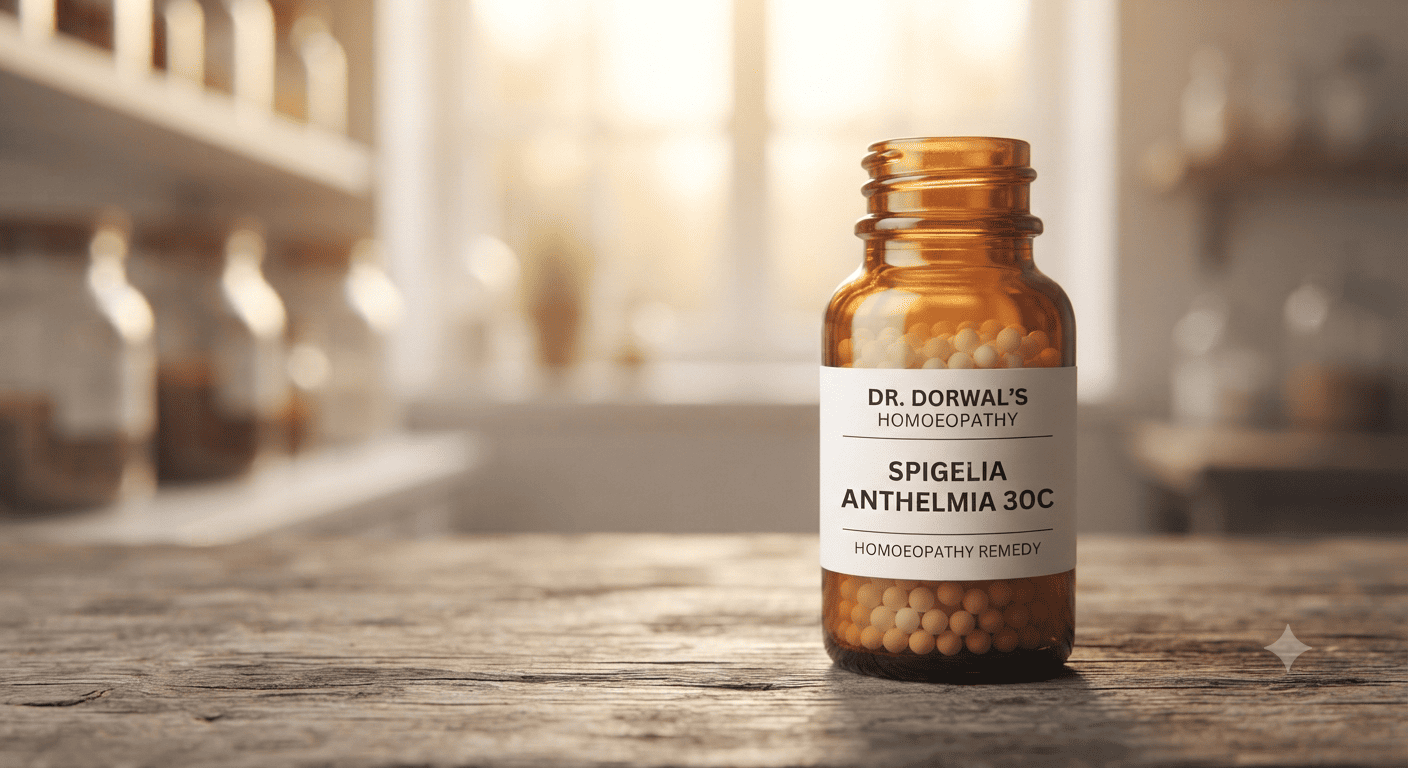
Spigelia anthelmia, or Pinkroot, is a cornerstone remedy in homoeopathy, particularly valued for its profound action on the heart, the nervous system, and the eyes. It is clinically distinguished by its elective affinity for these systems, making it a critical choice for conditions involving inflammation, neuralgia, and specific systemic sensitivities.
Key Clinical Indications & Uses
The therapeutic profile of Spigelia is defined by intense, stabbing pains and a high degree of sensitivity to external stimuli:
- Heart Affections: Spigelia is a premier remedy for pericarditis, rheumatic carditis, and angina pectoris. It addresses violent palpitations, weak and irregular pulses, and sticking precordial pains that are significantly aggravated by movement. Dyspnea is a common symptom, often requiring the patient to lie on the right side with the head elevated.
- Neuralgia & Nervous System: It is highly effective for neuralgia of the fifth nerve (prosopalgia). Patients often experience stabbing pains in the eye, zygoma, cheek, teeth, and temple, which are worse from touch, stooping, or motion. It is also indicated for rheumatic and scrofulous subjects who present with anaemia and debility.
- Ocular & Cranial Symptoms: Ocular indications include severe pressive pain, a feeling as if the eyes are too large, photophobia, and rheumatic ophthalmia. Headaches are often semi-lateral, involving the left eye, and may feel like a band around the head, worsening with a false step.
- Additional Indications: The remedy is well-suited for symptoms associated with the presence of worms (ascarides), characterized by itching and crawling in the rectum. Furthermore, it addresses mental anxiety regarding sharp or pointed objects.
Administration & Modalities
- Dose: The recommended dosage is 30C potency for neuralgic and inflammatory conditions.
- Modalities: Symptoms are characteristically worse from touch, motion, noise, turning, washing, or concussion. Patients often find relief when lying on the right side with the head high, or during inspiration.
Dr. Dorwal’s Perspective
Spigelia is a remedy of immense depth, especially when managing the “stabbing” pains associated with heart inflammation or chronic neuralgia. I view it as an essential tool for those complex cases where the patient is hyper-sensitive to any form of movement or concussion. Its reputation as a “chronic Arnica” is well-earned, as it provides sustained support in rheumatic and cardiac cases where physical trauma or inflammatory processes have left the system debilitated and raw. When a patient presents with that classic left-sided cardiac discomfort and an intense aversion to being touched, Spigelia is frequently the remedy that brings the heart and the nerves back to a state of quietude.
Disclaimer: This content is for informational purposes only. Homoeopathic medicines should be taken under the guidance of a qualified homoeopathic physician. Do not self-medicate for chronic or serious medical conditions, and always seek professional advice for any health concerns.
Frequently Asked Questions (FAQs)
It is a primary remedy for pericarditis, rheumatic carditis, angina pectoris, and violent palpitations, particularly when accompanied by sticking pains and dyspnea.
Spigelia is marked by stabbing, violent, throbbing pains, often described as neuralgia, which are highly sensitive to touch, motion, or even a false step.
Patients generally feel worse from touch, noise, and motion, but feel better when lying on the right side with the head elevated.
Yes, it is a recognized remedy for symptoms associated with the presence of worms, such as rectal itching, crawling, and ineffective urging to stool.
