
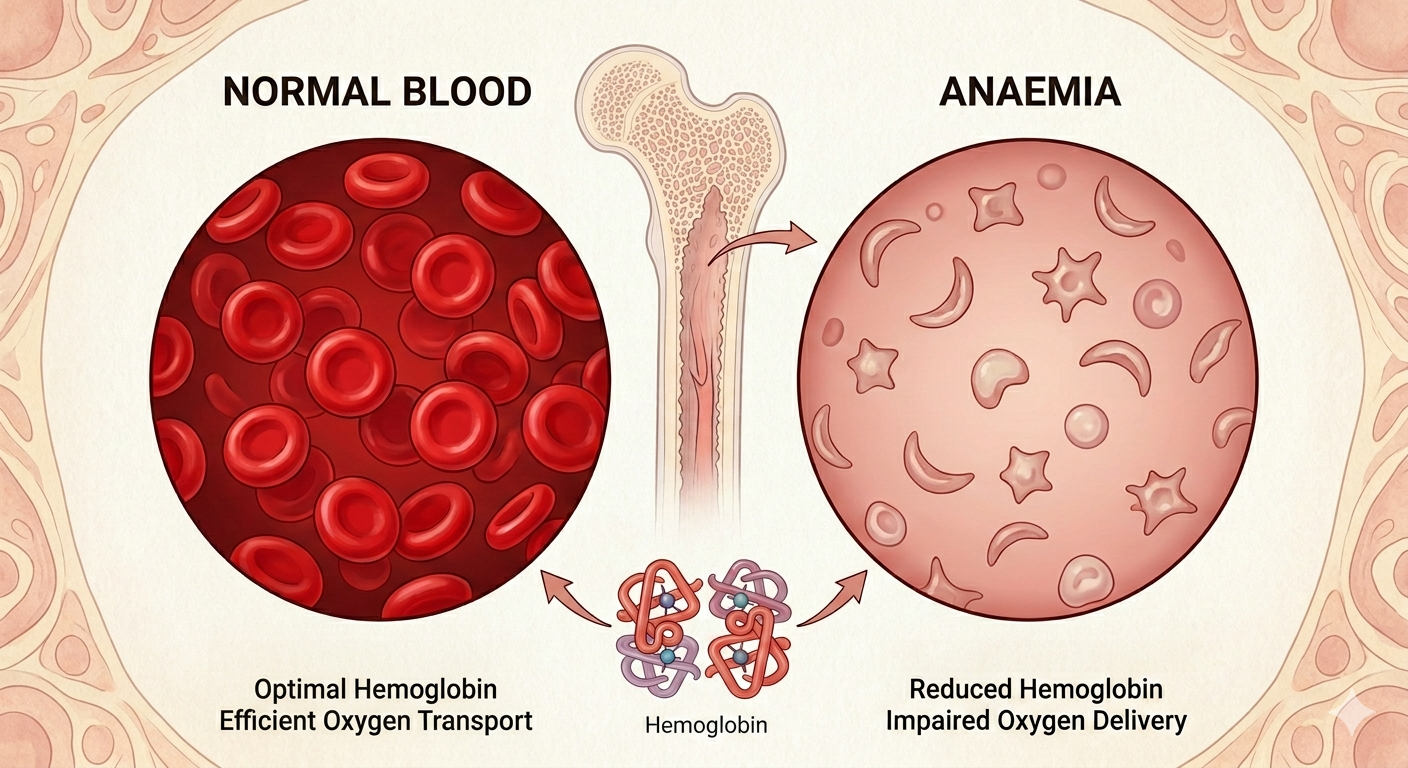
Anaemia is a blood disorder characterized by a low count of red blood cells (RBCs) or hemoglobin. On average, red blood cells have a lifespan of 120 days and contain hemoglobin, which serves as the primary oxygen carrier in our body. Anaemia produces a number of symptoms, some of which can become life-threatening in advanced stages.
Studies carried out by various institutes and organizations, including the World Health Organization (WHO), estimate that about 40% of children under the age of 5 and 35–40% of pregnant women globally are anaemic. It is a serious global healthcare problem that requires effective management and tailored medical treatment.
Signs and Symptoms
Anaemia causes mild to severe symptoms depending on the severity of the condition. Common symptoms include:
- Generalized bodily weakness
- Fatigue
- Pale skin
- Breathlessness (dyspnea)
- Low blood pressure (hypotension)
- Dizziness and headaches
- Cold hands and feet
- Chest pain
- Irregular or fast heartbeat (palpitations)
- Loss of concentration
- Loss of appetite
What Causes Anaemia?
Anaemia can be triggered by a variety of factors, including:
- Dietary Deficiency: A continuously deficient intake of iron, vitamin B12, or folic acid can cause anaemia, often accompanied by weight loss and a generalized feeling of weakness.
- Severe Blood Loss: Acute or chronic blood loss decreases the total volume of blood cells, including RBCs. In most cases, blood loss leads to iron deficiency.
- Chronic Diseases: Red blood cell production can decrease during advanced stages of conditions such as malaria, diabetes, tuberculosis, and chronic kidney disease.
- Malabsorption: This is a condition where the body is unable to absorb essential nutrients—such as carbohydrates, proteins, minerals, and vitamins—from the diet. A lack of vitamin and mineral absorption plays a crucial role in development of anaemia.
Additionally, hormonal disorders, certain medications, infections, hereditary disorders, autoimmune attacks, and bone marrow suppression can lower red blood cell counts.
Common Types of Anaemia
There are more than 400 known types of anaemia, classified by their causative factors. The most common include:
- Iron Deficiency Anaemia: The most prevalent type, caused by a lack of iron in the body. Iron is the core component of hemoglobin.
- Vitamin Deficiency Anaemia: A reduction in RBCs caused by a shortage of essential vitamins, most notably vitamin B12, folate, and vitamin C.
- Sickle Cell Anaemia: An inherited disorder characterized by a structural change where normal, flexible, bi-concave red blood cells become rigid and crescent- or sickle-shaped. These altered cells can get stuck in small blood vessels, blocking blood flow and causing severe symptoms.
- Aplastic Anaemia: A rare and serious condition where the bone marrow stops producing enough new blood cells, which can become life-threatening.
- Thalassemia: An inherited genetic disorder where the body makes an abnormal form of hemoglobin, resulting from defects in the alpha or beta polypeptide chains due to genetic mutations.
Risk Factors
Several factors can elevate a person’s risk of developing anaemia:
- Family History: Inherited types of anaemia can be passed down from parents to children via genetic mutations.
- Long-Term Illness: Individuals suffering from chronic conditions like cancer, diabetes, or kidney disease face a higher risk.
- Poor Nutrition: Regularly consuming food that lacks sufficient vitamins, minerals, and iron can trigger anaemia over time.
- Smoking: Chronic smoking increases the risk of respiratory and digestive disorders, which can interfere with nutrient absorption in advanced stages.
- Other Factors: Advanced age, alcohol abuse, chronic infections, and certain autoimmune disorders also increase vulnerability.
Potential Complications
Leaving anaemia untreated for prolonged periods can lead to severe complications:
- Debilitating Exhaustion: In advanced stages, extreme fatigue prevents individuals from managing daily routine tasks and drastically reduces concentration.
- Heart and Lung Complications: Chronic anaemia forces the heart to pump more blood to compensate for the lack of oxygen. This can lead to tachycardia (fast heart rate), cardiomegaly (enlarged heart), or heart failure, and can exacerbate underlying conditions like Chronic Obstructive Pulmonary Disease (COPD).
- Pregnancy Complications: Anaemic pregnant women face a significantly higher risk of premature birth and delivering low-birth-weight babies.
- Weakened Immune System: Severe anaemia can impair immune function, reducing the body’s natural resistance to bacterial and viral infections.
Prevention
Anaemia can often be prevented by maintaining a nutrient-dense diet and managing risk factors. A healthy preventative diet should feature:
- Iron: Lean meats, fortified cereals, oatmeal, beans, and spinach help maintain robust iron levels.
- Vitamins: Citrus fruits, tomatoes, and broccoli provide vitamin C (which enhances iron absorption), while meat and dairy products provide vitamin B12.
- Folate: Folate (vitamin B9) is vital for producing red and white blood cells in the bone marrow. On average, an adult requires 400 micrograms of dietary folate daily. Excellent sources include spinach, green peas, peanuts, and kidney beans.
Diagnosis
While clinical signs and symptoms guide a preliminary evaluation, physicians rely on specific laboratory tests to confirm diagnosis:
- Complete Blood Count (CBC): Measures the levels of platelets, red blood cells, and white blood cells. In healthy adults, the normal RBC range generally spans 4.7 to 6.1 million cells per microliter.
- Hemoglobin Estimation Test: Measures the exact amount of hemoglobin in the blood. The normal range for adults typically falls between 12 and 16 grams per deciliter.
- Ferritin Blood Test: Assesses the body’s stored iron reserves. Normal reference ranges generally sit between 30 and 300 micrograms per liter for males, and 20 to 300 for females. Low ferritin directly indicates depleted iron stores.
- Serum Iron Test: Measures the amount of circulating iron bound to transferrin (approximately 90%) and serum ferritin (approximately 10%). Normal levels generally range between 60 and 170 g/dL.
Other diagnostic tools include vitamin B12 assays, bone marrow biopsies, direct antiglobulin (Coombs) tests, and differential blood cell counts.
Conventional Treatment
Standard medical management focuses on addressing the root cause and restoring healthy blood counts:
- Dietary Adjustments: Increasing intake of iron- and vitamin-rich foods like leafy green vegetables, fresh fruits, and lean proteins.
- Supplements: Target oral or intravenous iron, vitamin B12, or folic acid supplements to correct deep-seated deficiencies.
- Medications: Prescription drugs like epoetin alfa (to stimulate RBC production), ferrous sulfate, or leucovorin, depending on the underlying pathology.
- Blood Transfusions: Utilized in acute, severe cases where hemoglobin levels drop to critical, life-threatening thresholds.
Homoeopathic Approach and Medicines
Homoeopathy treats blood-related ailments using a holistic philosophy, analyzing the patient’s entire physical and mental constitution. Medicines are selected based on strict individualization rather than a single diagnosis. When combined with proper dietary management homoeopathy medicines work dramatically.
Common Homoeopathic Medicines include:
- Ferrum metallicum: Indicated when a patient presents with an appearance of pseudo-plethora (false full-bloodedness) characterized by sudden flushing followed by severe paleness, alongside puffiness of the extremities. It is less effective if the anaemia stems from fluid loss.
- Pulsatilla: Often considered an antidote to the misuse or over-medication of crude iron supplements. It is indicated when symptoms include dizziness upon rising, a total absence of thirst, a highly emotional or mild disposition, and a strong desire for open, fresh air.
- Cinchona officinalis (China): Primary remedy for anaemia caused by the rapid loss of vital bodily fluids, such as acute hemorrhage, prolonged lactation, heavy menstrual flow, or chronic diarrhea. Symptoms typically include a pale, sallow complexion and a feeling of heavy, dull head pain.
- Calcarea carbonica: A deep-acting constitutional remedy used for debilitated conditions. It is frequently indicated in the chlorosis (green sickness) of young girls who present with a wax-like complexion, large pupils, cold extremities, and a tendency to sweat easily.
- Arsenicum album: Highly effective in severe or pernicious anaemia, as well as cases arising from malarial or toxic influences. It matches patients exhibiting profound prostration (extreme exhaustion), rapid and irregular palpitations, marked restlessness, and intense anxiety.
- Helonias dioica: Particularly suited for women suffering from anaemia due to prolonged uterine hemorrhaging, especially when accompanied by severe sluggishness and pelvic weight. It is regarded in homeopathy as an excellent remedy for stimulating red blood cell production.
- Secale cornutum: Utilized in progressive, severe stages of anaemia where the blood itself appears thin and pale. It acts directly on the blood corpuscles and blood vessels, making it useful in advanced, degenerative states.
- Natrum muriaticum: Indicated when marked paleness and emaciation occur despite the patient eating well. Concomitant symptoms include throbbing headaches, dyspnea (especially when climbing stairs), chronic constipation, and a deeply depressed or melancholic spirit.
Other remedies frequently utilized based on their specific symptom profiles include Ferrum phosphoricum, Calcarea phosphorica, Cyclamen, Chininum arsenicosum, Aceticum acidum, Alumina, Picricum acidum, and Kali carbonicum.
References
- World Health Organization: Anaemia. https://www.who.int/health-topics/anaemia#tab=tab_1
- NHS Choices: Iron deficiency anaemia. https://www.nhs.uk/conditions/iron-deficiency-anaemia/
- Mayo Clinic: Anemia. https://www.mayoclinic.org/diseases-conditions/anemia/symptoms-causes/syc-20351360
- Better Health Channel: Anaemia. https://www.betterhealth.vic.gov.au/health/conditionsandtreatments/anaemia
- Medical News Today: Everything you need to know about anemia. https://www.medicalnewstoday.com/articles/158800
- National Health Portal of India: Anaemia. https://www.nhp.gov.in/disease/blood-lymphatic/anaemia
- Boericke, W. New Manual of Homoeopathic Materia Medica.
