
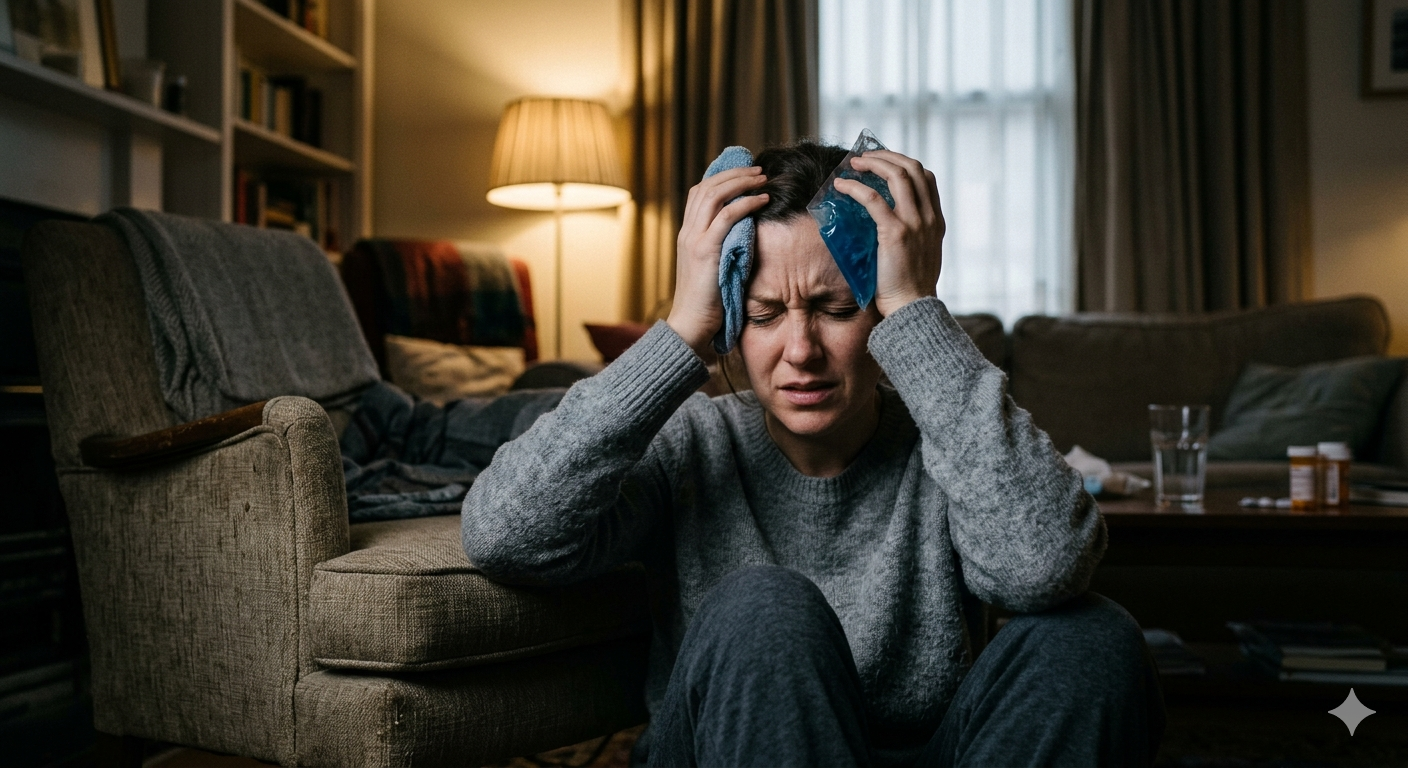
Migraine is a chronic neurological disorder characterized by recurrent, moderate-to-severe headaches. Unlike a typical tension headache, migraines are often described as throbbing, shooting, bursting, or burning sensations that can affect one or both sides of the head. Attacks can last anywhere from several hours to several days and are often accompanied by other debilitating symptoms.
Signs and Symptoms
Beyond head pain, a migraine episode frequently includes:
- Sensory Disturbances: Sensitivity to light (photophobia), sound (phonophobia), and sometimes odors.
- Gastrointestinal Distress: Nausea and vomiting.
- Cognitive Issues: Dizziness, confusion, or difficulty concentrating.
- Aura: About 15-20% of cases involve “aura,” which consists of temporary visual, motor, or speech disturbances occurring before or during the headache.
Causes and Risk Factors
While the exact cause varies from person to person, migraines are often triggered by a combination of genetic and environmental factors. Common triggers include:
- Psychological Stress: High-pressure work environments and chronic anxiety.
- Physical Exhaustion: Over-exertion of the brain and body.
- Lifestyle Factors: Irregular sleep patterns, smoking, alcoholism, or excessive caffeine consumption/withdrawal.
- Dietary Issues: Nutritional deficiencies or dehydration.
- Hormonal Changes: Fluctuations related to menstrual cycles or pregnancy.
- Environmental Stimuli: Bright, flashing lights, loud noises, or strong odors.
Diagnosis
Diagnosis is primarily clinical, based on a patient’s medical history and the pattern of symptoms. There is no single blood test for migraine; however, physicians may use MRI or CT scans to rule out other underlying neurological issues if the headache pattern is unusual.
Complications
If left unmanaged, chronic migraines can lead to severe health issues, including:
- Neuralgic Disorders: Increased risk of insomnia, dizziness, and chronic pain syndromes.
- Status Migrainosus: A debilitating, long-lasting migraine attack that may require hospital care.
- Mental Health Impact: Higher risk of developing clinical depression and anxiety due to the burden of persistent pain.
Approaches to Treatment
Managing migraine requires a multifaceted strategy that addresses both the physical symptoms and the underlying lifestyle triggers.
1. Conventional Treatment
Conventional medicine typically focuses on two fronts:
- Abortive Therapy: Medications taken at the onset of an attack (e.g., triptans, NSAIDs) to stop the progression of the pain.
- Preventive Therapy: Daily medications (such as beta-blockers, antidepressants, or anti-seizure drugs) used to reduce the frequency and severity of attacks.
2. Holistic & Lifestyle Management
- Home Tips: Maintaining a consistent sleep schedule, staying hydrated, keeping a “migraine diary” to identify personal triggers, and creating a quiet, dark environment during an attack can provide substantial relief.
- Nutritional Therapy: Identifying food sensitivities and ensuring adequate intake of Magnesium, Riboflavin (Vitamin B2), and Coenzyme Q10, which have been shown to reduce migraine frequency.
- Hydrotherapy: The use of warm foot baths (to draw blood away from the head) or cold compresses on the forehead/neck to constrict blood vessels and alleviate pain.
- Acupuncture: A Traditional Chinese Medicine (TCM) practice that uses thin needles to stimulate specific points, which may help rebalance the body’s energy flow and reduce headache frequency.
- Biofeedback: A technique that teaches patients to control involuntary body functions, such as muscle tension and heart rate, to prevent or manage an impending migraine.
- Mindfulness and Yoga: Regular practice of Pranayama (breath control) and meditation helps regulate the autonomic nervous system, significantly lowering the “stress load” that frequently triggers attacks.
- Hydration: Maintain steady water intake throughout the day to prevent dehydration-related headaches.
3. Homoeopathy Approach
Homoeopathy operates on the principle of Similia Similibus Curentur (“like cures like”). Unlike conventional medicine, which often seeks to suppress symptoms, homoeopathy aims to restore the body’s Vital Force. In treating migraine, the homoeopathic physician performs a detailed Case Taking, analyzing: Modalities (What makes the pain better or worse?), Sensation (Is the pain throbbing, stitching, bursting, or boring?), Mentals (Is the patient irritable, anxious, or depressed? Is there a history of grief or suppressed emotions?) and many more. Commonly recommended medicines by homoeopathy physicians include:
1. Dilutions (Potencies)
Dilutions are used to treat the underlying susceptibility and chronic nature of migraines. They work at a dynamic, energetic level.
- Belladonna: For sudden onset, violent throbbing, and congestion. The face is red, and eyes are sensitive to light.
- Bryonia Alba: For the “motion-sensitive” migraine. The patient wants to lie perfectly still because any movement makes the bursting head pain worse.
- Gelsemium: Suited for migraines preceded by visual disturbances, dizziness, and a feeling of heavy, drooping eyelids.
- Sepia: Specifically for women whose migraines are linked to hormonal fluctuations, menstrual cycles, or feeling overwhelmed by family duties.
- Silicea: For chronic, deep-seated headaches that start at the back of the head (occiput) and radiate over the top of the head.
2. Mother Tinctures (Q)
Mother tinctures are concentrated liquid extracts used for faster physiological support. They are often used in small doses in water to provide gentle relief.
- Passiflora Incarnata Q: Excellent for nervous headaches associated with sleeplessness and mental exhaustion. It acts as a gentle sedative to calm the nervous system.
- Ginkgo Biloba Q: Used for headaches related to poor cerebral circulation, dizziness, and cognitive fog.
- Crataegus Oxyacantha Q: Often used when the headache is related to high blood pressure or irregular cardiac rhythm.
- Avena Sativa Q: A powerful nerve tonic. It is specifically indicated for those suffering from the “brain-fag” of modern life, physical exhaustion, or migraines resulting from prolonged stress or work overload.
- Chionanthus Virginica Q: Indicated for “sick headaches” associated with liver or gallbladder disturbances, often accompanied by jaundice or digestive issues.
- Melilotus Officinalis Q: Highly specific for congestive headaches; it acts effectively on the vascular system to relieve the intense, bursting, and throbbing pain associated with severe congestion in the head.
- Petasites Officinalis Q: Often used to reduce the frequency and intensity of migraine attacks, sometimes referred to as the “Butterbur” of the herbal world.
3. Bio-Chemic Salts (Tissue Remedies)
These are essential minerals required by the body to maintain cellular health. They are often used as supportive therapy alongside constitutional remedies.
- Magnesia Phosphorica: Known as the “homoeopathic aspirin.” It is highly effective for neuralgic, spasmodic, and cramping pains. Best taken in hot water to soothe the nervous system.
- Ferrum Phosphoricum: Best for headaches in the early stages, especially when accompanied by congestion, inflammation, or heat.
- Kali Phosphoricum: The premier nerve nutrient. Essential for migraines triggered by stress, brain-fag, and mental exhaustion.
- Natrum Muriaticum: Helps balance water distribution in the body, which is vital for patients whose headaches are linked to dehydration or fluid retention.
Clinical Tip: Homoeopathic and bio-chemic medicines should be taken under the guidance of a qualified practitioner, as treatment is highly personalized based on individual symptoms.
Conclusion
Migraine is a challenging condition, but it is not insurmountable. Managing migraine is a journey that requires looking at the “whole person” rather than just the localized head pain. Conventional medicine offers immediate relief, where as holistic systems like homoeopathy offers the potential to resolve the underlying triggers and constitutional weakness. By combining these approaches with stress-reduction techniques like meditation, you can transition from a state of chronic suffering to one of sustained vitality.
Disclaimer: This information is for educational purposes only. Please consult a licensed healthcare professional for any health concerns or before starting any treatment regimen.
