
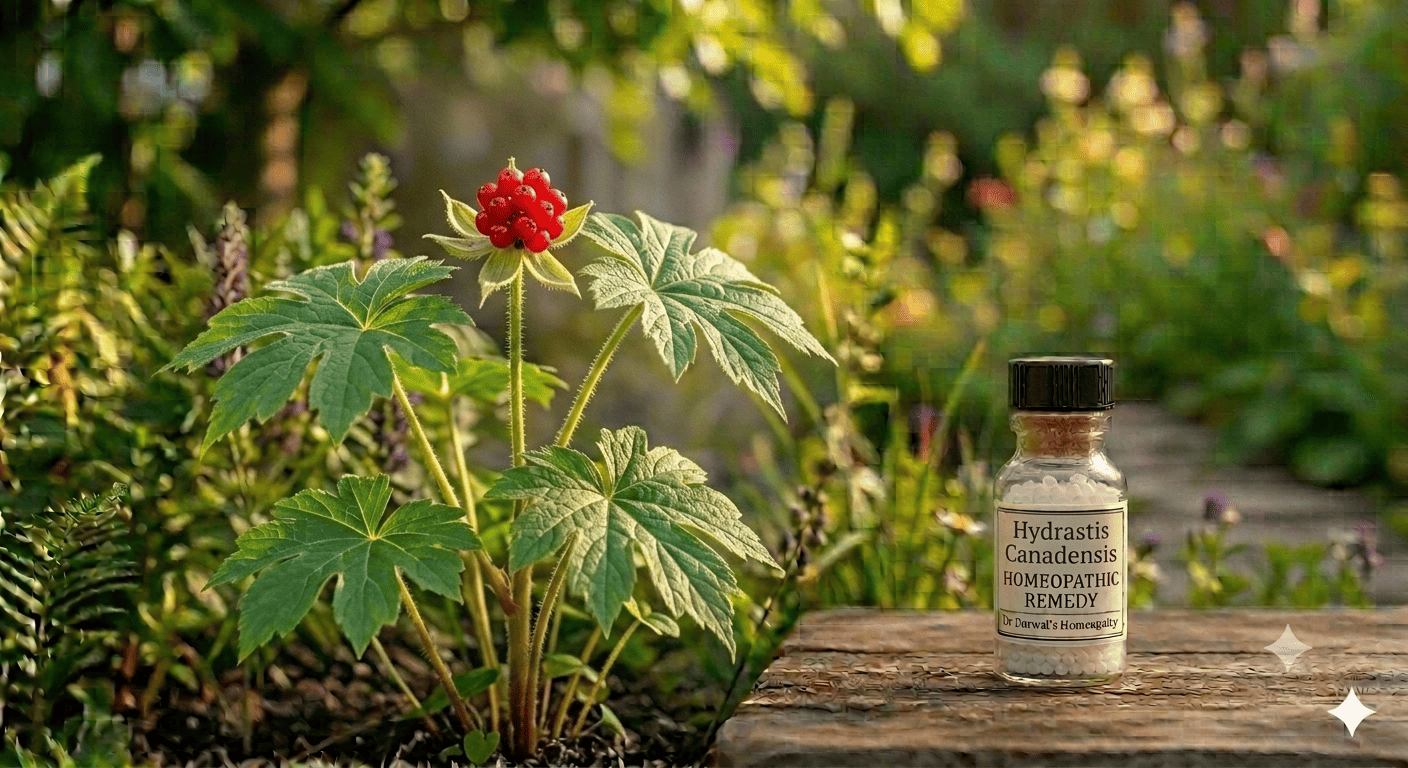
Hydrastis Canadensis, commonly known as Golden Seal, is a cornerstone remedy in homoeopathic practice, particularly noted for its profound action on the mucous membranes. It is indicated for states of sub-acute or chronic inflammation, characterized by the production of thick, yellowish, and tenacious (ropy) secretions.
Clinical Indications & Benefits
In my clinical practice, Hydrastis is frequently employed for its restorative effects on cachectic, exhausted individuals. Key therapeutic applications include:
- Gastrointestinal & Hepatic Support:
- Atonic Dyspepsia & Gastritis: Indicated for patients with weak digestion, a constant “sore” feeling in the stomach, and a sensation as if a hard-cornered substance were present.
- Hepatobiliary Disorders: Effective for torpid liver, jaundice, and gallstone-related discomfort.
- Constipation: Addresses obstinate constipation accompanied by a sinking feeling in the stomach and dull frontal headaches.
- Mucous Membrane Catarrh:
- Respiratory & Nasal Conditions: Indicated for chronic sinusitis, ozena (with ulceration of the septum), and follicular pharyngitis. It is particularly valuable for bronchitis in elderly, exhausted patients characterized by thick, yellow, tenacious expectoration.
- Urogenital Health: Used in the second stage of gonorrhea (thick, yellow discharge) and for leucorrhoea that is acrid, corroding, and tenacious.
- Oncological & Degenerative States:
- Pre-Ulcerative States: Highly regarded in cases of cancer or cancerous states, specifically before ulceration, when pain is the primary symptom.
- Glandular Affections: Indicated for goiter of puberty and pregnancy, as well as breast tumors with nipple retraction.
- Dermatological & Systemic Use:
- Smallpox (Variola): Historically utilized to modify the disease, shorten its course, and mitigate distressing symptoms.
- Chronic Ulcers: Applied locally and internally for lupus, cancerous formations, and unhealthy skin tendencies.
Administration & Therapeutic Modalities
- Potency & Dosage: Clinical application ranges from the mother tincture (Q) to the 30C. Colorless preparations are available for localized application.
- Clinical Observation: The hallmark of this remedy is the patient’s constitutional state—often old, easily tired, and suffering from general emaciation. When a patient presents with thick, yellow, ropy mucus across any mucous membrane, Hydrastis remains a primary consideration.
Dr. Dorwal’s Perspective
In my clinical practice, Hydrastis Canadensis is an indispensable tool for patients suffering from chronic “catarrhal exhaustion.” It is my go-to remedy when a patient’s vitality has been sapped by long-standing digestive or respiratory disease. I find it especially effective for the “cachectic” patient who presents with both mental depression and physical emaciation. By addressing the stagnation in the liver and the tenacity of the mucous secretions, Hydrastis helps break the cycle of chronic infection and debility, acting as a deep-acting tonic for the entire system.
Disclaimer: This content is for informational purposes only. Homoeopathic medicines should be taken under the guidance of a qualified homeopathic physician. Do not self-medicate for chronic or serious medical conditions, and always seek professional advice for any health concerns.
Frequently Asked Questions (FAQs)
The remedy is defined by thick, yellowish, and tenacious (ropy) mucus, which can be found in the throat, stomach, uterus, or urethra.
Yes, it is highly effective for atonic dyspepsia, gastritis, liver torpor, and chronic constipation.
It is primarily indicated in the early stages of a cancerous state, specifically before ulceration, when pain is the dominant symptom.
Yes, it is specifically indicated for bronchitis in aged, exhausted individuals who struggle with thick, yellow expectoration and a feeling of impending suffocation.
