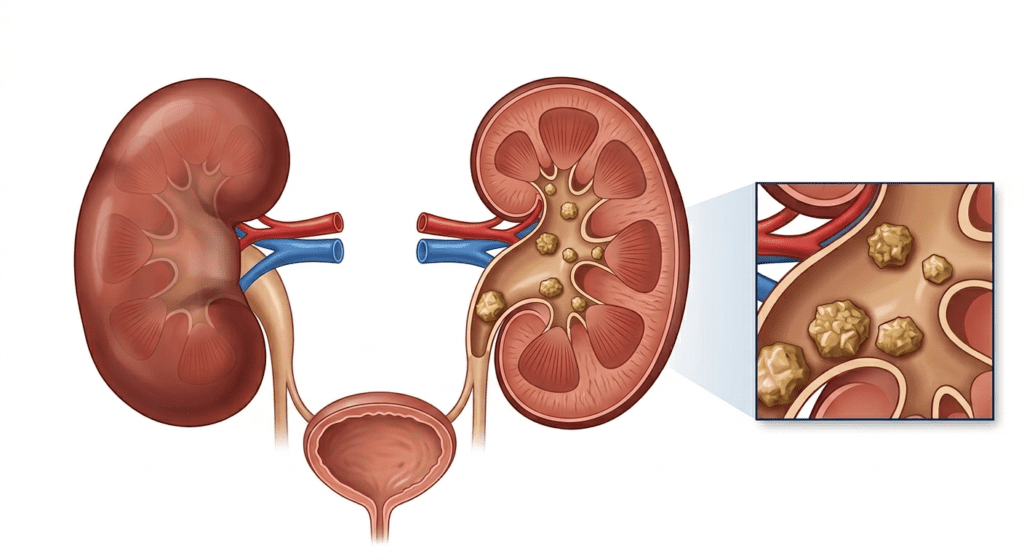
Quick Overview: Ocimum Canum is a homoeopathic remedy chiefly used for treating renal colic and kidney stones marked by reddish, “brick-dust” sediment in the urine. It is commonly available as Mother Tincture (Q), 30C, and 200C, with the Q typically dosed at 10–15 drops in water, 2–3 times a day.
Ocimum Canum occupies a specific and well-recognised place in homoeopathic materia medica as a remedy for the urinary system. Unlike broader constitutional remedies, its use is fairly targeted — reached for specifically when a patient presents with the classic picture of spasmodic renal colic, pain that radiates along the course of the ureters, and the telltale reddish, sandy sediment in the urine that gives it its “brick-dust” reputation. Beyond kidney stones, it also has a recognised role in uric acid–related complaints, certain urinary tract irritations, and, to a lesser extent, prostatic and reproductive-gland congestion. Because its indications are so specific, it works best when the underlying diagnosis (such as confirmed kidney stones) is properly established first, with the remedy then selected to match the individual’s actual symptom picture.
What is Ocimum Canum used for?
In clinics, Ocimum Canum is used in:
- Renal Colic: It is indicated in cases where spasmodic kidney stone pain is started over kidney region and radiate along the ureters; often accompanied by intense agony and discomfort.
- Kidney Stones: It is primary medicine used for the management of kidney stones, where patients represent their complaints with “brick-dust” (red) sediment in the urine.
- Uric Acid Diathesis: Ocimum Canum is frequently used to manage metabolic imbalances including targeted treatment for high level uric acid levels. In addition, it also works in cases where uric acid levels are associated with stone formation in urinary tract.
- Dysuria & Urethral Inflammation: It also used to cure patients who represent complaints of severe burning, painful and obstruction of micturition. Turbid urine is often associated with haematuria.
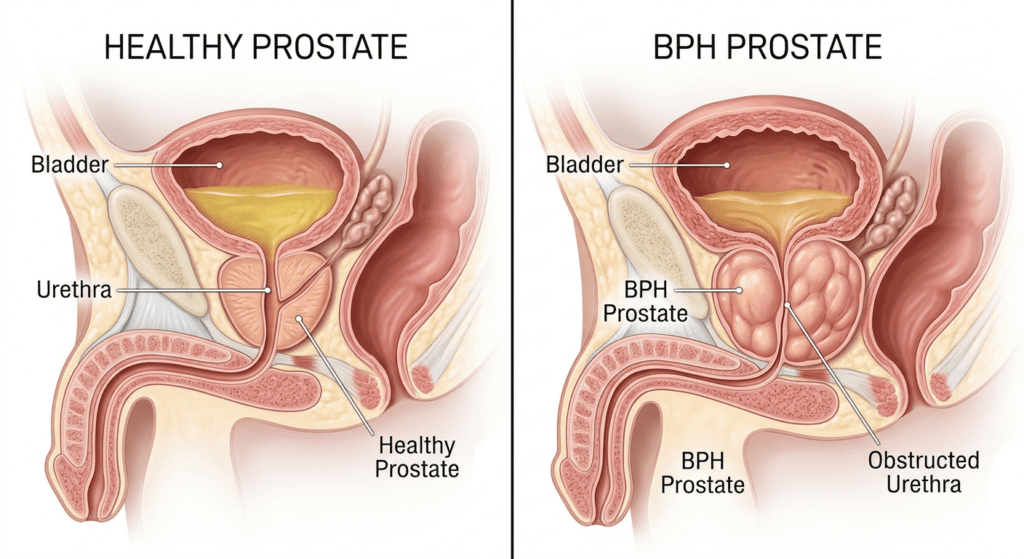
- Prostatic Congestion: It also relieves frequent urine frequency and dragging sensations that are often associated with prostatic enlargements.
- Vulvar Pruritus: It covers symptoms like intense itching in vulva, particularly when it is associated with local mucosal irritation or specific discharge patterns in females.
How Ocimum Canum Differs From Similar Remedies?
Several remedies are considered for renal colic and kidney stones — knowing which one fits matters:
| Remedy | Key Distinguishing Feature |
|---|---|
| Ocimum Canum | Renal colic (often right-sided) with red, “brick-dust” sediment and violent vomiting during the attack |
| Berberis Vulgaris | Pain that radiates outward from a fixed point in the kidney region toward the bladder or thigh, often with a bitter taste in the mouth |
| Lycopodium Clavatum | Right-sided kidney/urinary complaints alongside marked digestive bloating, worse in the late afternoon |
| Pareira Brava | Severe renal colic where the patient must get on hands and knees for relief, with straining and difficult urination |
| Hedeoma Pulegioides | Renal colic with pain radiating down the front of the thigh rather than toward the bladder |
Potency & Administration
- Mother Tincture (Q) or 30C is most often used for spasmodic, acute renal-colic pain. 30C and 200C are typically selected by a homoeopathic physician for more constitutional, longer-term approach once the acute episode has settled, based on the patient’s symptom picture rather than the diagnosis alone.
- Fluid intake: Increasing water intake is generally recommended alongside treatment to clear the passage. Kidney stones should always be properly diagnosed (ultrasound/imaging) so that stone size, shape, and location are known — this determines whether a supportive homoeopathic approach is appropriate or whether the case needs urgent medical/surgical intervention.
Dr. Dorwal’s Perspective
Ocimum Canum is a remedy I turn to often for patients presenting with the classic wave-like, spasmodic pain of renal colic, especially when they describe reddish, sandy sediment in their urine. I utilize this medicine on patients who tells me their wave-like pain in the kidney region. In homoeopathic practice, it is not only a pain alleviator but also improve the body’s physiology towards recurring of stones in future. Before using this medicine for kidney stones, it is important to consider the shape, size and location of the stone in urinary tract. As a professional homoeopathic physician, Before prescribing Ocimum Canum, I match whole symptomatic profile of the patient with medicine symptoms and co-relate these with disease pathology. Sometimes, patients hope results by taking Ocimum Canum by themselves, but in cases of kidney stones and prostatic enlargements, proper diagnosis is mediatory.
Disclaimer: This content is for informational purposes only and is not a medical advice. Kidney stones and related urinary complaints should be properly diagnosed (including imaging) before starting any treatment. Please seek professional guidance before taking any medicine, and always consult a qualified homoeopathic practitioner or medical professional for diagnosis and treatment.
- Symptom prevalence in a cohort of 147 patients improved with the homoeopathic medicine Ocimum canum: A multicenter, open, observational, clinical verification study
- Phytochemical Analysis of Ocimum Canum Mother Tincture and Evaluation of its Efficacy on Nephrolithiasis Patients
- Ocimum canum – Boericke
- Comparative study of individualised homoeopathic medicines and Ocimum canum mother tincture in the management of nephrolithiasis
- The Role of Homoeopathy In Renal Stone Management
- A comprehensive review of the efficacy of lesser known homoeopathic remedies in the management of renal calculi
Frequently Asked Questions (FAQs)
It is mainly used for renal colic and kidney stones, particularly when there is reddish, “brick-dust” sediment in the urine, and for related uric acid and urinary complaints.
Generally, the mother tincture is well-tolerated when used as directed, but it isn’t safe for everyone — it contains alcohol as a preservative, so it should be used cautiously (or avoided) by people with alcohol sensitivity, certain liver conditions, in pregnancy, or in young children, and always under a homoeopathic physician’s guidance. It also isn’t meant for daily, indefinite use without a specific indication.
When taken at the recommended dose, significant side effects are uncommon, but some people may experience mild digestive upset. Because the mother tincture contains alcohol, it can also cause discomfort in people sensitive to it. Any unusual reaction should be reported to your prescribing homoeopathic physician.
Stress is not one of its classical or well-documented indications. Ocimum Canum is primary and best-established affinity towards urinary and renal system. If stress or anxiety is the main concern, that calls for a different remedy selected on its own symptom picture, ideally after a proper case assessment.
Ocimum 30C potency is generally used the same way as the mother tincture for renal colic and kidney-stone-related complaints. It is selected when symptoms are more individualised and based on the patient’s overall symptom picture.
Ocimum 200C potency is a higher dilution typically reserved for more constitutional prescribing, generally selected by an experienced homoeopathic physician, usually after the acute picture is well understood, rather than for first-line acute pain relief.
Prices vary by brand and bottle size, but a 30ml bottle of Ocimum Canum Q from established homoeopathic pharmacies typically falls in the ₹90–₹300 range.
Commonly cited dose is 10–15 drops in half a cup of water, 2–3 times a day, but the correct dose, frequency, and duration should always be confirmed by your prescribing homoeopathic physician, based on your specific case rather than taken as a fixed rule.