Quick Overview: Homoeopathic medicine Berberis Vulgaris is indicated for renal colic and kidney stones, gallbladder and liver congestion, urinary tract complaints, and gouty or rheumatic pain — particularly where pain has a sharp, radiating, “travelling” character.
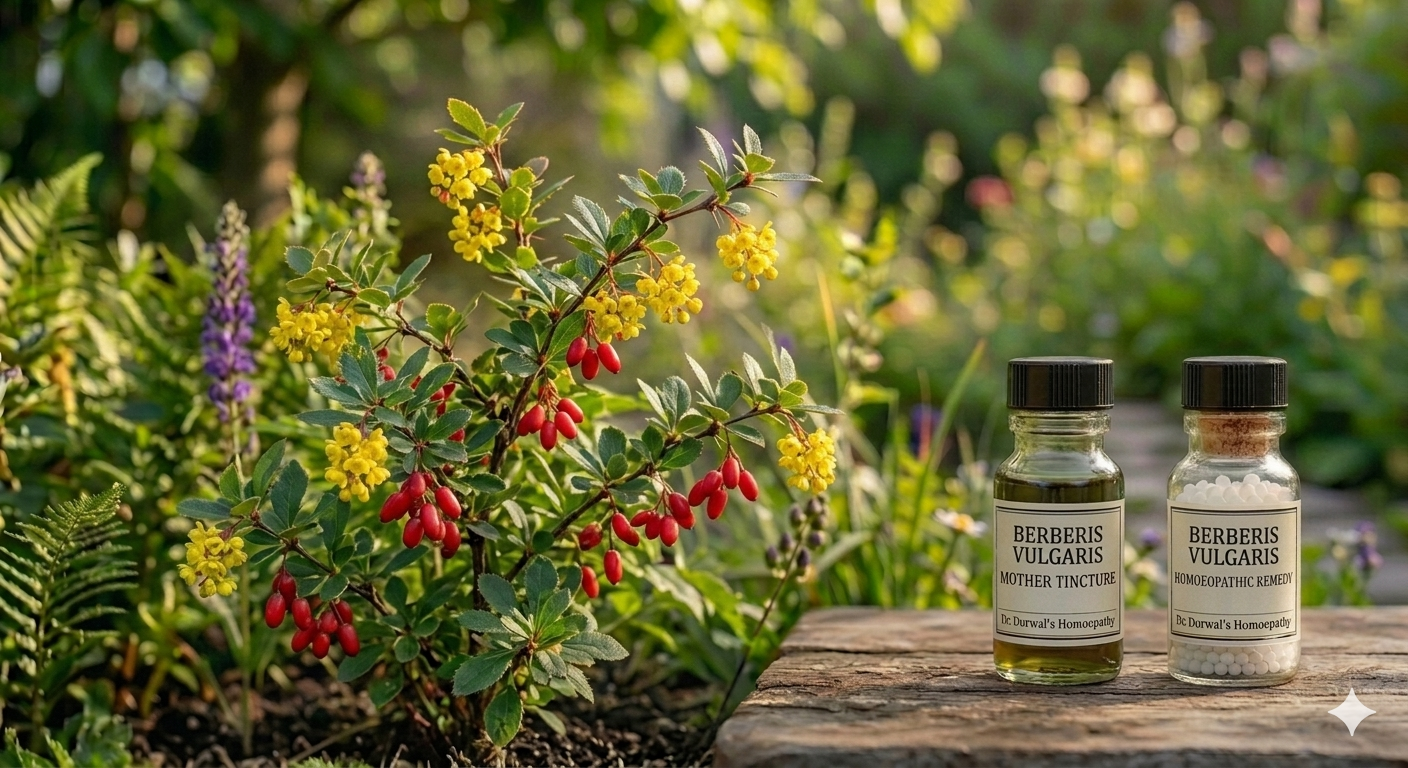
Berberis Vulgaris is prepared from the bark of the Barberry shrub. It is a popular remedy in homoeopathy for managing disorders related to the liver, kidneys, and urinary tract. As a medical educator and homoeopathic physician, I frequently reach for this remedy in patients whose pain seems to radiate or “travel” from one organ to another. Most classically, i used berberis Vulgaris in pain that radiates from the kidney down toward the urinary bladder. Over the years, it has become one of my most relied-upon remedies for renal colic, and Homoeopathic physicians use it widely in practice.
Key Clinical Indications and Benefits
Berberis Vulgaris covers a fairly specific but very common cluster of complaints in clinical practice. The pattern I look for is pain that shifts or radiates rather than staying fixed in one spot, along with a sense of general sluggishness in the organs of elimination. It is a remedy I associate strongly with the urinary and hepatic systems, and over time I’ve come to recognise a fairly consistent set of presentations where it proves genuinely useful.
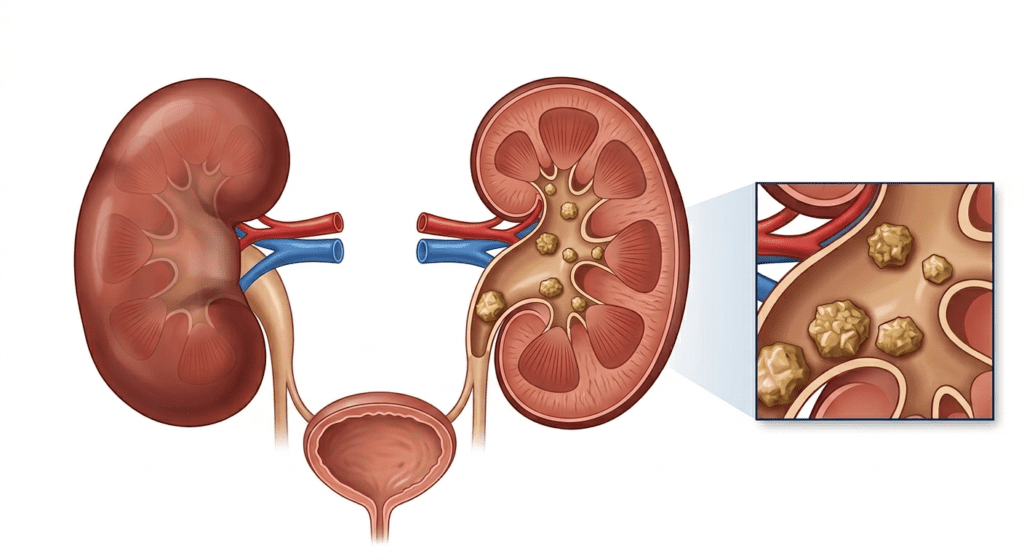
- Renal Calculi (Kidney Stones): It is indicated for sharp, stitching, or “tearing” pains that originate in the kidney region and radiate down the ureter toward the bladder, groin, or thigh — often described by patients as pain that seems to move as the stone moves. There is frequently associated nausea, restlessness, and a marked soreness in the kidney region on the affected side, sometimes with visible blood or sediment in the urine. This radiating, colicky character is really the hallmark that leads me to this remedy over others in the same category.
- Urinary Disorders: Useful where there’s burning during urination, frequent urging, or a lingering sense that the bladder hasn’t fully emptied, along with cloudy, sediment-laden, or mucous-streaked urine. I also consider it in patients who describe a dull, constant backache in the kidney region that isn’t necessarily tied to an active stone — often an early sign of urinary irritability or gravel formation building up gradually.
- Liver & Gallbladder Issues: Beneficial for hepatic congestion, gallstone colic, and the digestive disturbances that tend to accompany it — a bitter or metallic taste in the mouth, nausea after fatty foods, constipation, and occasional jaundice. Patients often describe a dragging, heavy sensation under the right ribs, sometimes radiating toward the back or right shoulder blade, which mirrors the same “travelling” pain pattern seen in the renal presentations.
- Joint & Rheumatic Pain: Often indicated in gouty conditions or joint pain accompanied by urinary symptoms, along with a stiff, dragging sensation in the lumbar region that tends to worsen on first movement after rest. It’s a useful remedy to consider when joint complaints and urinary sluggishness appear together, since Berberis addresses both the elimination of uric acid and the local discomfort at the same time.
- General Debility from Chronic Congestion: In patients with long-standing sluggishness of the liver and kidneys — low energy, a sallow or dull complexion, and a general feeling of toxicity — Berberis Vulgaris is often used as a supportive constitutional aid, helping the eliminative organs work more efficiently rather than treating any single acute symptom.
How It Differs From Similar Remedies?
Several remedies get considered for renal colic and kidney stones, and on the surface the cases can look alike — sharp pain, a history of stone formation, urinary irritability. The table below sets out how Berberis Vulgaris compares with three other commonly indicated remedies for this picture.
| Remedy | Key Distinguishing Feature |
| Berberis Vulgaris | Sharp, radiating, “travelling” pain from kidney to bladder or thigh; urine often cloudy with sediment; a gouty or rheumatic background is common. |
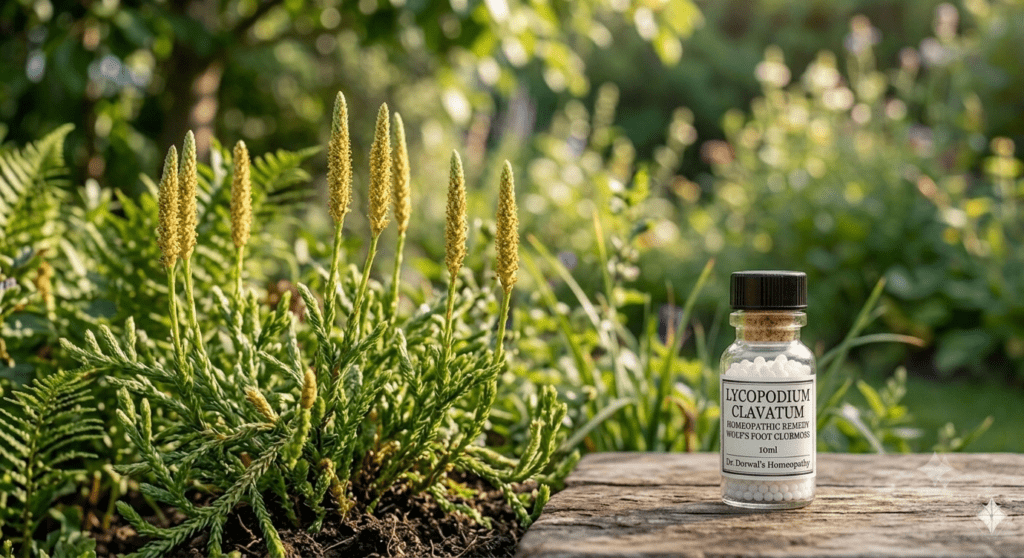
| Lycopodium Clavatum | Right-sided renal complaints with marked bloating and digestive gas; red sand or gravel visible in the urine; symptoms often worse in the late afternoon. |
| Cantharis | Intense, cutting, burning pain in the urinary tract with an almost constant, urgent desire to urinate, passing only a few drops at a time. |
| Sarsaparilla | Pain that is worse at the end of urination rather than during it, often left-sided, with fine, sand-like sediment left behind in the collection vessel. |
Administration & Therapeutic Modalities
- Potency & Dosage: it is commonly utilized in Mother Tincture (Q) for liver and kidney support, and 30C or 200C potencies for more specific neuralgic or colic pains.
- Formulation: It is administered in both Mother Tincture and Globule form. Consistency is key for chronic cases of stone formation or hepatic sluggishness.
Dr. Dorwal’s Perspective
In my clinical practice, I think of Berberis Vulgaris as the “primary regulator” for the body’s filtration systems — the liver and the kidneys. What I look for, and what tells me this is likely the right remedy, is that wandering, radiating quality to the pain: a renal stone causing pain that seems to travel along the course of the ureter, or a sluggish liver producing that dull, dragging discomfort under the right ribs.
I’ve used Berberis Vulgaris quite extensively for kidney stones in the 5 to 7 mm range, and in my experience this is where it tends to be most consistently helpful — small enough that the body has a genuine chance of passing the stone on its own, with the remedy working to ease the colicky pain and support that process along the way. I’ve had a good number of patients in this size range see the stone pass with considerably less distress than they were bracing for, though I’m always careful to set expectations — response time and outcome do vary from patient to patient, and larger or impacted stones need to be evaluated for other interventions rather than relying on the remedy alone.
Clinical studies on ultra-diluted Berberis Vulgaris in an experimental model of urolithiasis shows that it reduce the markers associated with stone formation and showed measurable anti-crystallization activity against calcium oxalate — the mineral behind the majority of kidney stones. Separately, case series published through homoeopathic research institutions have documented successful expulsion of urinary calculi in patients treated with this remedy. These findings are still preliminary by conventional research standards, and I don’t present them as proof in the way a large clinical trial would be, but they do echo what I consistently observe at the clinic — that Berberis Vulgaris is doing more than simply masking pain.
Disclaimer: This content is for informational purposes only. Homoeopathic medicines should be taken under the guidance of a qualified homoeopathic physician. Do not self-medicate for chronic or serious medical conditions, and always seek professional advice for any health concerns.
- Berberis vulgaris: specifications and traditional uses
- Homoeopathic preparation of Berberis vulgaris as an inhibitor of Calcium oxalate crystallization: An in vitro evidence
- Exploring the role of Berberis vulgaris in urolithiasis: Mechanisms, pathophysiology and therapeutic potential
- A review of the effects of Berberis vulgaris and its major component, berberine, in metabolic syndrome
- Implications of Physiological Action of Berberis Vulgaris to Understand Its Guiding Symptoms
- Homoeopathic dilution of Berberis vulgaris and Urinary calculi: A Case Series
- Renal calculi treated with Homeopathic remedy Berberis vulgaris –a case study
- A study to ascertain the effect of berberis vulgaris, hydrangea, cantharis, lycopodium clavatum and staphysagria in renal calculi
- Preliminary investigation on ultra high diluted B. vulgaris in experimental urolithiasis
Frequently Asked Questions (FAQs)
Berberis Vulgaris is primarily used for kidney stones, renal colic, gallstones, liver congestion, and urinary tract complaints marked by sharp, radiating pain. It is also considered in gouty or rheumatic conditions where joint pain appears alongside urinary sluggishness. The remedy is chosen based on the specific character of the pain — sharp, shifting, and radiating from one area to another.
Yes, Berberis Vulgaris is one of the most widely used homoeopathic remedies for kidney health, particularly for renal colic and supporting the passage of small stones. It is often reached for when pain radiates from the kidney down toward the bladder or thigh, along with cloudy or sediment-laden urine. Many practitioners also use it to support general kidney function in cases of chronic sluggishness.
Berberis Vulgaris is generally safe with no significant side effects when taken in the correct potency under a qualified physician’s guidance. Homoeopathic remedies at these dilutions are not associated with the kind of adverse effects seen with conventional medication. Self-medication without proper case assessment is not advisable, especially for ongoing kidney or liver conditions.
Pain relief in acute colic is often noticed within a few doses, sometimes within hours of starting the remedy. Support for stone passage or chronic liver sluggishness, typically needs several weeks of consistent use to show a meaningful change. Response time can vary depending on the size of the stone and the individual’s overall constitution.
Yes, Berberis Vulgaris is commonly indicated for hepatic congestion and biliary sluggishness, helps to ease symptoms like a bitter taste, constipation, and dull discomfort under the right ribs. It is also considered when gallstone colic is present, particularly if the pain has that same radiating quality seen in its renal indications. Long-term use is usually paired with dietary guidance for best results.
Berberis Vulgaris is not a primary homoeopathic remedy for heart conditions — its main clinical use is centered on the kidneys, liver, and urinary tract. Cardiac complaints call for a different set of remedies chosen on their own distinct symptom picture. It shouldn’t be relied upon for any heart-related concern without a proper cardiac evaluation.
Berberis Vulgaris is usually taken as drops of Mother Tincture diluted in water, or as globules in 30C/200C potency, with the exact dose and frequency decided by a homoeopathic physician based on the case. Mother Tincture is generally preferred for ongoing organ support, while higher potencies are reserved for acute, more intense colicky pain. Consistency in dosing tends to matter more than the exact potency chosen.
Berberis Vulgaris is not a standard remedy for diabetes management; its established clinical role is in renal, hepatic, and urinary complaints rather than blood sugar regulation. Patients with diabetes and kidney-related symptoms may still be prescribed it for the urinary picture specifically, but not as a treatment for blood sugar itself. Diabetes management should continue to be guided by an appropriate treatment plan.
There’s no strong clinical evidence that Berberis Vulgaris directly lowers creatinine levels. Any effect on kidney function should be monitored with proper lab tests under medical supervision rather than assumed from symptom relief alone. It may be used alongside other measures to support kidney health, but not as a specific creatinine-lowering agent.
Berberis Vulgaris is not specifically indicated for cholesterol management in homoeopathic practice; its primary strength lies in renal and hepatic support rather than lipid profiles. Some patients with liver congestion may see general improvement in digestion and metabolism, but this shouldn’t be taken as a direct cholesterol-lowering effect. Cholesterol concerns are best addressed through their own dedicated evaluation and management.
Berberis Vulgaris is often used to support general liver function and ease congestion, which can be helpful alongside diet and lifestyle changes, though it isn’t a dedicated fatty liver treatment on its own. It may help with associated symptoms like heaviness under the ribs, poor digestion of fatty foods, and general sluggishness. A comprehensive plan involving diet, exercise, and medical monitoring remains essential for fatty liver.
Acute pain relief can be felt within hours to a few days, while deeper support for organ function or stone clearance is usually assessed over several weeks. Chronic, long-standing complaints of liver or kidney sluggishness may take a few months of consistent treatment before a clear pattern of improvement is seen. Regular follow-up with the prescribing physician helps track this progress accurately.
No, Berberis Vulgaris is not recognized in homoeopathic practice as a blood sugar-lowering remedy; its indications are centered on the kidneys, liver, and urinary tract. It should not be used as a substitute for standard diabetes care or monitoring. Any blood sugar concerns should be discussed directly with the treating physician.
Berberis Vulgaris is not used or indicated for weight loss; any changes in weight should not be attributed to this remedy without medical evaluation. Its role is limited to supporting kidney, liver, and urinary function rather than influencing metabolism or body weight. Unexplained weight changes are always worth discussing with a physician regardless of any homoeopathic treatment underway.
There’s no established link between Berberis Vulgaris and increased blood pressure in homoeopathic literature; it isn’t associated with cardiovascular side effects of this kind. Patients with hypertension can generally be prescribed it for kidney or liver symptoms without concern for a blood pressure interaction, though this should still be confirmed by their physician. Regular blood pressure monitoring should continue as advised.
No, Berberis Vulgaris is not linked with the factors that known to cause constipation — if anything, it’s often used to help ease the constipation that can accompany liver and gallbladder congestion. Patients typically report improved digestion and more regular bowel movements as hepatic function improves with treatment. Persistent constipation unrelated to liver symptoms would need a separate assessment.