
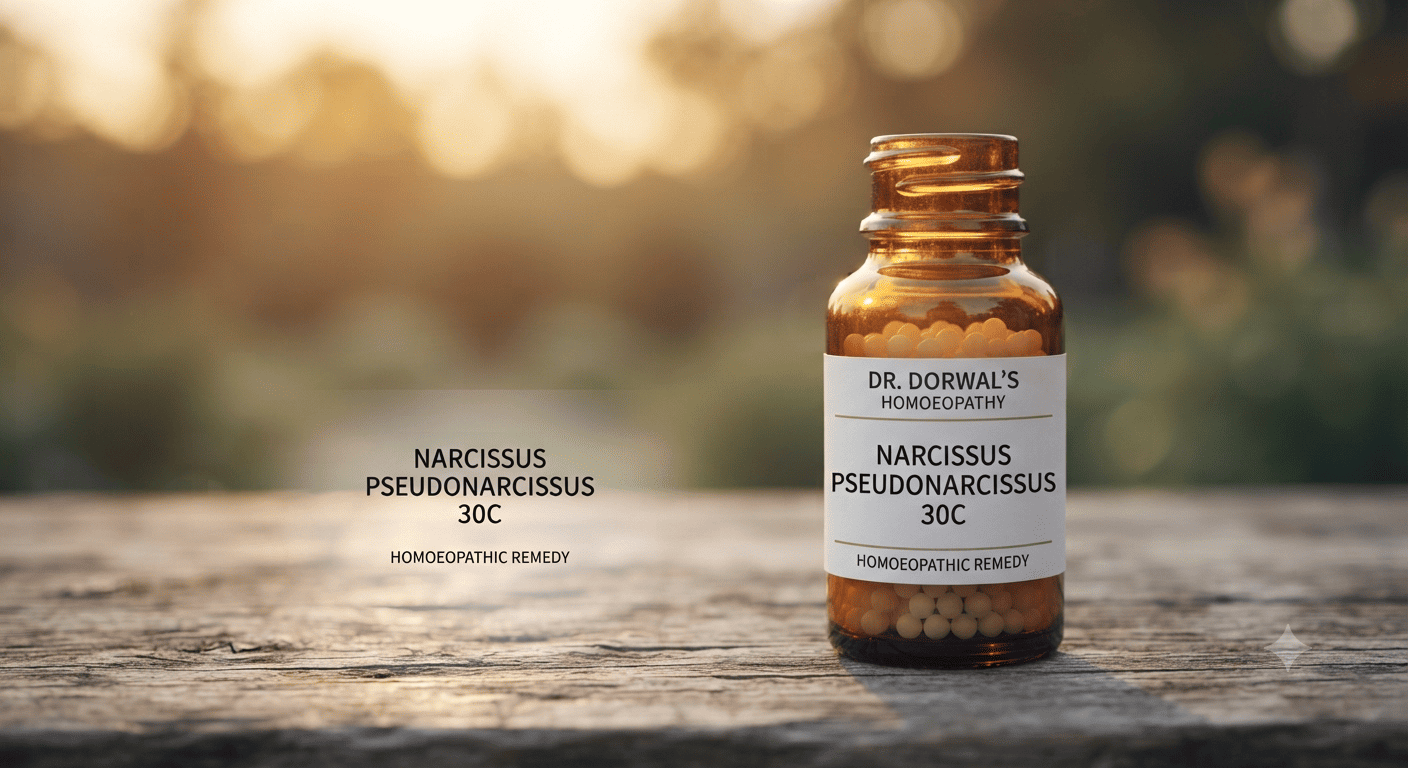
Narcissus Pseudonarcissus (Daffodil) is a specialized homoeopathic remedy recognized for its specific action on the respiratory system, as well as its profound influence on gastrointestinal function. Derived from the daffodil bulb, this remedy is uniquely characterized by the variation in its alkaloid action depending on the bulb’s flowering stage, offering a nuanced approach to managing spasmodic and inflammatory symptoms.
Key Benefits & Uses
Narcissus Pseudonarcissus is indicated for states characterized by sudden gastrointestinal distress and persistent respiratory irritation:
- Respiratory & Bronchial Support: This remedy is highly regarded for its efficacy in treating coughs and bronchitis. It is particularly useful for persistent, continuous coughing, coryza, and frontal headaches. Additionally, it is indicated for the convulsive stage of whooping-cough.
- Gastrointestinal Response: It acts as a primary intervention for symptoms involving nausea, which is typically followed by episodes of violent vomiting and diarrhoea.
- Dermatological Relief: Narcissus addresses skin conditions presenting as erythema of a papular, vesicular, and pustular type, particularly when these symptoms show marked aggravation during wet weather.
Administration & Therapeutic Modalities
- Potency Selection: Clinical practice commonaly suggests the use of the 30C & Higher potencies for addressing these conditions.
- Alkaloid Nuance: The physiological action is notably dependent on the harvesting stage of the bulb. Extraction from flowering bulbs tends to cause dryness of the mouth, check cutaneous secretions, dilate pupils, quicken the pulse, and weaken heart contractions. Conversely, extraction from bulbs after flowering increases salivation and cutaneous secretions, contracts the pupil, and may cause slight nausea and pulse relaxation.
- Absorption: To ensure maximum sublingual absorption, avoid eating or drinking for 20 minutes before or after administration.
Dr. Dorwal’s Perspective
In my clinical practice, Narcissus Pseudonarcissus is a targeted remedy I employ when a patient presents with a specific, intense respiratory signature—particularly the convulsive paroxysms of whooping-cough or persistent bronchitis accompanied by frontal headaches. I also look to this remedy when the clinical picture is complicated by sudden, violent gastrointestinal upset, specifically nausea followed by vomiting and diarrhoea. By understanding the alkaloid properties of the plant, I can better assess the patient’s reaction to symptoms like excessive salivation or pupil changes, allowing me to provide a more precise, restorative intervention. It is a vital tool in managing seasonal respiratory sensitivities that flare up in damp, challenging weather.
Disclaimer: This content is for informational purposes only. Homoeopathic medicines should be taken under the guidance of a qualified homoeopathic physician. Do not self-medicate for chronic or serious medical conditions, and always seek professional advice for any health concerns.
Frequently Asked Questions (FAQs)
It is used for bronchitis, persistent coughs, coryza, and specifically for the convulsive stage of whooping-cough.
Yes, it is indicated for symptoms of nausea that are quickly followed by violent vomiting and diarrhoea.
It is indicated for erythema of a papular, vesicular, and pustular type, especially when symptoms are worse in wet weather.
The physiological effects differ significantly depending on whether the alkaloid is extracted from the flowering bulb or the bulb after flowering, influencing symptoms like pupil dilation/contraction and secretion levels.
