
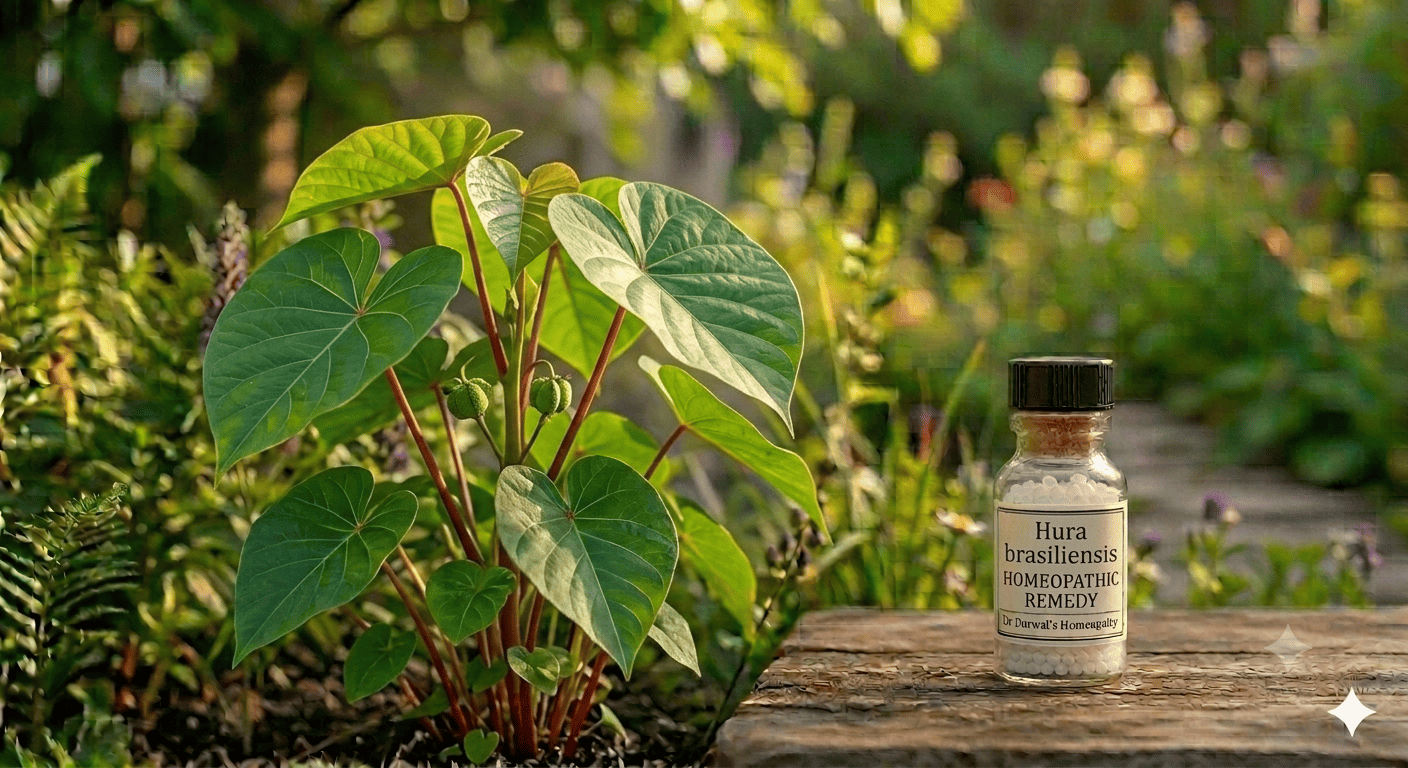
Hura Brasiliensis, also known as Assacu, is a homoeopathic remedy recognized for its specific influence on the dermal layers and musculoskeletal framework. Historically associated with the treatment of severe dermatological conditions, this remedy is noted for its distinctive sensations of tension and localized pain.
Clinical Indications & Benefits
In clinical practice, Hura Brasiliensis is indicated for the following symptomatic patterns:
- Dermatological Affections:
- Leprosy & Skin Induration: Primarily indicated in cases of leprosy, especially when the skin presents a “hide-bound” or overly tight, inelastic sensation.
- Vesicular Eruptions: Clinically applied for tense vesicles and a sensation of the forehead skin feeling drawn tight.
- Localized Itching & Eruptions: Utilized for itching and pimples occurring specifically over prominent bony projections, such as the malar bones.
- Musculoskeletal & Neuralgic Pain:
- Localized Sensations: Indicated for a characteristic sensation of a “splinter” under the thumb-nails and throbbing sensations in the finger tips.
- Stiffness & Back Pain: Used in conditions involving a stiff neck and associated pain in the back.
Administration & Therapeutic Modalities
- Potency & Dosage: Practitioners typically employ the 30C potency for this remedy, adjusting based on the clinical presentation.
- Clinical Observation: The hallmark of Hura Brasiliensis is the intense sensation of skin tension (“hide-bound”) and the presence of localized sensations like the splinter-like pain under the nails. Monitoring for these specific dermatological and neuralgic markers is essential for its therapeutic application.
Dr. Dorwal’s Perspective
In my clinical practice, I have not personally utilized Hura Brasiliensis; however, existing homoeopathic literature suggests it serves as a highly specialized agent for deep-seated skin pathologies. Literature indicates that when a patient presents with the characteristic “hide-bound” sensation—where the skin feels completely inelastic—this remedy may be considered. Its specific affinity for bony prominences and the unusual splinter-like sensations under the nails provides a unique diagnostic profile that distinguishes it from other dermatological remedies. By targeting these intense, localized sensations, literature suggests that Hura Brasiliensis offers a pathway for addressing systemic skin disorders that present with significant tension and rigidity.
Disclaimer: This content is for informational purposes only. Homoeopathic medicines should be taken under the guidance of a qualified homeopathic physician. Do not self-medicate for chronic or serious medical conditions, and always seek professional advice for any health concerns.
Frequently Asked Questions (FAQs)
It is historically utilized in the treatment of leprosy and other severe skin conditions characterized by a “hide-bound” or tightened sensation.
The hallmark symptoms include skin that feels drawn tight (especially on the forehead), tense vesicles, and itching or pimples over bony prominences like the malar bones.
Yes, it is indicated for cases involving a stiff neck, back pain, and distinct, localized sensations like throbbing in the finger tips or a “splinter” under the thumb-nails.
According to homoeopathic literature, the sixth potency is commonly employed. A qualified physician should assess your symptoms to determine the appropriate course of treatment.
