
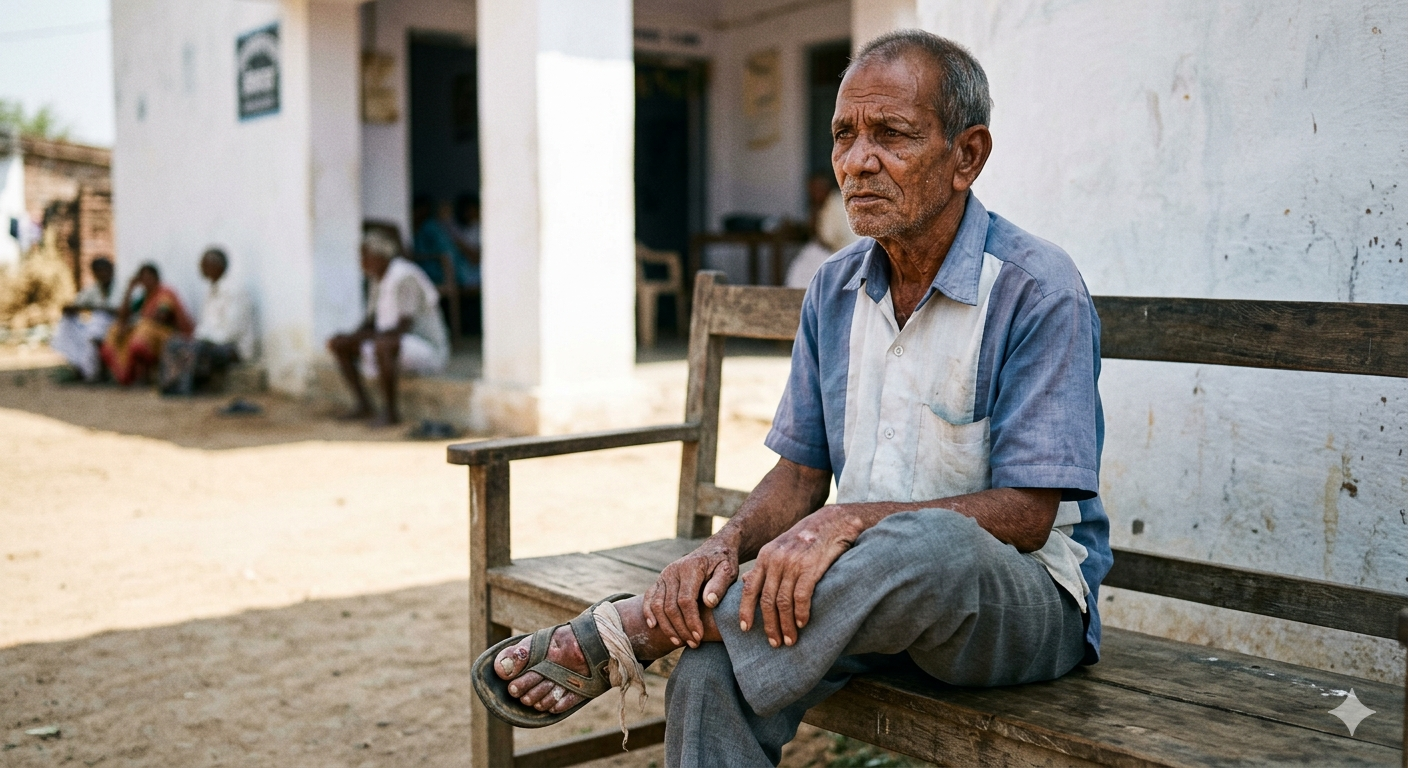
Leprosy, historically known as Hansen’s disease, is a chronic, infectious, yet non-fatal condition primarily caused by the bacterium Mycobacterium leprae. Despite its ancient origins—documented in Indian texts as early as the 6th century BCE—it remains a significant public health concern in specific tropical and subtropical regions. The disease predominantly targets the cooler areas of the human body, specifically the skin, peripheral nerves, mucosal surfaces of the upper respiratory tract, eyes, and, in certain presentations, the testes.
Cause and Transmission
The causative agent, Mycobacterium leprae, is a slow-growing bacillus. Due to the slow nature of the infection, the incubation period can range drastically from 2 to 20 years. Transmission occurs through:
- Respiratory Droplets: The most common route involves prolonged, close contact with the nasal secretions or droplets of an untreated infected individual.
- Direct Contact: Potential transmission via broken skin or contact with contaminated mucous membranes.
- Vertical Transmission: Evidence suggests potential transmission from an infected mother to the fetus or via breast milk, though these are less common pathways.
Clinical Manifestations
The clinical spectrum of leprosy is wide, reflecting the host’s immune response to the pathogen. Key symptoms include:
- Dermatological changes: Hypopigmented or reddish skin lesions, often presenting as nodules or rounded, compact masses known as “globi,” which may appear arranged in parallel, resembling cigarettes in a pack.
- Neurological involvement: Distinct loss of sensation in affected skin patches due to peripheral nerve damage, often accompanied by generalized muscle weakness.
- Systemic signs: Painless ulcers on the soles of the feet, eye irritation (redness, burning), and the potential suspension or suppression of immune responses.
Classification of the Disease
Leprosy is classified based on the immune status of the host and the bacterial load:
- Lepromatous Leprosy: Characterized by multiple, symmetrical, hypo-pigmented, or nodular lesions with a suppressed immune response.
- Tuberculoid Leprosy: Features single or few asymmetrical, hypo-pigmented lesions with a robust cell-mediated immune response.
- Borderline Leprosy: A transitional state categorized into Borderline Tuberculoid (epitheloid cells and lymphocytes), Mid-borderline (sheets of epitheloid cells), and Borderline Lepromatous (histiocyte predominance with abundant bacilli).
- Indeterminate Leprosy: An early form characterized by non-specific, localized lymphocytic infiltration around skin adnexa (follicles and sweat glands).
- Pure Neural Leprosy: Primarily involves nerve trunks without visible initial skin lesions.
- Histoid Leprosy: A rare, multibacillary form featuring whorls and fascicles of spindle-shaped cells.
- Reactional Leprosy: Occurs during acute inflammatory episodes, manifesting as a sudden spread of granulomas and a surge in bacterial presence.
Diagnostic Approaches
Diagnosis relies on a multi-faceted approach that include:
- Biopsies: Skin and nerve biopsies provide histopathological evidence of the bacilli or characteristic nerve inflammation.
- Clinical Assessment: Systematic evaluation of sensory loss and lesion morphology.
- Lepromin Test: While not a definitive diagnostic tool for active infection, it is utilized to classify the leprosy type based on the patient’s existing immune response.
Complications
If left untreated, leprosy can lead to profound complications, including permanent nerve damage, sensory loss, muscle atrophy, and progressive physical disfigurement, often resulting in secondary disabilities.
Conventional Medical Treatment
Modern medical science has revolutionized the management of leprosy, transforming it from a dreaded, lifelong affliction into a curable disease.
- Multidrug Therapy (MDT): The gold standard of conventional treatment is MDT, provided free of charge by the WHO globally. Because the Mycobacterium leprae bacterium can develop resistance, MDT combines two or three powerful antibiotics to ensure the bacteria are eradicated and resistance is prevented.
- Common Antibiotics used in MDT: Rifampicin, Dapsone, and Clofazimine.
- Treatment Duration: The duration of treatment depends on the clinical classification:
- Paucibacillary (PB) Leprosy: Usually treated for 6 months.
- Multibacillary (MB) Leprosy: Usually treated for 12 months.
- Management of Reactions: During or after treatment, some patients experience immune-mediated inflammatory reactions (Type 1 or Type 2 reactions). Conventional doctors manage these with anti-inflammatory medications like corticosteroids (e.g., Prednisolone) to prevent nerve damage.
- Surgery and Physiotherapy: For patients who have already developed nerve damage or physical disfigurement, surgical interventions (reconstructive surgery) and dedicated physiotherapy are utilized to restore function and prevent further disability.
Perspectives of Homoeopathic Treatment
Homoeopathy approaches leprosy as a constitutional and miasmatic condition. Practitioners emphasize that the disease reflects a deeper systemic imbalance. The goal of homoeopathic intervention is to stimulate the “vital force,” enabling the body to resist the pathogen and restore systemic health. Commonly used homoeopathy medicines used to support treatment of leprosy include:
- Sulphur: Considered the “king of anti-psoric” remedies; highly regarded for chronic, burning, and itching skin eruptions.
- Graphites: Indicated for stubborn skin conditions with a tendency toward malignancy, oozing, and deep cracking.
- Petroleum: Used when the skin exhibits deep, painful fissures, particularly on the palms and soles, often worsening in winter.
- Rhus Toxicodendron: Indicated for inflammatory, vesicular (fluid-filled) eruptions accompanied by intense burning and stinging pain.
- Cicuta Virosa: Prescribed when the patient presents with severe anxiety about the future, often accompanied by spasmodic or epileptic-like movements.
- Aloe Socotrina: Used for patients suffering from deep self-loathing or anger regarding their condition, often with associated abdominal/lumbar distress.
- Blatta Orientalis: Indicated for patients suffering from chronic respiratory distress or lung infections alongside skin pathology.
- Other Medicines: Arsenicum Album, Hydrastis Canadensis, Secale Cornutum and many more medicines may also use to support treatment of leprosy on specific symptom profile.
Note: Homoeopathy is often viewed by its practitioners as a supportive approach to improve the patient’s overall constitution, mental state, and recovery process.
Conclusion
Leprosy remains a challenge that requires both medical diligence and societal compassion. While it is a chronic, non-fatal infection, its impact extends far beyond physical symptoms, often leading to deep-seated psychological distress and social stigmatization.
Effective management necessitates early diagnosis and strict adherence to treatment protocols—specifically Multidrug Therapy (MDT)—to prevent permanent nerve damage and disfigurement. While conventional medicine provides the essential tools to kill the bacteria and cure the disease, integrating comprehensive care—which may include physiotherapy, psychological support, and, for some, complementary approaches like homoeopathy—can significantly enhance the patient’s quality of life. By combining rigorous clinical diagnostics, proactive preventative measures, and patient-centered care, we can successfully alleviate the burden of this disease and ensure that those affected lead healthy, dignified, and integrated lives.
Disclaimer: Leprosy is a serious medical condition that requires professional clinical management. Always consult with a qualified dermatologist or infectious disease specialist regarding your treatment plan. Standard Multidrug Therapy (MDT) is the internationally recognized, evidence-based cure for leprosy and should be the foundation of any treatment strategy.
