
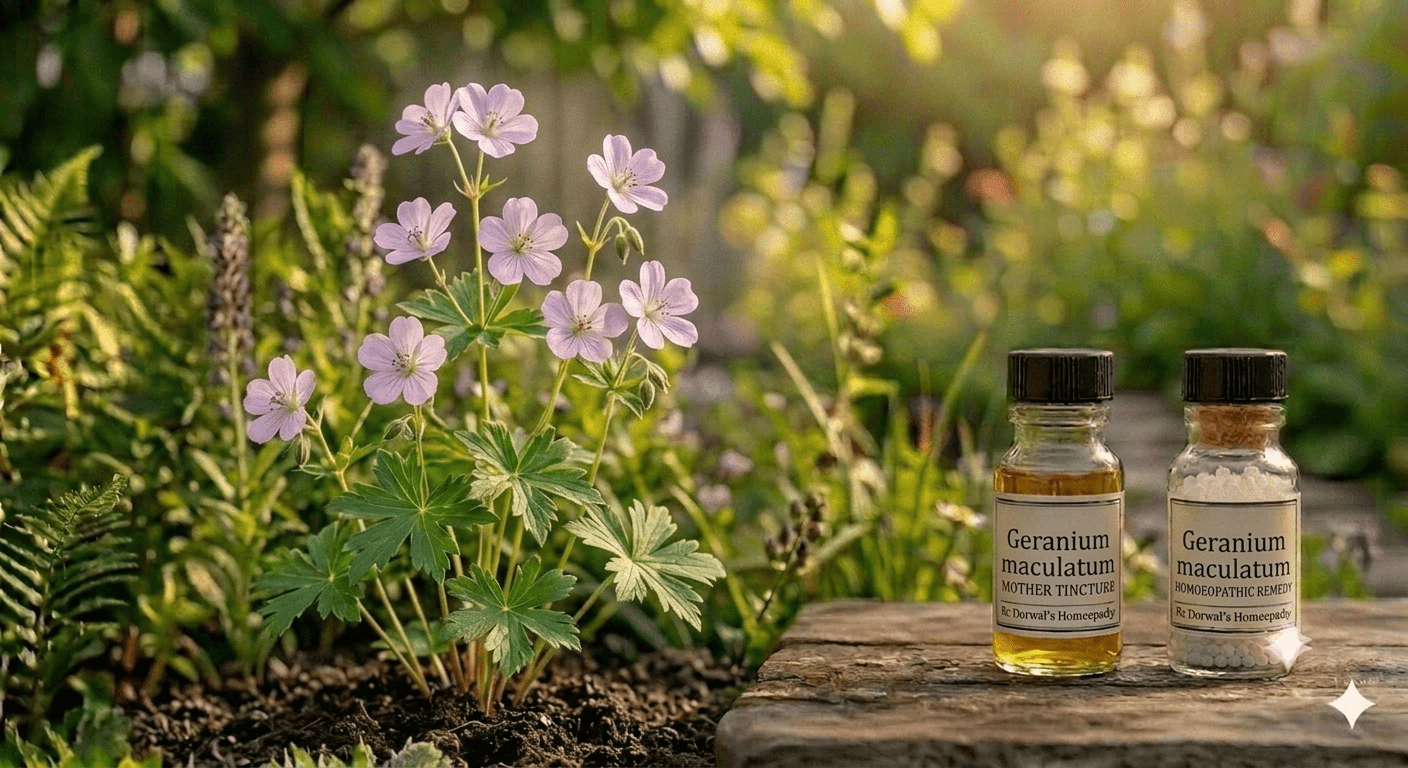
Geranium Maculatum, commonly known as Cranesbill, is a highly valued remedy in homoeopathic medicine, renowned for its exceptional astringent properties. It is primarily indicated in conditions characterized by passive hemorrhages and mucous membrane discharges. In clinical practice, it is considered a potent restorative agent for systems suffering from relaxed or atonic conditions.
Key Clinical Indications and Benefits
Geranium Maculatum is specifically sought after for its ability to tighten tissues and control bleeding. It is clinically indicated for:
- Hemorrhagic Control: Primarily used to treat various forms of passive hemorrhaging, including bleeding from the nose, stomach, lungs, and uterus. It acts as an effective hemostatic agent.
- Gastrointestinal Support: Indicated for chronic diarrhoea and dysentery where there is a constant sensation of mucus in the rectum. It is particularly effective when the bowel movements are associated with straining and weakness.
- Mucous Membrane Tonic: Highly effective in treating gastric ulcers and catarrhal conditions of the stomach. It helps soothe the irritated lining and promotes the healing of damaged membranes.
- Post-Hemorrhagic Recovery: Beyond its acute use, it is utilized during the recovery phase following significant blood loss, helping to revitalize the patient and address the physical debility caused by anaemia or exhaustion.
Administration & Therapeutic Modalities
- Potency & Dosage: Most commonly prescribed in the Mother Tincture (Q) for its immediate astringent effect on bleeding, or in lower potencies (Such as 30C) for managing chronic mucous discharge and gastric ulceration, based on the severity of the symptoms.
- Observation: As an astringent, it requires careful observation regarding the nature of the discharge. If bleeding persists or shows no sign of reduction despite administration, a professional evaluation is necessary to rule out underlying serious pathology.
Dr. Dorwal’s Perspective
In my clinical practice, Geranium Maculatum is my preferred choice when I encounter cases of “passive, persistent discharge” or bleeding that lacks the acute inflammatory red-hot nature of other remedies. I often explain to my patients that this remedy works by “toning” the relaxed blood vessels and mucosal tissues. When a patient presents with chronic gastric irritability or non-traumatic hemorrhages, Geranium Maculatum serves as a reliable restorative agent, helping the body regain its structural integrity and metabolic balance.
Disclaimer: This content is for informational purposes only. Homoeopathic medicines should be taken under the guidance of a qualified homoeopathic physician. Do not self-medicate for chronic or serious medical conditions, and always seek professional advice for any health concerns.
Frequently Asked Questions (FAQs)
It is primarily used as a powerful astringent to control passive hemorrhages, treat chronic diarrhoea, and soothe irritated mucous membranes throughout the body.
Yes, it is often indicated in cases of gastric ulceration due to its ability to soothe mucous membranes and promote healing of the gastric lining.
It is generally safe when used in appropriate homoeopathic dilutions. However, it should only be used under the guidance of a physician to ensure it matches the patient’s specific condition.
In cases of passive bleeding or acute gastric distress, patients often report a noticeable reduction in symptoms relatively quickly, though the duration of treatment depends on the underlying chronicity.
