Quick Overview: Epiphegus Virginiana is a homoeopathic medicine commonly used for Migraines, Nervous Sick Headaches, Mental Burnout, and fatigue from physical or mental overwork.
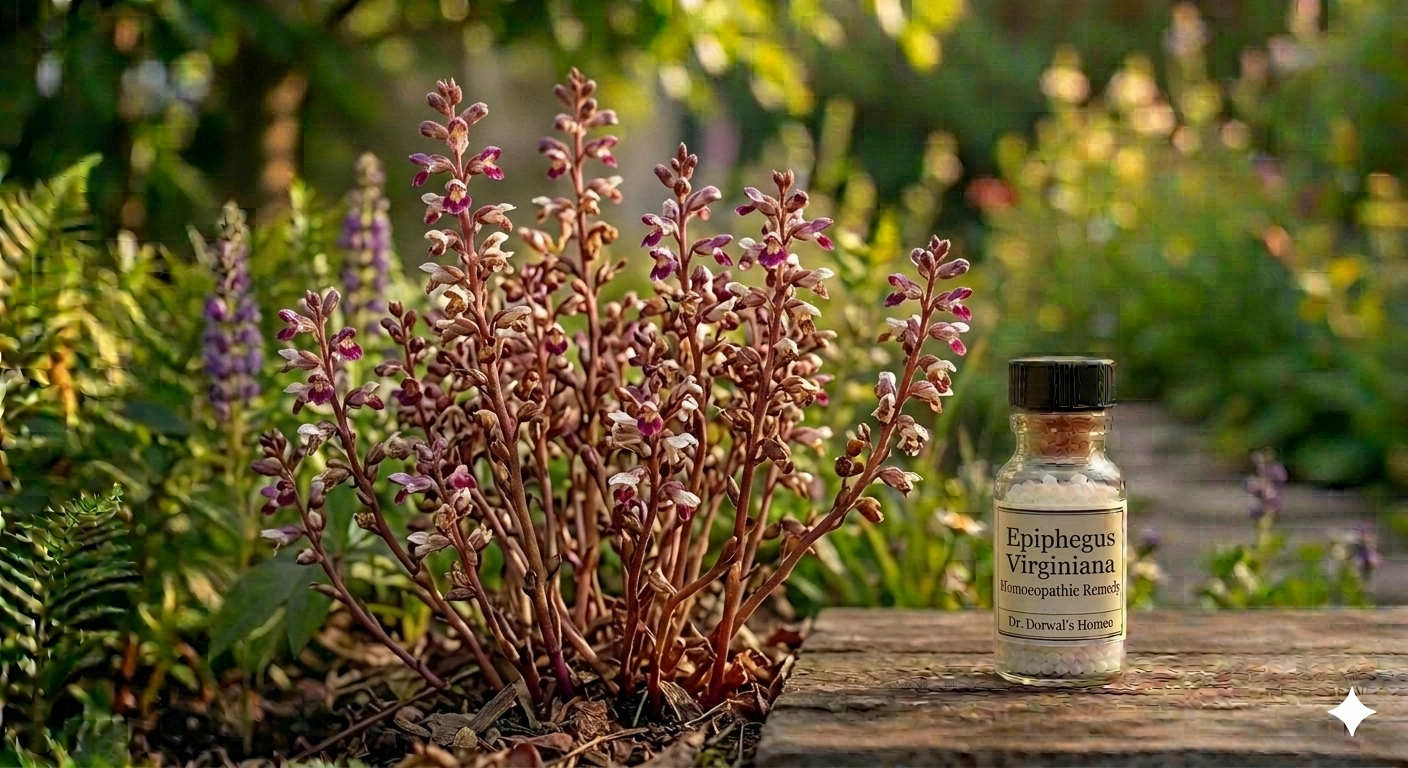
Epiphegus Virginiana is derived from a parasitic plant known as Beech-drop. It doesn’t get anywhere near the recognition of remedies like Belladonna or Nux Vomica, but among homoeopaths it has carved out a fairly specific niche: Nervous, “sick” headaches that show up after a period of overwork, mental strain, or physical exhaustion.
Clinical Indications & Benefits
In clinical practice, Epiphegus Virginiana is prescribed for various specific situations that involve nervous exhaustion and tension:
- Nervous Sick Headaches: It is primarily used for headaches that follow a stretch of heavy physical or mental effort, often once tiredness or stress has caught up with the person.
- Symptomatic Characteristics: headache is commonly described as a pressing or throbbing pain, usually felt in the temples, and is characteristically aggravated by talking, exertion, or mental strain.
- Associated Gastric Disturbances: Headache is often accompanied by associated gastric symptoms like nausea, dizziness, or a general sense of unwellness, which is consistent with the presentation known as a “sick headache.”
- Nervous Exhaustion: It is suitable for people who feel “worn out” or fatigued, with the headache acting as a physical sign of this exhausted condition.
Administration & Therapeutic Modalities
- Potency & Dosage: Practitioners typically employ potencies (such as 30C or 200C) to address the acute nature of the headache, though higher potencies may be considered based on the constitutional profile of the patient.
- Clinical Observation: Clear feature of this medicine is the clear link between the start of the the physical activity that occurred before it. Physicians also monitor the patient for specific factors that may worsen their condition. Aggravating factors includes talking, moving, or engaging in mental activities, in order to ensure the prescription is accurate.
How It Compares to Other Common Headache Remedies
Homoeopathy has several well-known remedies for headaches, and each is chosen based on a fairly distinct symptom picture. Here’s a quick side-by-side comparison to put Epiphegus Virginiana in context:
| Remedy | Key Source | Type of Headache | Typical Triggers / Aggravation | Notable Modality |
| Epiphegus Virginiana | Beech-drop (parasitic plant) | Nervous, pressing/throbbing pain in the temples | Talking, exertion, mental strain | Worse from talking and physical or mental exertion |
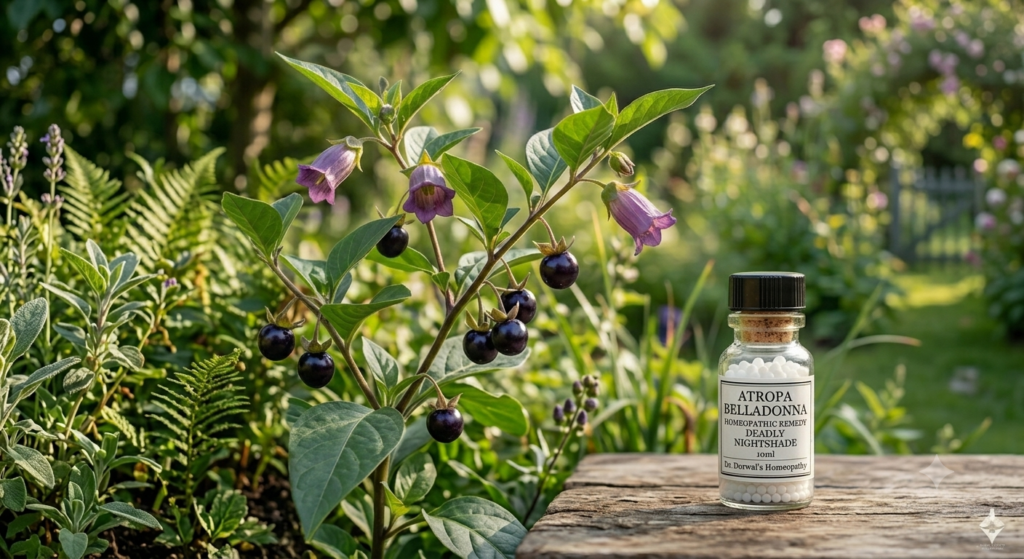
| Belladonna | Deadly nightshade | Sudden, violent, throbbing headache with a flushed face | Light, noise, jarring motion, sun exposure | Worse from light, noise and motion; better from firm pressure |
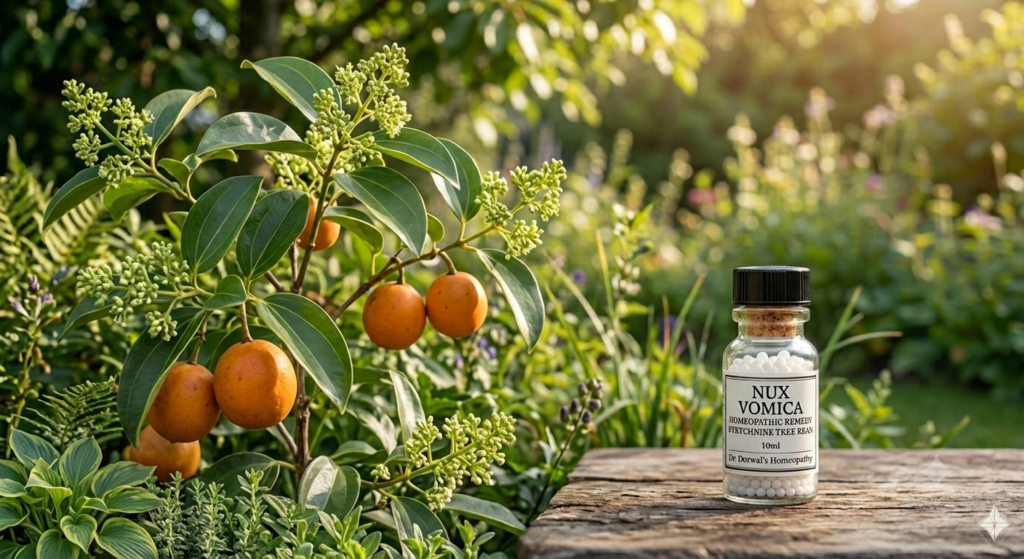
| Nux Vomica | Poison nut | Headache linked to overwork, rich food or stimulant overuse | Mental exertion, alcohol, overeating, lack of sleep | Worse in the morning and after stimulants; better from rest |
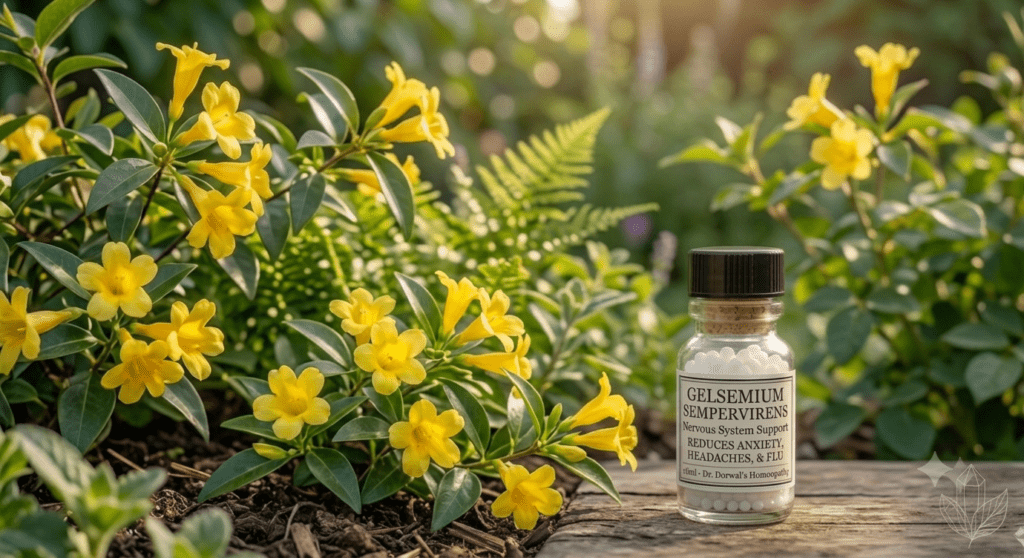
| Gelsemium | Yellow jasmine | Dull, band-like ache at the back of the head, with heaviness of the eyelids | Anticipation, emotional stress, heat | Worse from stress and motion; better after urination or rest |
The point of a table like this isn’t to suggest these remedies are interchangeable — it’s really the opposite. In classical homoeopathy, remedy selection comes down to matching the specific pattern of a person’s symptoms, not just the location of the pain.
Dr. Dorwal’s Perspective
In clinical practice, Epiphegus Virginiana is a genuinely useful tool for what’s classically described as a “nervous sick headache. I used it in high working individuals whose bodies and minds tend to break down following extended periods of stress or physical exhaustion. I identify the patient’s specific triggers like, simple act of talking of patient and mental exhaustion that he/she shows on face. Once that trigger is identified by detailed case taking, Epiphegus can helps in the throbbing temple pain and support the nervous system back toward equilibrium after these episodes of headaches.
Disclaimer: This content is for informational purposes only. Homoeopathic medicines should be taken under the guidance of a qualified homeopathic physician. Do not self-medicate for chronic or serious medical conditions, and always seek professional advice for any health concerns.
Frequently Asked Questions (FAQs)
It is mainly used to treat headaches that affect the nervous system, particularly those that occur due to physical activity or stress.
The headache is typically aggravated by talking, physical movement, mental strain, or general fatigue.
It is commonly regarded for headaches that involve a throbbing sensation centered around the temples and are accompanied by nausea, which may resemble migraine symptoms, but it requires professional assessment.
Medicine targets the nerve fatigue that causes the headache, supporting the body’s recovery from the tiredness caused by stress, which leads to pain.
“Epigea” is a common misspelling of Epiphegus (Epiphegus Virginiana). It’s used the same way — for nervous, sick headaches with pressing or throbbing pain in the temples that worsen with talking or exertion.
Epiphegus 30C potency is a commonly used to provide strength for the acute nervous headache picture described above — throbbing temple pain following exertion, often with nausea or dizziness. As with any homoeopathic remedy, potency and dosage should be confirmed with a qualified homoeopathic physician based on the individual case.
Beyond headaches, it’s primarily associated with nervous exhaustion and the physical symptoms that tend to accompany it, most notably pressing or throbbing head pain brought on by overwork or mental strain.
Lower potencies such as 6C are sometimes used for milder or more frequent symptom flare-ups, though 30C and 200C are more commonly referenced for the acute nervous sick headache. The right potency depends on the severity of symptoms and should be decided in consultation with a practitioner.