
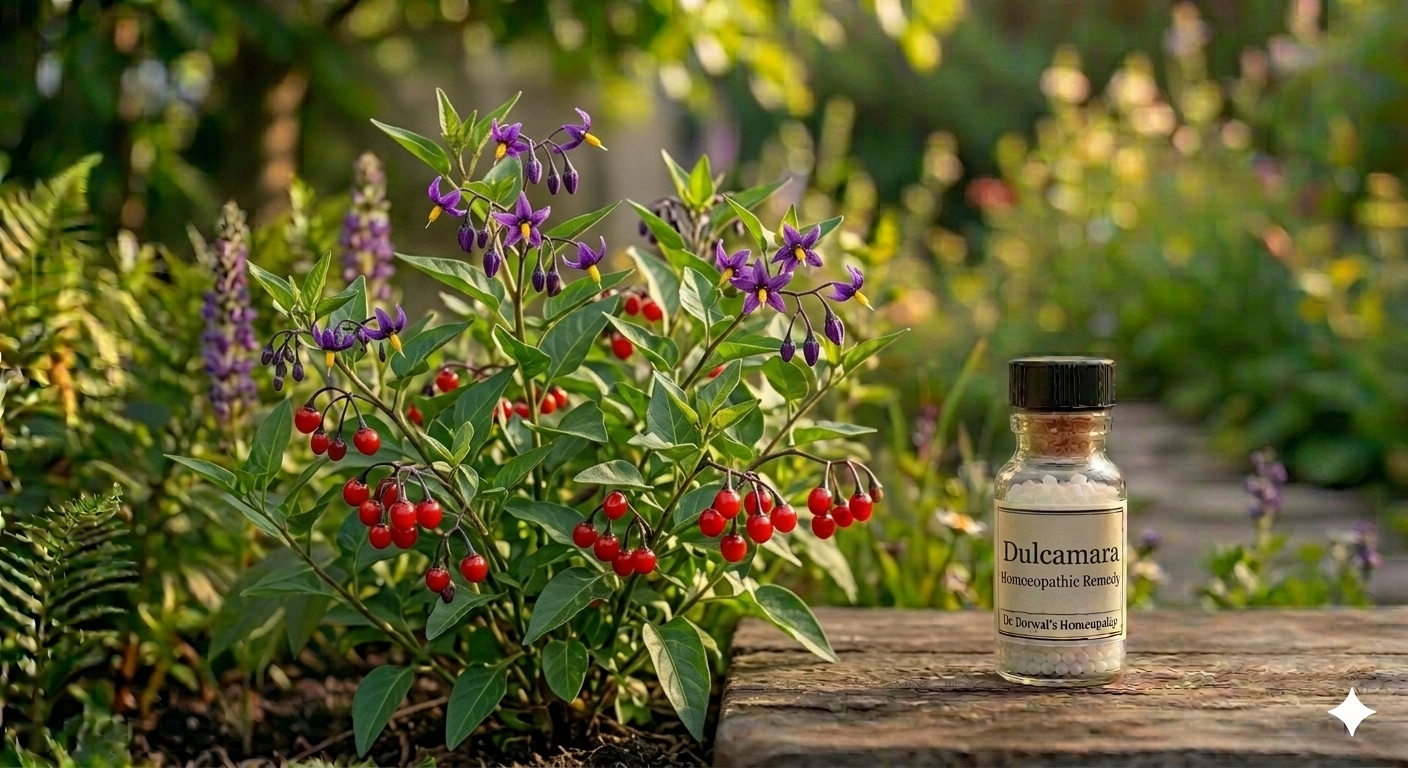
Dulcamara, derived from Solanum dulcamara, acts as a vital homoeopathic agent with a deep-seated influence on the body’s mucous membranes, dermal layers, and musculoskeletal framework. Its clinical application is primarily focused on alleviating symptoms that are induced or intensified by humid-cold conditions or abrupt shifts in ambient temperature.
Clinical Indications & Benefits
In clinical practice, Dulcamara is utilized for several specific scenarios:
- Acute Catarrhal Rhinitis: Highly indicated for colds and nasal congestion that appear immediately after exposure to damp, chilly air, often characterized by thick, yellow-white mucus.
- Allergic Bronchitis & Cough: Frequently indicated for bronchial irritation marked by excessive mucus production, particularly in cases where symptoms are exacerbated by seasonal changes or high-humidity climates.
- Rheumatoid Arthritis & Myalgia: Indicated for joint pain and muscular soreness, where the diagnosis involves stiffness and inflammation that worsen significantly in rainy weather or cold, humid climates.
- Urticaria & Eczema: Clinically useful for skin eruptions or hives that manifest during damp weather, specifically when the skin condition is associated with an underlying susceptibility to “damp-cold” triggers.
- Diarrhoea (Seasonal): Often prescribed for acute gastrointestinal disturbances or abdominal cramping that occurs specifically upon the sudden onset of cold, damp weather.
Administration & Therapeutic Modalities
- Potency & Dosage: Practitioners typically employ various potencies, such as 30C or 200C, based on the acuteness and nature of the symptoms, tailored to the individual patient’s response.
- Clinical Observation: The hallmark of Dulcamara is its specific relationship with “damp-cold” environments. Monitoring the patient for the characteristic modalities—worsening in cold, damp weather and improvement through movement—is crucial in determining the appropriate therapeutic intervention.
Dr. Dorwal’s Perspective
In my clinical practice, Dulcamara is more than just a remedy for “colds”—it is a foundational tool for patients whose physiological regulation is overly sensitive to environmental stress. I have observed that many patients suffering from chronic musculoskeletal stiffness or recurrent catarrh are essentially struggling with their body’s inability to adapt to humidity and cold drafts. By utilizing Dulcamara, I focus on strengthening the patient’s internal response to these weather-related triggers. It has become a cornerstone in my protocol for “weather-sensitive” patients, helping to stabilize their mucosal and joint health even when the external climate is hostile.
Disclaimer: This content is for informational purposes only. Homoeopathic medicines should be taken under the guidance of a qualified homeopathic physician. Do not self-medicate for chronic or serious medical conditions, and always seek professional advice for any health concerns.
Frequently Asked Questions (FAQs)
It is primarily used for ailments triggered by exposure to cold, damp weather, including respiratory issues, joint pain, and skin eruptions.
Yes, it is highly regarded in homoeopathy for relieving rheumatic pains and stiffness that worsen specifically in cold, damp conditions.
The hallmark is the aggravation of symptoms due to cold, damp weather and sudden changes in temperature, with improvement noted upon physical movement.
No. It is specifically suited for coughs and catarrh brought on by damp air and cold winds. A qualified physician should assess your specific symptoms to determine if Dulcamara is the appropriate match.
