
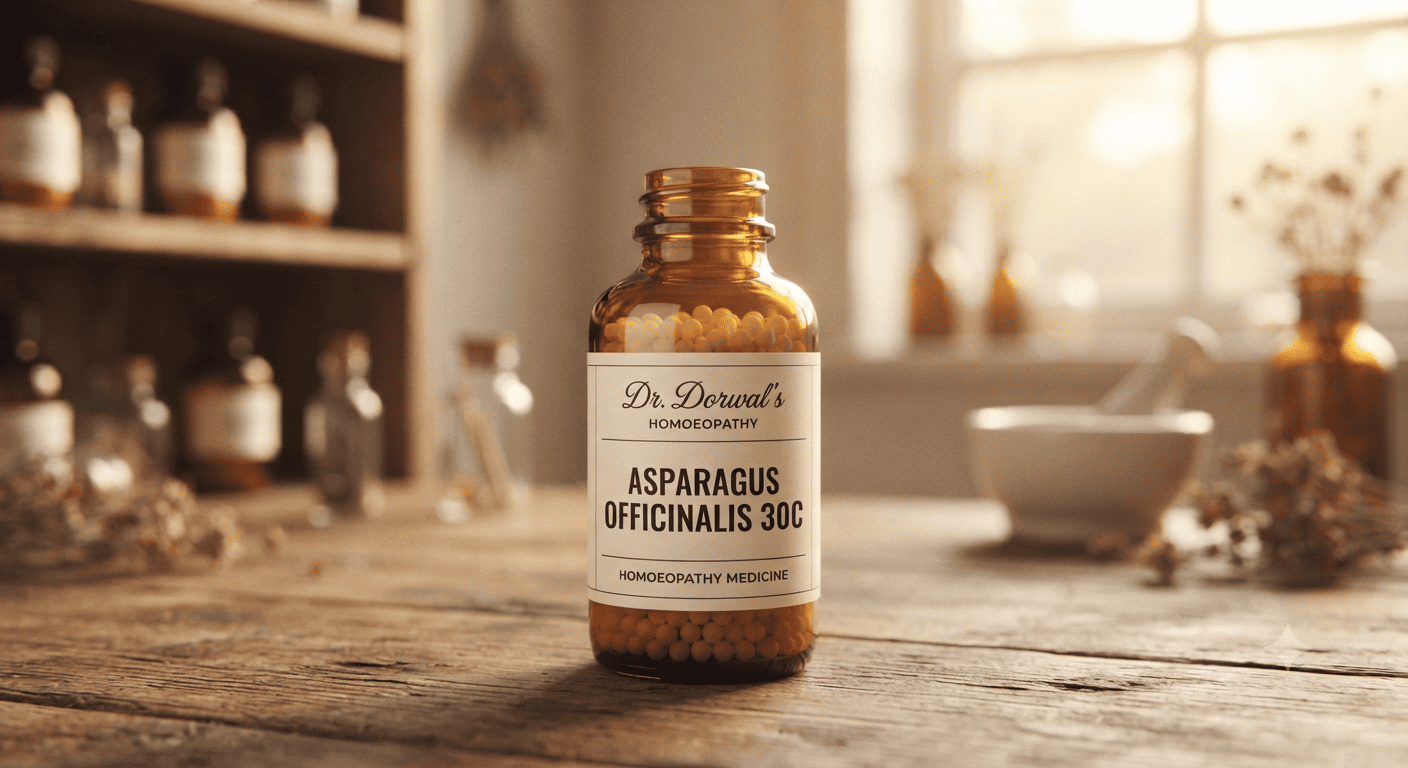
Asparagus Officinalis is a remedy with a pronounced and direct affinity for urinary and cardiovascular systems. While its clinical picture is well-defined in classical materia medica, it is important to note that it does not form a part of my active clinical protocols. However, for professional understanding and academic review, we examine its unique physiological impact.
Key Clinical Indications & Uses
Therapeutic profile of Asparagus Officinalis is dominated by its immediate action on kidneys, heart, and musculoskeletal connective tissues:
- Urinary & Renal Activity: It is historically recognized for its ability to increase and alter urinary secretion. It is indicated in cases of cystitis characterized by pus, mucus, and tenesmus, as well as in the management of lithiasis (stone formation). Uurine itself often presents with a distinct, peculiar odor and fine, stitching pains at the urethral orifice.
- Cardiovascular & Respiratory Depression: It is noted for causing cardiac weakness, manifesting as palpitations and an intermittent, feeble pulse. This cardiovascular strain often leads to a sense of chest oppression, hydrothorax, and difficulty in breathing.
- Rheumatic Affinities: A striking keynote is the presence of rheumatic pains that gravitate toward the left side, particularly affecting left shoulder, area under the clavicle, and acromion process of left scapula. These pains are often intricately linked with bladder disturbances.
- Head & Throat Catarrh: It is indicated in migraines accompanied by scotoma (visual field defects) and a persistent, rough sensation in throat, necessitating the clearing of copious, tenacious mucus.
Administration & Dosage
- Dose: 30C potency is traditionally cited in literature for managing these conditions.
Dr. Dorwal’s Perspective
In the study of homoeopathy, it is as vital to understand the remedies we choose not to prioritize as it is to master the polychrests. Asparagus Officinalis presents a highly specific, almost mechanical, action on kidneys and heart’s rhythm. Its ability to create a clinical “bridge” between bladder irritation and left-sided shoulder pain is a fascinating anatomical link that speaks to the remedy’s specific neurological pathways.
However, in my own practice, I find that other constitutional and organ-specific remedies offer more stable, reliable outcomes for the conditions Asparagus is traditionally used to treat. While I do not include it in my active protocols, I encourage students of our science to study it for its clear indication in cases where urinary symptoms are inextricably bound to cardiac depression. It remains a classic example of how a common garden plant can exert a profound, albeit specific, influence on human system.
Disclaimer: This content is for informational purposes only. Homoeopathic medicines should be taken under the guidance of a qualified homoeopathic physician. Do not self-medicate for chronic or serious medical conditions, and always seek professional advice for any health concerns.
Frequently Asked Questions (FAQs)
It is most famous for its immediate and marked action on urinary secretion, frequently causing irritation and changes to urine’s odor.
Rheumatic pain is notably left-sided, specifically affecting the left shoulder, region under clavicle, and scapula, often occurring alongside bladder distress.
It causes cardiac depression, characterized by palpitations, a weak/intermittent pulse, and a sensation of oppression in the chest.
It is indicated in cystitis when patient experiences tenesmus, burning, and the presence of pus or mucus in urine.
