
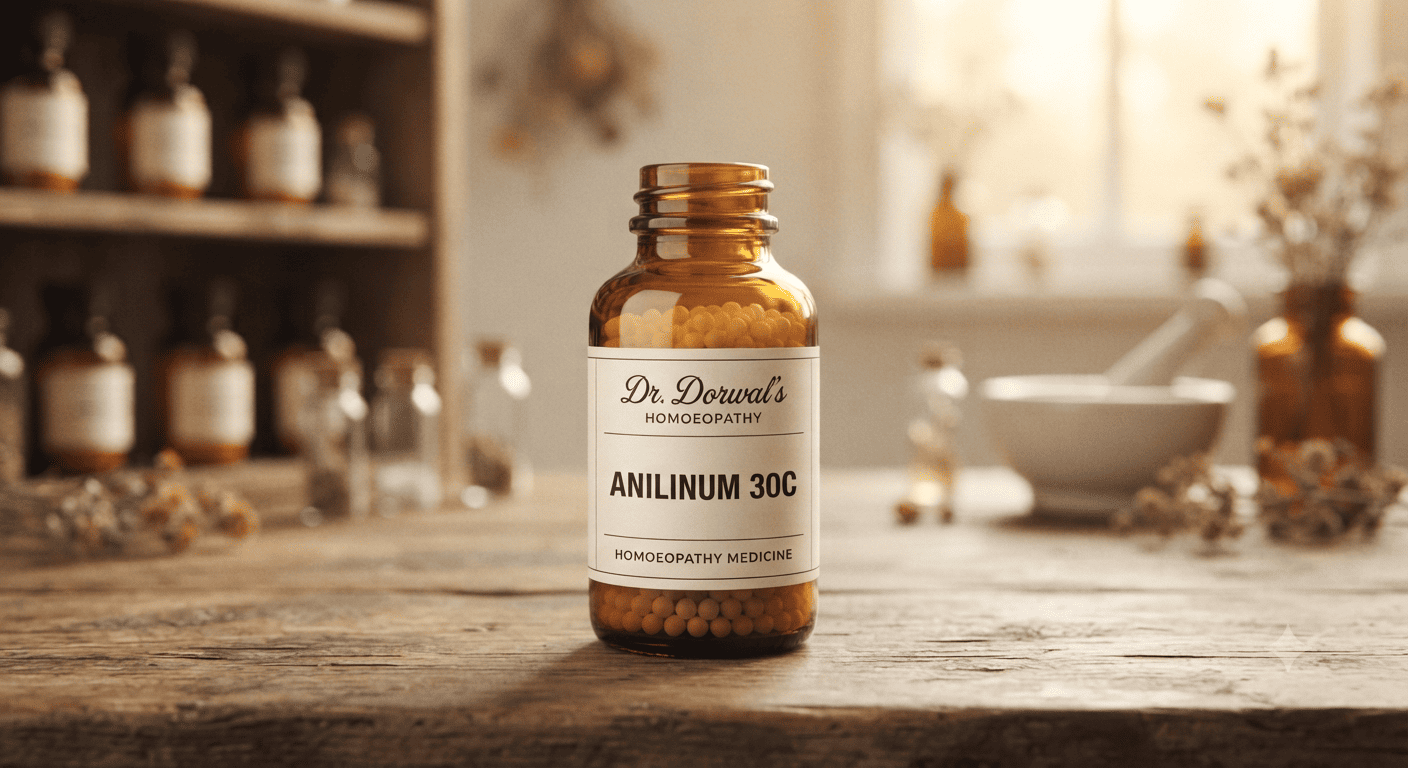
Anilinum (Amidobenzene) is a specialized, toxicological-derived remedy that acts with significant intensity upon blood, vascular system, and the urinary tract. While it is rarely first line of intervention, its profile offers a vital therapeutic pathway for cases manifesting profound constitutional dyscrasias and specific localized pathologies.
Key Clinical Indications & Uses
Therapeutic profile of Anilinum is defined by its ability to induce states of acute systemic stress and structural change:
- Vascular and Blood Dyscrasias: It is indicated in states of profound anaemia where the patient exhibits a distinctive discoloration of the skin—often a dull, cyanotic, or “leaden” hue. Characteristic physical signs include blue lips, a purple-hued face, and marked systemic weakness.
- Urinary Tract Pathologies: Anilinum shows a specific affinity for male urogenital system, including painful swelling of scrotum and penis. It is a potential consideration for the development of tumors within urinary passages.
- Systemic Congestion & Gastric Distress: Clinical picture is often complicated by significant gastric disturbances, anorexia, and generalized swelling of the skin, reflecting the body’s struggle to maintain homeostasis under the remedy’s influence.
- Cerebral Disturbance: It is indicated for marked giddiness and intense, pressing pain in the head, occurring in conjunction with systemic vascular compromise.
Administration & Dosage
- Dose: Given the potent nature of this remedy, it is typically employed in dilutions (Such as 30C) to ensure clinical safety and efficacy, guided by the individual’s reaction.
Dr. Dorwal’s Perspective
In my clinical practice, Anilinum remains a remedy that I have yet to incorporate into my active, daily protocols. However, in study of our Materia Medica, it serves as a powerful reminder of how modern industrial agents can leave a “trace” in the human constitution. The presentation of blue-tinted lips and a purple-hued face is a diagnostic pointer that a homoeopath must always keep in their mental repertoire, particularly when dealing with rare, obscure cases of persistent anemia or unexplained swelling.
While it is an agent derived from the dark world of coal tar, our homoeopathic preparation seeks to harness its potential to reverse the very conditions it can induce in its toxic form. For the practitioner who sees cases of stubborn, deep-seated anaemia that do not respond to the standard iron-based or constitutional supports, Anilinum stands as a specialized option. It is a testament to fact that our therapeutic reach must extend to the edges of the Materia Medica to assist those patients who exist in the “shadow” of rare or unusual pathological states.
Disclaimer: This content is for informational purposes only. Homoeopathic medicines should be taken under the guidance of a qualified homoeopathic physician. Do not self-medicate for chronic or serious medical conditions, and always seek professional advice for any health concerns.
Frequently Asked Questions (FAQs)
Profound anaemia, cyanosis (blue lips/purple face), gastric disturbance, and swelling of the male genital organs are the primary indicators for Anilinum
It is associated with painful swelling of the penis and scrotum and the development of tumors in the urinary passages.
It induces a state of deep systemic toxicity, characterized by anorexia, skin swelling, and general weakness.
