
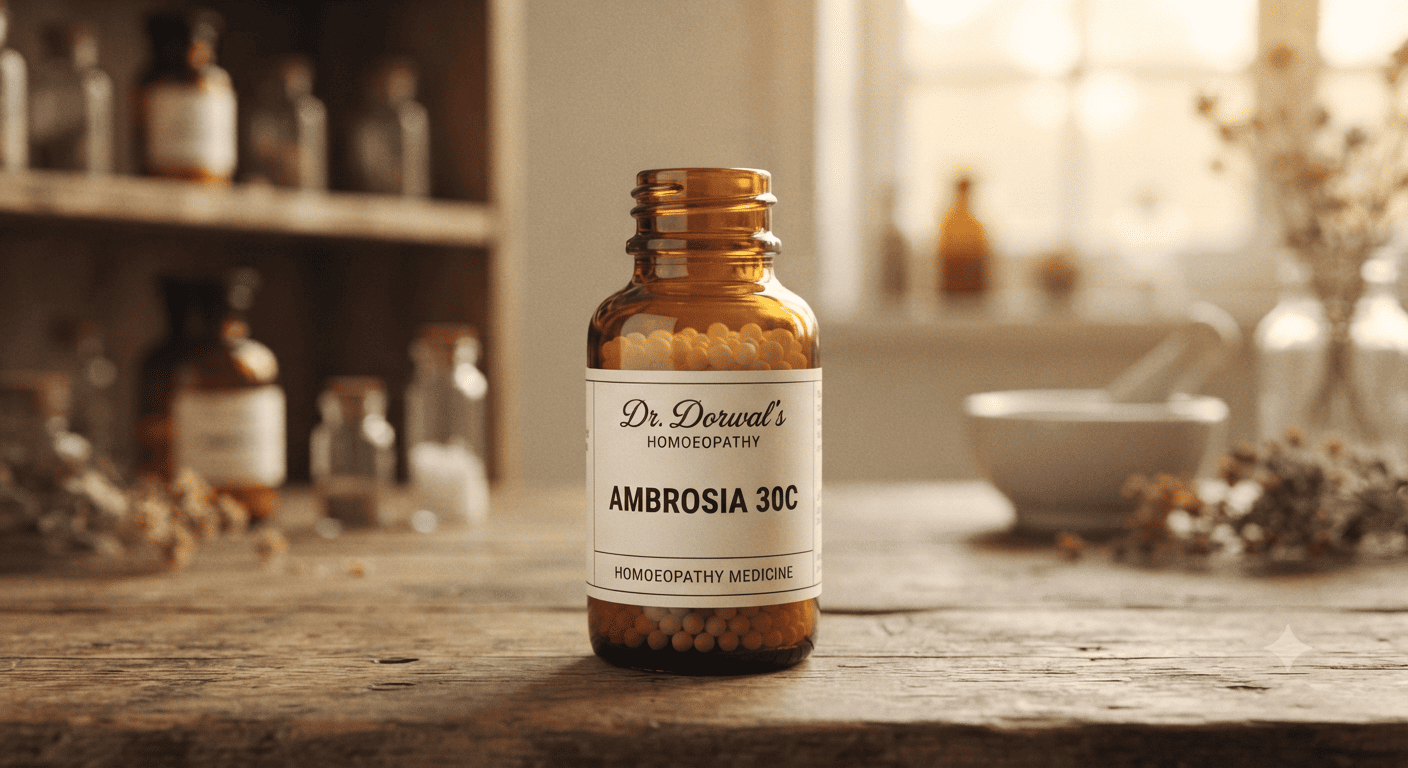
Ambrosia Artemisiaefolia (Rag-Weed) is a targeted therapeutic agent with a primary sphere of action on upper respiratory and gastrointestinal tracts. While best known for its effectiveness in seasonal allergic responses, its clinical profile encompasses a range of acute catarrhal and diarrhoeal conditions that require prompt, specific intervention.
Key Clinical Indications & Uses
Therapeutic profile of Ambrosia is defined by its ability to resolve acute inflammatory states triggered by environmental allergens or seasonal shifts:
- Hay-Fever and Allergic Rhinitis: This remedy is a cornerstone for hay-fever management. It is specifically indicated when the patient suffers from intense lachrymation (tearing), intolerable itching of eyelids, and a profuse, watery coryza. Entire respiratory tract feels “stuffed up,” often accompanied by severe sneezing and, in some cases, epistaxis (nosebleed).
- Respiratory and Asthmatic Irritation: Ambrosia acts upon the trachea and bronchial tubes, alleviating the wheezy cough and asthmatic attacks that often accompany seasonal allergies. It is also noted for its potential utility in certain forms of whooping cough.
- Seasonal Gastrointestinal Disturbance: Beyond the respiratory system, Ambrosia is highly effective for diarrhoeal conditions that manifest during the summer months, including dysentery.
Administration & Dosage
- Dose: In clinical practice, Mother tincture (Q) up to 30C potency is generally utilized. For epistaxis, 10 drops in water may be administered during and after the attack. For classic cases of hay-fever, high potencies are frequently favored.
Dr. Dorwal’s Perspective
In clinical practice, Ambrosia is my primary consideration during the height of ragweed season. When a patient walks into the clinic with eyes streaming, eyelids itching uncontrollably, and that distinct, congested “stuffed-up” sensation in the nose and chest, Ambrosia often provides the rapid relief that these patients desperately seek.
What I find fascinating is the breadth of its action. We often pigeonhole it as a hay-fever remedy, but it is equally potent for summer diarrhoeas and dysenteric states that occur as the climate shifts. It serves as a reminder that homoeopathic remedies often possess a multi-system efficacy, which follows the “seasonal” nature of the pathology. It is a sharp, efficient remedy that hits the mark precisely when patient is under the duress of environmental irritation.
Disclaimer: This content is for informational purposes only. Homoeopathic medicines should be taken under the guidance of a qualified homoeopathic physician. Do not self-medicate for chronic or serious medical conditions, and always seek professional advice for any health concerns.
Frequently Asked Questions (FAQs)
Intense lachrymation, intolerable itching of the eyelids, sneezing, and a feeling of being “stuffed up” throughout the respiratory tract are the primary symptoms of Ambrosia.
Yes, it is particularly indicated for diarrhoea and dysentery occurring during the summer months.
For epistaxis, a dosage of 10 drops of the tincture in water is recommended during and after the episode.
High potencies are generally preferred for the management of chronic or severe hay-fever symptoms.
