
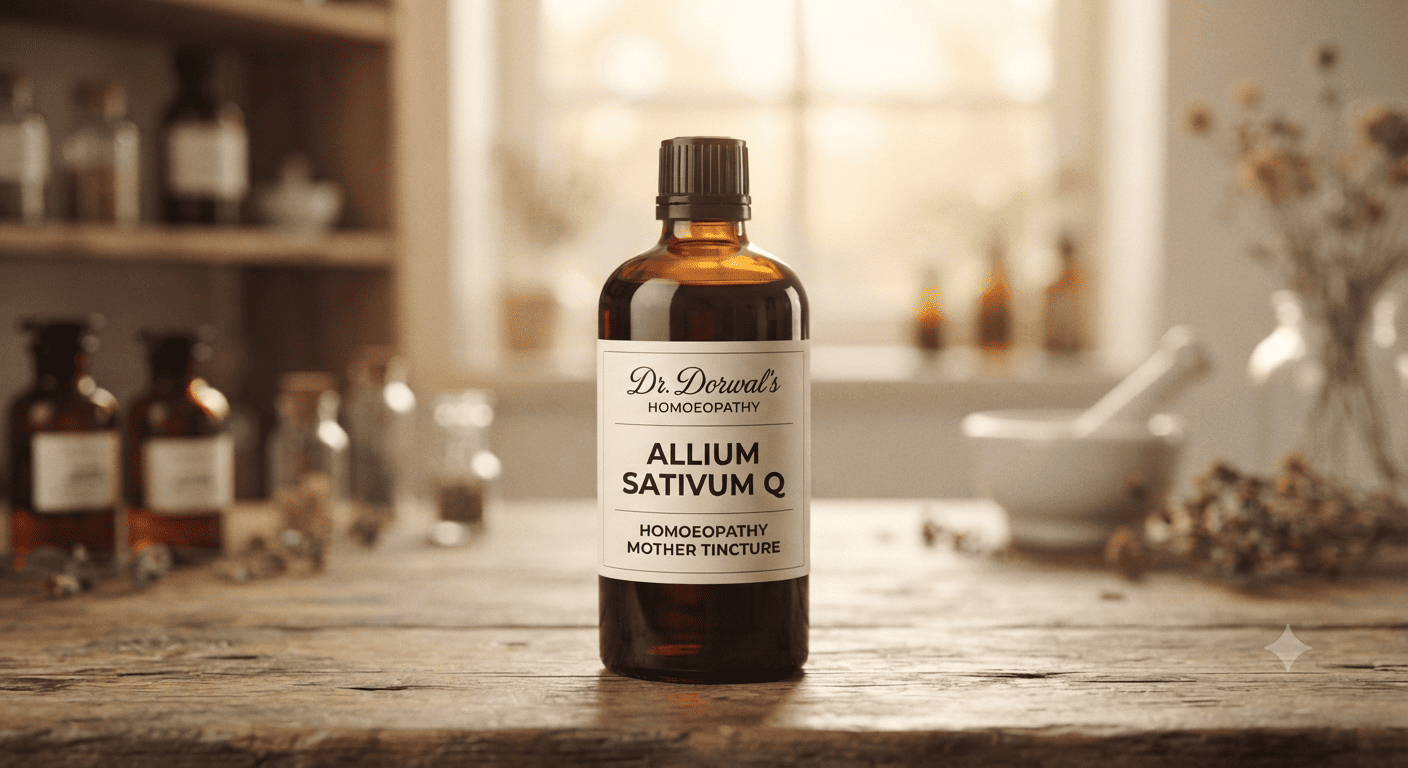
Allium Sativum, derived from common garlic, is a deep acting homoeopathic remedy with a specific affinity for gastrointestinal tract, respiratory, and circulatory system. Historically recognized for its antimicrobial and nutritional properties, in homoeopathy, it is a constitutional remedy tailored to specific dietary and pathological profiles.
Key Clinical Indications & Uses
Therapeutic profile of Allium Sativum is centered on supporting metabolic processes, resolving chronic catarrh, and addressing specific digestive disturbances:
- Constitutional Profile: This remedy is particularly suited to “fleshy,” robust subjects who are “high livers.” It is classically indicated for patients who consume a diet rich in meat and heavy foods while drinking relatively little. They often suffer from concomitant dyspepsia and chronic catarrhal affections.
- Gastrointestinal Health: It acts directly on the intestinal mucous membrane, increasing peristalsis. It is invaluable in cases of chronic colitis, especially when associated with pathological gut flora. It addresses constipation marked by constant dull pains in the bowels and a voracious appetite.
- Respiratory Support: The remedy is a key consideration for chronic bronchitis and bronchiectasis, characterized by constant rattling of mucus in the bronchi and a morning cough with tenacious, difficult-to-raise expectoration. It also has a historical clinical application in supporting cases of pulmonary tuberculosis, where it has been observed to help normalize temperature, reduce cough, and improve weight gain.
- Circulatory and Vaso-Motor: Allium Sativum possesses vasodilatory properties and has been shown to induce arterial hypotension. It may also be indicated for conditions involving catarrhal deafness.
Administration & Uses
- Dose: In general homoeopathic practice, potencies ranging from Mother tincture (Q) to 30C are utilized.
Dr. Dorwal’s Perspective
In my clinical practice, Allium Sativum is an indispensable remedy for the “heavy eater.” When a patient presents with a robust frame, a history of significant meat consumption, and chronic digestive or respiratory catarrh, this remedy immediately comes to mind. It effectively “cuts through” the systemic sluggishness that often accompanies a rich, sedentary lifestyle.
I find it particularly effective in resolving chronic intestinal issues where the microbiome is compromised—what we might clinically describe as dysbiosis. Its ability to support both digestive function and respiratory clearance makes it a powerful constitutional agent for restoring metabolic balance in the right patient type. It serves as a vital reminder that our materia medica often holds profound therapeutic keys in the very foods we consume.
Disclaimer: This content is for informational purposes only. Homoeopathic medicines should be taken under the guidance of a qualified homoeopathic physician. Do not self-medicate for chronic or serious medical conditions, and always seek professional advice for any health concerns.
Frequently Asked Questions (FAQs)
It is best suited to “fleshy” individuals who are “high livers,” particularly those who eat much meat and drink little.
It increases peristalsis and is indicated for chronic colitis, constipation with dull pains, and a voracious appetite.
It is used for chronic bronchitis and bronchiectasis with rattling mucus and tenacious, difficult expectoration in the morning.
Yes, it possesses vasodilatory properties and has been shown to induce arterial hypotension.
