
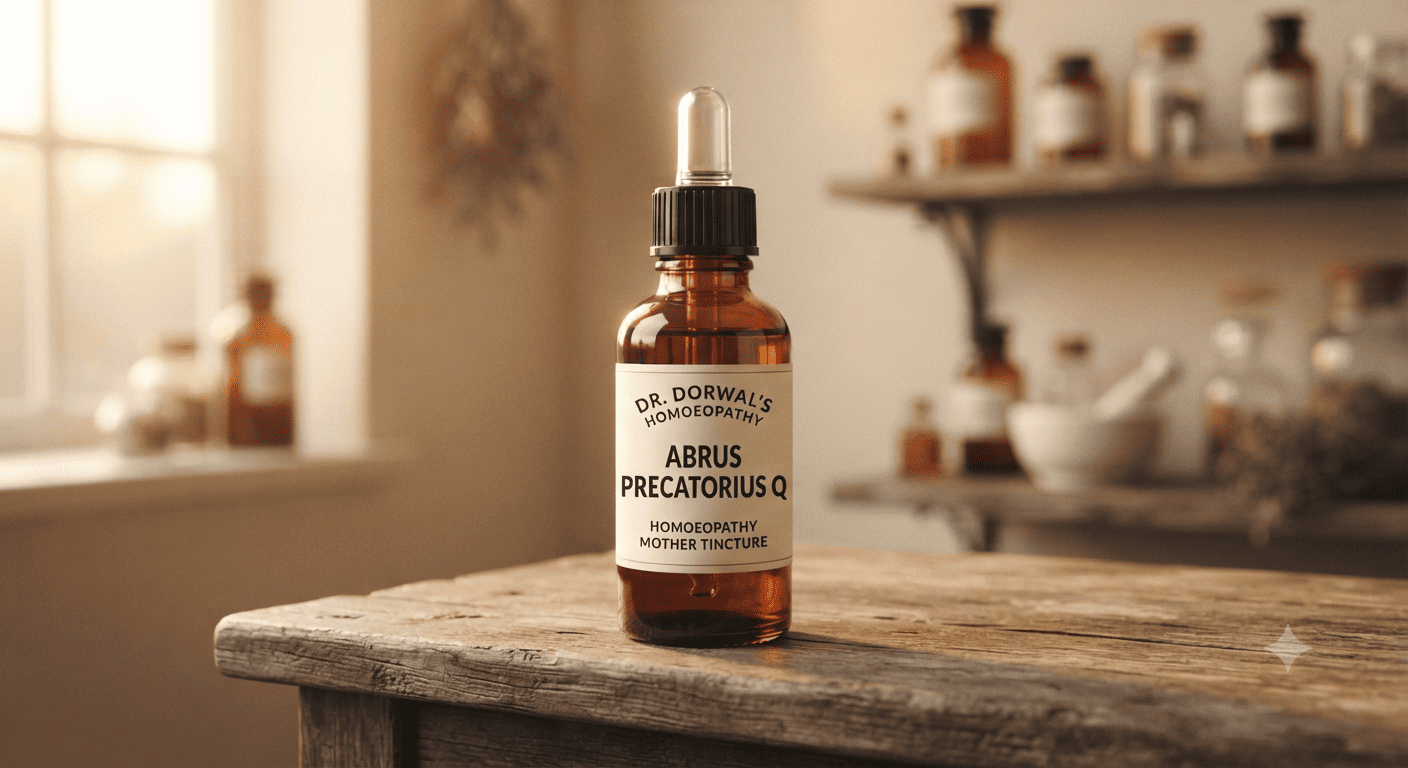
Abrus Precatorius, commonly known as the Crab’s Eye Vine or Jequirity, is a highly specialized homoeopathic remedy with a localized but potent sphere of action. Historically and clinically, it is recognized primarily for its profound effects on ocular pathology and certain chronic skin affections.
Key Clinical Indications & Uses
While its application is niche, Abrus Precatorius is historically noted for specific, difficult-to-treat conditions:
- Ophthalmological Affections: The remedy is particularly indicated for granular ophthalmia (trachoma), purulent conjunctivitis, and keratitis. Its action is so intense that inflammation can often spread from the eyes to the surrounding face and neck.
- Dermatological & Malignant Growth: It has been traditionally employed in the management of epithelioma, lupus, and chronic, stubborn ulcerations.
- Mechanism of Action: The protein poisons found in the seeds of Abrus Precatorius are noted for their similarity to certain snake venoms, which accounts for their intense, localized inflammatory action when used therapeutically in ophthalmic cases like pannus to stimulate healing through induced immune response.
Administration & Uses
- Dose: In clinical practice, it is typically utilized in form of Mother tincture (Q), diluted for local application, or (3X) potency for internal administration.
Dr. Dorwal’s Perspective
In the evolving field of homoeopathic practice, it is essential to remain acquainted with the full spectrum of the Materia Medica, even those remedies that may not be present in one’s current daily protocols. Abrus Precatorius is a prime example of a remedy with a very specific, potent, and somewhat aggressive clinical profile, particularly in ophthalmology.
While I have not yet integrated Abrus Precatorius into my active clinical protocols, its historical reputation for addressing intractable granular conditions of the eyelids remains a significant point of interest. In clinical practice, we often find that as we deepen our study and encounter rare, recalcitrant cases, the need for such specialized, deeply-acting remedies becomes increasingly relevant. It serves as a reminder that our repertoire must always remain expansive enough to meet the specific demands of the patient’s pathology.
Disclaimer: This content is for informational purposes only. Homoeopathic medicines should be taken under the guidance of a qualified homoeopathic physician. Do not self-medicate for chronic or serious medical conditions, and always seek professional advice for any health concerns.
Frequently Asked Questions (FAQs)
It is mainly used for serious eye conditions, such as granular conjunctivitis (trachoma) and keratitis, as well as some skin ulcers.
Its toxic principles are biologically comparable to certain snake venoms, which is why it must be used with extreme caution and clinical precision.
It is used locally as a diluted Mother tincture (Q) or internally in 3X potency.
No, it is a highly specialized remedy reserved for very specific, often chronic or severe, clinical presentations.
