
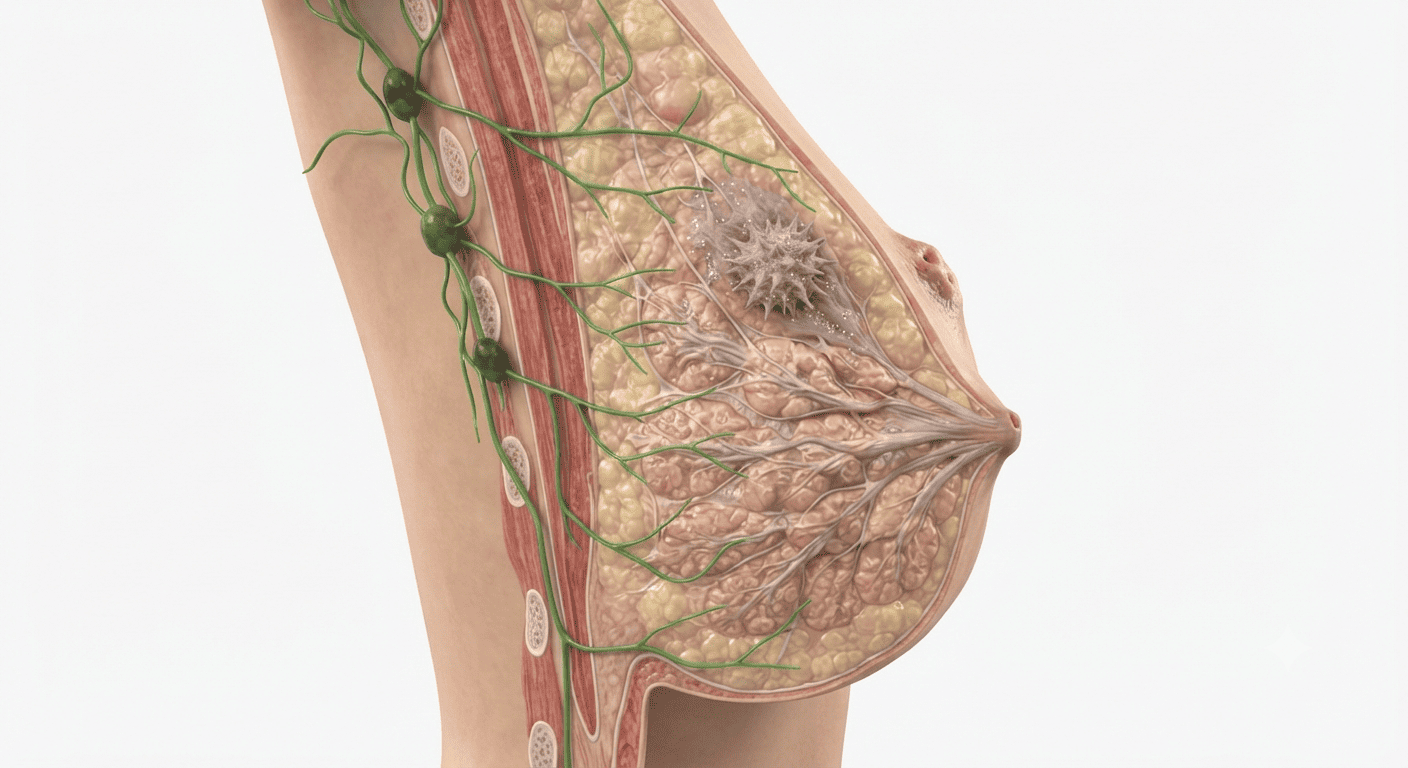
Breast cancer is a disease where abnormal cells develop in the breast. Commonly, it develops in milk ducts or milk-producing lobules. It represents one of the most prevalent oncological concerns globally, affecting both biological mechanisms and systemic health. It can spread into nearby breast tissue, lymph nodes, or other organs to become metastatic and potentially fatal. Survival rates continue to improve due to earlier diagnoses from screening advancements, awareness, and more effective treatment plans. In this comprehensive guide, we will explore signs and symptoms, underlying causes, potential risk factors, and diagnostic methods associated with breast cancer. Furthermore, we will examine both mainstream medical treatments and holistic therapeutic options, including homoeopathy.
Signs and Symptoms
Patients with breast cancer may present with a variety of localized and systemic clinical features depending on the stage of disease:
- Lump or Mass: It is most common presentation in cases of breast cancer. It is rule out by a hard, painless, irregular mass or lump felt within the breast or underarm (axilla) region.
- Skin Changes: Localized dimpling, puckering, or retraction of the skin, often described as an “orange peel” (peau d’orange) appearance due to lymphatic blockage.
- Nipple Abnormalities: Spontaneous nipple discharge (particularly clear or bloody), recent inversion of nipple, or scaling, crusting, and ulceration around the areola (such as in Paget’s disease of breast).
- Size and Contour Alterations: Unilateral changes in size, shape, or overall contour of breast.
- Advanced Symptoms: Bone pain, localized swelling, persistent fatigue, unexplained weight loss, and respiratory distress if metastasis has occurred.
Causes and Risk Factors
Breast cancer is a multifactorial disease driven by genetic, hormonal, and environmental influences. However, Exact cause remains unexplained, But key risk factors include:
- Gender and Age: Being biologically female is the primary risk factor, with incidence increasing significantly with advanced age.
- Hormonal Factors: Prolonged exposure to endogenous estrogen—such as early menarche, late menopause, nulliparity, or the use of exogenous hormone replacement therapy (HRT)—increases risk.
- Family and Personal History: A history of breast cancer or a prior personal history of benign proliferative breast disease.
- Environmental and Lifestyle Factors: Exposure to ionizing radiation, sedentary lifestyle, obesity (especially post-menopausal), chronic alcohol consumption, and smoking.
Diagnostic Evaluation
A definitive diagnosis involves a comprehensive clinical assessment combining multiple modalities:
- Clinical Examination: Detailed physical inspection and palpation of both breasts and regional lymph nodes.
- Imaging Studies: Diagnostic mammography, ultrasound, and magnetic resonance imaging (MRI) to characterize tissue architecture and non-palpable lesions.
- Histopathological Biopsy: Core needle biopsy or surgical excision to analyze tissue architecture, confirm malignancy, and assess histological grade.
- Receptor Status Testing: Laboratory assays to determine Estrogen Receptor (ER), Progesterone Receptor (PR), and Human Epidermal Growth Factor Receptor 2 (HER2) status, which dictate targeted treatment strategies.
Gold Standard Treatment Approach for Breast Cancer
Breast cancer management is a nuanced, multi-disciplinary process tailored to the disease stage, tumor pathology, patient preference, and available resources. Clinically, the treatment framework is categorized into early breast cancer, locally advanced breast cancer, and metastatic breast cancer.
1. Early Breast Cancer
Includes tumors under 5 cm without clinically positive lymph nodes.
- Surgical Options: Involves excising the primary tumor via breast conservation surgery (partial mastectomy or lumpectomy) or performing a total mastectomy.
- Axillary Management: Sentinel lymph node biopsy is performed; completion axillary dissection or radiation is reserved for cases with more than 3 positive nodes or extranodal extension.
- Systemic & Targeted Therapies: Chemotherapy is guided by final staging and molecular profiles, with high-risk hormone-positive, HER2-positive, and triple-negative cases receiving targeted or systemic regimens. Neoadjuvant (up-front) chemotherapy is increasingly utilized to improve breast conservation rates and assess treatment response.
- Radiation & Hormonal Therapy: Whole-breast radiation with a tumor bed boost is standard following breast conservation surgery. Anti-estrogen or aromatase inhibitor therapy is indicated for all hormone receptor-positive patients.
2. Locally Advanced Breast Cancer (LABC)
Encompasses tumors larger than 5 cm or those with clinically positive lymph nodes.
- Neoadjuvant Strategy: Baseline MRI and radiographically detectable markers are established before initiating up-front chemotherapy to reduce tumor size, eradicate micrometastases, and evaluate biological responsiveness.
- Surgical & Axillary Treatment: Post-chemotherapy surgery involves breast conservation or total mastectomy (if contraindications like extensive size or skin involvement exist), paired with axillary dissection for initially positive nodes or sentinel node biopsy for initially negative nodes.
- Adjuvant Interventions: Follow-up management includes radiation therapy, hormonal therapy for hormone-positive tumors, and additional systemic chemotherapy if residual disease persists.
3. Metastatic Breast Cancer
- Systemic Management: Primarily managed using systemic options such as targeted therapy, immunotherapy, hormonal therapy, and chemotherapy tailored to patient fitness and molecular characteristics.
- Palliative Care: Palliative radiation is utilized to control bulky primary tumors and manage metastases in the brain, bone, and lungs, while surgery is strictly reserved for palliative symptom control.
Holistic Treatment Approaches
1. Yoga and Physical Rehabilitation
Yoga acts as a gentle therapy that brings peace of mind and helps ease various physical discomforts. Along with this, simple movement therapy, guided post-surgery stretching, and controlled breathing exercises help reduce arm swelling (lymphedema), improve upper-body movement, lower tiredness, and boost emotional well-being.
2. Diet and Nutrition
Emphasizing an anti-inflammatory diet rich in fresh vegetables, fruits, antioxidants, and adequate hydration to support cellular health and immune defense, while managing weight and minimizing processed food intake.
3. Homoeopathic Care
Homoeopathy works on the fundamental principle of Similia Similibus Curentur (“like cures like”) and operates on detailed symptom profile of individual. In homoeopathic literature, numerous remedies are documented to support oncology patients. Common medicines include:
- Asterias Rubens: Asterias Rubens is particularly valuable for left-sided breast affections, marked by swollen, indurated mammary glands and sharp, lancinating or dull aching pains extending down the left arm to the fingers. It is historically indicated for cancer of breast even in ulcerative stage, accompanied by hard, knotted axillary glands and neuralgic symptoms.
- Carbo Animalis: It works on venous constitutions with lowered vitality and offensive secretions, showing specific utility in breast affections. Darting pains and painful indurations in breasts, particularly the right breast are guiding symptoms to use this remedy. Furthermore, it covers glandular indurations and swellings in mammary glands accompanied by lancinating, cutting, and burning pains.
- Conium Maculatum: A leading remedy for glandular system, specifically altering its structure and causing engorgement and stony-hard indurations resemble cancerous conditions, often follow physical trauma or contusions. It works in cases where mammary glands become lax, shrunken, hard, and painful(lancinating or piercing nighttime pain).
- Hydrastis Canadensis: it is indicated for tumors of the breast accompanied by a retracted nipple, as well as a raw, sore, and burning chest with pain extending from the chest to the left shoulder.
- Phosphorus: Phosphorus is characterized by a profound affinity for destructive metabolism, fatty degenerations, and haemorrhages. It is well-suited for tall, slender persons with weakened constitutions. In mammary affections, it is indicated for stitching pains in breasts, fistulous tracks following mammary abscesses, and suppuration of mammary glands accompanied by burning, watery, and offensive discharges.
- Silicea: Silicea Terra is deep acting and indicated for conditions marked by imperfect assimilation, defective nutrition, and a strong tendency toward slow suppurative processes and fistulous burrowings. In mammary affections, it is a key remedy for very sore, easily ulcerated or retracted nipples, hard lumps in breast, and fistulous ulcers or abscesses of the breast with offensive discharges.
In addition, many more medicines like Thuja, Carcinosin, Phytolacca are also selected by physicians on the basis of unique symptom profile of patient.
Dr. Dorwal’s Perspective
As a clinician, I believe that timely intervention is the key to manage breast cancer effectively. Individualized homoeopathic medicines and holistic care are excellent to support vitality and management for treatment side effects. Holistic approaches should be viewed as supportive care, not as a replacement for essential conventional treatment.
My clinical philosophy rests on three pillars:
- Precision in Treatment: Do not ignore warning signs or delay gold-standard conventional therapies like surgery, chemotherapy, or radiation. Targeted oncology interventions remain the primary, essential solution to address the malignancy.
- Integrated Healing: Use standard medical protocols to target core disease. Holistic care and homoeopathic medicines—selected on the basis of unique symptom profile of the patient must be used to accelerate recovery, reduce treatment-related side effects, and support overall resilience.
- Root Cause & Constitutional Focus: Advanced breast cancer and chronic symptoms require a comprehensive approach. We must treat the whole patient, supporting both systemic health and emotional well-being throughout their healing journey.
Conclusion
Breast cancer requires a rigorous, multi-faceted clinical approach that prioritizes early detection and evidence-based conventional treatment. For holistic, long-term well-being, an integrated model combining standard oncological care with supportive lifestyle modifications, targeted rehabilitation, and individualized homoeopathic support offers an exceptional pathway to enhance quality of life and restore systemic vitality.
Medical Disclaimer: Information provided here is intended solely for educational and informational purposes and should not be construed as professional medical advice, diagnosis, or treatment. Always consult a qualified physician or healthcare provider regarding any questions or concerns pertaining to a medical condition. Never disregard professional medical counsel or delay seeking treatment based on information contained in this material.
- Breast cancer – WHO
- Breast Cancer—Epidemiology, Risk Factors, Classification, Prognostic Markers, and Current Treatment Strategies—An Updated Review
- Breast Cancer – Mayo Clinic
- Breast Cancer – NCBI
- Homeopathic Protocol for Advanced Breast Cancer
- Homeopathy in the Fight Against Breast Cancer: Hope or Hype?
- Homeopathy as Praxis: Integration of Homeopathy as Supportive Care into Daily Life in Early Breast Cancer Patients
- Effects of pre-defined homoeopathic medicines to mitigate adverse dermatological effects of radiotherapy and vomiting of chemotherapy in breast carcinoma: A randomised, double-blind, placebo-controlled, pilot trial in the context of usual care
