
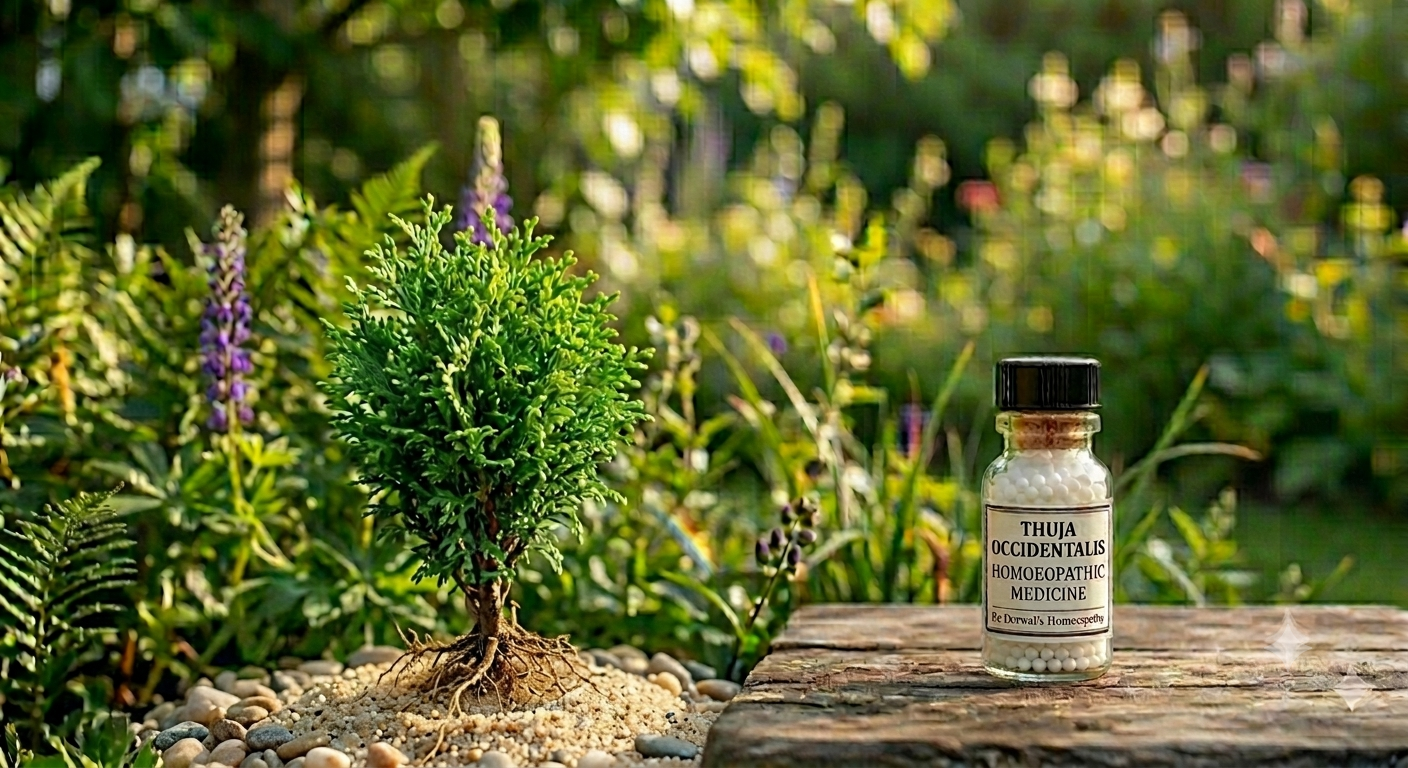
Thuja Occidentalis, derived from the Arbor Vitae (Tree of Life), occupies a unique and powerful position in the homoeopathic pharmacopoeia. Often referred to as the “great anti-sycotic” remedy, Thuja is known for its deep-acting ability to address constitutional tendencies that manifest as abnormal growths or cellular irregularities. Rather than acting as a superficial treatment, Thuja is frequently employed to penetrate systemic disturbances and restore balance where the body’s regulatory mechanisms have become fixed or misguided.
Key Benefits
Thuja is revered for its ability to address conditions characterized by “excessive” growth or hardening. Its clinical benefits include:
- Skin & Outgrowths: Primarily indicated for warts, skin tags, moles, and other benign excrescences. It is the go-to remedy when the skin shows signs of irregular, cauliflower-like, or hard, dry growths.
- Post-Vaccination & Suppressed Conditions: Often considered when health began to decline following vaccinations or when a skin eruption was previously suppressed by topical ointments or external treatments, leading to deeper internal illness.
- Urological & Reproductive Health: huja is often indicated for chronic urinary tract disturbances, such as a sensation of “gurgling” water in the abdomen. It is also a key remedy for recurrent reproductive issues, including persistent pelvic pain and irregularities in the menstrual cycle.
- Mental & Emotional State: Indicated for individuals who may feel a sense of “fixed ideas” or a lack of confidence. There is often an underlying feeling of being “different” or a tendency toward melancholy and introversion.
- Joint & Rheumatic Issues: Thuja is highly effective for chronic rheumatic conditions and joint pain, particularly when symptoms intensify during damp or humid weather—a definitive clinical indicator for this remedy.
Administration & Therapeutic Modalities
- Potency & Dosage: Due to its deep-acting nature, Thuja is rarely used for daily ailments. Mid-range potencies (30C) may address acute local issues, while high potencies (200C or above) are reserved exclusively for professional practitioners to treat chronic conditions.
- External Application: In addition to oral administration, Thuja is frequently applied externally (as a tincture or ointment) for localized skin conditions, such as stubborn warts or excrescences.
Dr. Dorwal’s Perspective
In my practice, I view Thuja as the “regulatory architect.” It is essential for stubborn, recurrent issues or abnormal growths. I often employ a dual approach, using Thuja orally to address constitutional imbalances alongside external lotions or tinctures for targeted wart treatment. This synergy produces excellent outcomes, but given its profound depth, it must be guided by a professional physician.
Disclaimer: This content is for informational purposes only. Homoeopathic medicines should be taken under the guidance of a qualified homoeopathic physician. Do not self-medicate for chronic or serious medical conditions, and always seek professional advice for any health concerns.
Frequently Asked Questions (FAQs)
Thuja is a constitutional remedy primarily used to address “sycotic” tendencies, which manifest as abnormal cellular growth (like warts or polyps) and systemic imbalances that have become chronic or difficult to resolve.
Thuja is indicated for warts, skin tags, and moles; post-vaccination side effects; chronic urinary issues; and rheumatic pain that significantly worsens in damp, humid conditions.
No. It is specifically suited for warts that are hard, sensitive to touch, or have a jagged, cauliflower-like appearance. A professional assessment is required to ensure the remedy matches the specific nature of the growth.
No. Thuja is a very deep-acting, slow-moving, and powerful remedy. It is intended for infrequent, targeted dosing under professional supervision. Frequent use is inappropriate and can lead to an unnecessary aggravation of symptoms.
