
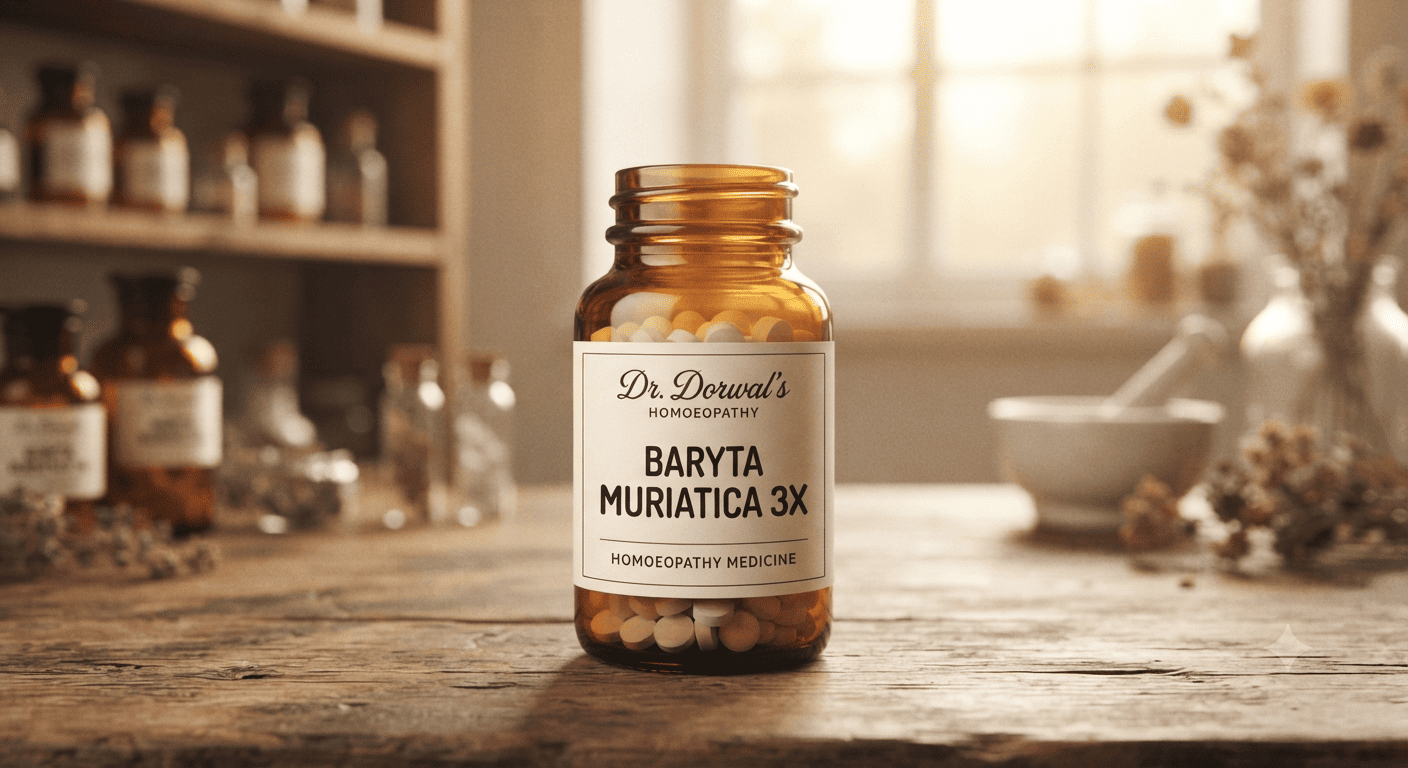
Baryta Muriatica is a foundational deep-acting remedy in homoeopathic pharmacopoeia, holding a premier position in the management of organic lesions, vascular degeneration, and chronic structural decline. Like other barium salts, its primary sphere of action encompasses the aged constitution and the stunted, sluggish state, with a profound affinity for the arterial system, the nervous apparatus, and glandular tissues.
Key Clinical Indications & Uses
Therapeutic profile of Baryta Muriatica is defined by distinct patterns of vascular sclerosis, neurological weakness, and mucosal catarrh:
- Cardiovascular & Arterial Pathology: It is a major remedy for arteriosclerosis, vascular degeneration, and hypertension. It is specifically indicated where there is high systolic pressure with a comparatively low diastolic tension, accompanied by cardiac and cerebral symptoms. It addresses arterial hardening, aortic involvement, and narrowing of the cardiac orifice with pain immediately after eating.
- Geriatric & Cerebral Support: It is tailored for chronic head symptoms in the elderly, characterized by heaviness rather than acute pain, alongside vertigo and cerebral anaemia. It is also indicated in degenerative nervous conditions, including multiple sclerosis of the brain and spinal cord, where voluntary muscular power is lost but sensory perception remains intact.
- Otorhinolaryngological & Tonsillar Affections: It addresses chronic hypertrophy of the tonsils, parotid swelling, offensive otorrhea, and middle ear complications accompanied by noises during chewing, swallowing, or sneezing. It is classically indicated for children who appear stupid, hard of hearing, and habitually go around with their mouth open, talking through the nose.
- Gastrointestinal & Respiratory Catarrh: It covers a characteristic “gone” feeling at the epigastrium, retching, and gastric tenderness. In respiratory sphere, it benefits senile asthma and bronchial affections in the elderly characterized by cardiac dilation, great accumulation of rattling mucus, and difficult expectoration.
Administration & Dosage
- Dose: In homoeopathic protocol, it is typically utilized in (3X) third trituration, noting that this remedy bears the repetition of dosage remarkably well.
Dr. Dorwal’s Perspective
In practice of geriatric medicine and chronic pathology, Baryta Muriatica is an indispensable tool. When we observe the physical and mental manifestations of aging—the stiffening of arteries, rising systolic pressure, dull vertigo, and quiet cognitive slowing—Baryta Mur acts as a structural modulator.
What I find most clinically instructive is its precision in managing the delicate balance between the heart and arterial tree. It is not merely a remedy for high blood pressure; it is a remedy for the underlying sclerotic degeneration of vascular walls. Whether addressing the silent hardening of arteries, chronic choking hypertrophy of the tonsils in children, or the lingering paresis following acute infections, this remedy speaks directly to the tissue’s loss of elasticity. For the practitioner, understanding its specific pulse tension and circulatory profile allows us to bring a steady, restorative influence to deep-seated degenerative states.
Disclaimer: This content is for informational purposes only. Homoeopathic medicines should be taken under the guidance of a qualified homoeopathic physician. Do not self-medicate for chronic or serious medical conditions, and always seek professional advice for any health concerns.
Frequently Asked Questions (FAQs)
It is classically indicated for organic lesions in the aged (geriatric constitutions) and individuals who are physically or mentally dwarfish and sluggish.
It addresses arteriosclerosis, vascular degeneration, and high blood pressure—specifically where there is a high systolic pressure paired with a comparatively low diastolic tension.
It is frequently prescribed for children with chronic tonsillar hypertrophy who appear hard of hearing, look dull or stupid, and habitually keep their mouths open.
It is utilized in sclerotic conditions of the brain and spinal cord, including multiple sclerosis, where muscular weakness and paresis are prominent.
