
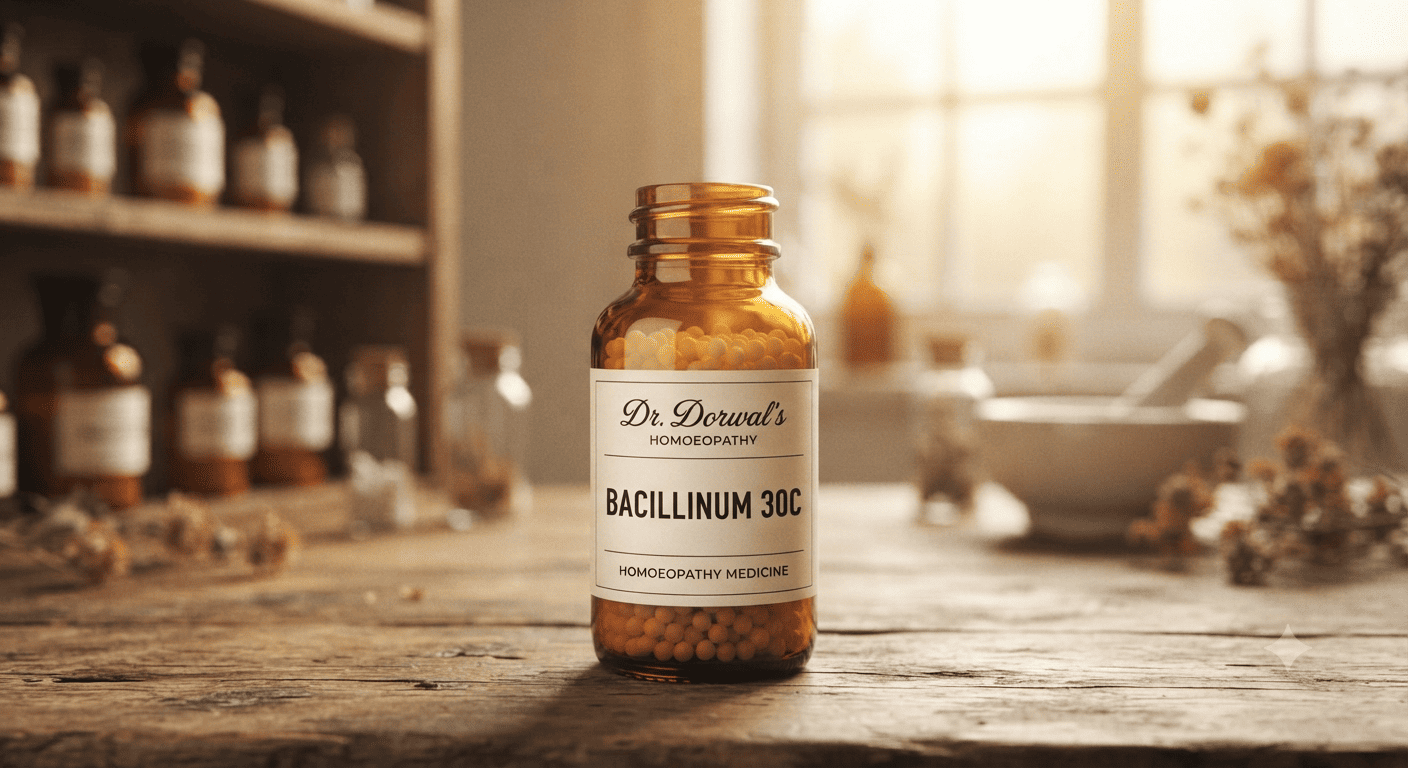
Bacillinum Burnett, introduced by Dr. J. Compton Burnett as a maceration of a typical tuberculous lung, stands as one of the most profound nosodes in homoeopathic therapeutics. While historically recognized for its deep constitutional impact on the tubercular diathesis and chronic respiratory pathologies, its clinical utility extends gracefully into stubborn dermatological and systemic conditions.
Key Clinical Indications & Uses
Therapeutic profile of Bacillinum Burnett is defined by its action on the respiratory apparatus, lymphatic system, and skin:
- Respiratory & Catarrhal States: It is historically valued for modifying chronic catarrhal conditions, particularly in the elderly with enfeebled pulmonary circulation. It helps decrease muco-purulent expectoration, making sputum more aerated and less purulent, and is indicated in humid asthma, suffocative catarrh, and nocturnal suffocative attacks.
- Tubercular Diathesis: It acts as an invaluable intercurrent remedy in the early stages of tubercular disease affecting the glands, joints, skin, and bones.
- Dermatological Manifestations: It exhibits a profound affinity for stubborn skin affections. Key indications include ringworm (tinea), pityriasis, and chronic eczema—particularly eczema of the eyelids. It also addresses enlarged and tender cervical and inguinal lymph nodes.
- Gastrointestinal & Cephalic Affections: It covers sudden diarrhoea occurring before breakfast, obstinate constipation with offensive flatus, and severe, deep-seated headaches characterized by the sensation of a tight hoop around the head.
Administration & Dosage
- Dose: The dose is of paramount importance. Bacillinum should not be given below 30C potency and must never be repeated frequently. One dose a week is often sufficient to elicit a vital reaction. Because of its rapid action, positive results should be visible quickly; if not, further repetition is uncalled for.
- Modalities: Symptoms are characteristically worse at night, in early morning, and from exposure to cold air.
Dr. Dorwal’s Perspective
In my clinical practice, while Bacillinum Burnett holds a legendary status in respiratory therapeutics, I utilize it mostly in skin conditions. When a patient presents with recurrent, stubborn dermatological complaints—such as persistent ringworm, scaling pityriasis, or chronic eczema around the eyelids—that fail to respond to standard remedies, Bacillinum often acts as a master key.
What I find most clinically instructive is its role as a constitutional deep-cleaner for the skin. Skin eruptions that stubbornly return or are tied to a deep lymphatic sluggishness respond remarkably well to the nosode’s corrective impulse. However, because this is a potent nosode derived from tubercular tissue, dosage discipline is everything. I strictly adhere to high potencies (30C and above) and maintain wide spacing between doses—often a single dose weekly or fortnightly—allowing the vital force adequate time to react without overwhelming the patient. When used with this level of precision, it clears pathological layers that lighter remedies cannot touch.
Disclaimer: This content is for informational purposes only. Homoeopathic medicines should be taken under the guidance of a qualified homoeopathic physician. Do not self-medicate for chronic or serious medical conditions, and always seek professional advice for any health concerns.
Frequently Asked Questions (FAQs)
It is a nosode prepared from a maceration of a typical tuberculous lung, introduced to homeopathy by Dr. J. Compton Burnett.
Nosodes are deeply acting remedies; Bacillinum should not be prescribed in low potencies (avoiding anything below the 30th) and must not be repeated frequently to prevent unnecessary aggravation of the vital force.
It is exceptionally useful in managing chronic skin disorders such as ringworm, pityriasis, and stubborn eczema, alongside enlarged, tender lymph glands.
Symptoms are typically worse at night, in the early morning hours, and from cold air exposure.
