
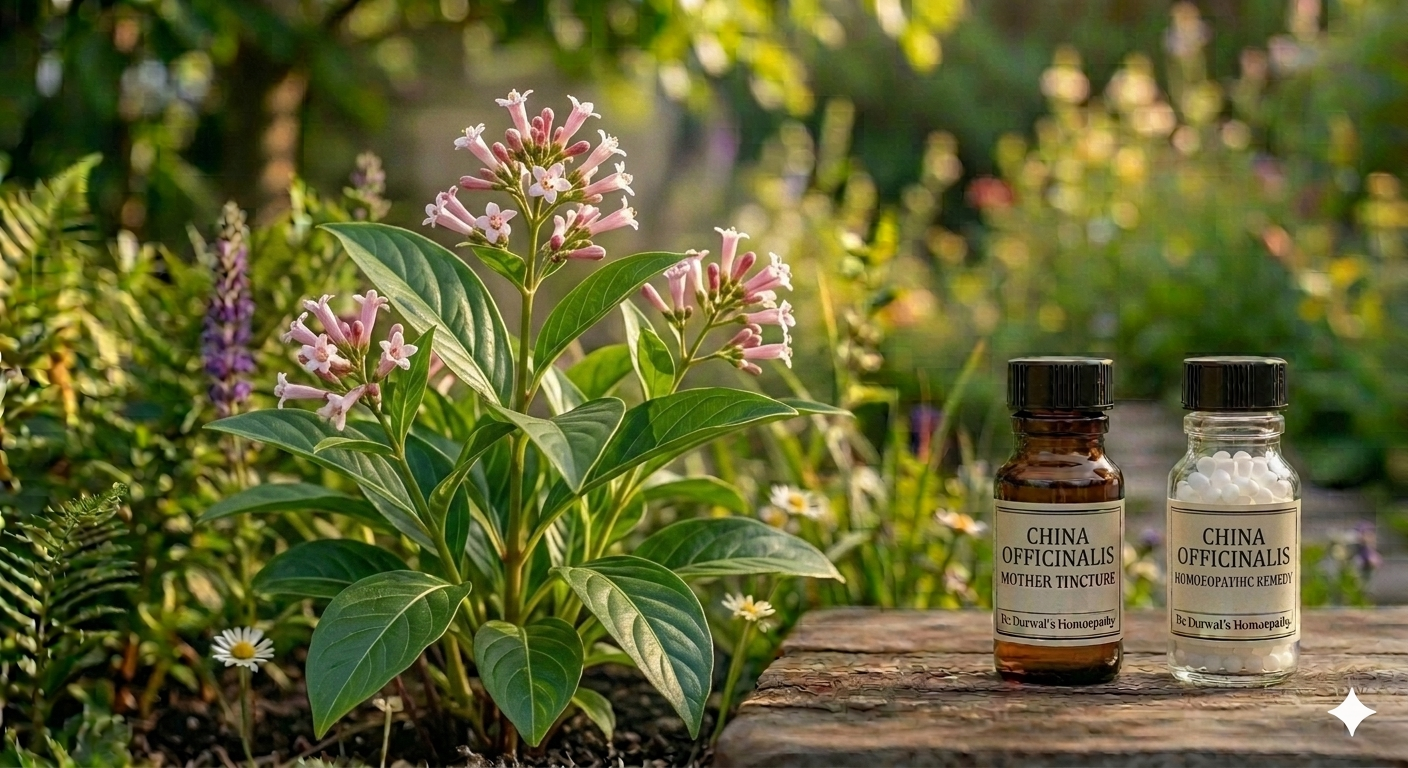
China Officinalis, also known as Cinchona Officinalis, is one of the most vital polycrest remedy in homoeopathy. Historically renowned as the remedy that inspired Samuel Hahnemann to discover the principle of “Like Cures Like,” it remains the premier choice for exhaustion resulting from fluid loss and debilitating illnesses.
Key Clinical Indications and Benefits
China Officinalis is primarily indicated for states of physical depletion and periodicity. It is clinically prescribed for:
- Debility from Fluid Loss: The primary keynote. It is indicated for extreme weakness following loss of vital fluids, such as haemorrhages, excessive sweating, prolonged diarrhoea, or lactation.
- Periodic Fevers (Malaria/Intermittent Fever): Famous for treating fevers that recur at specific intervals (every week). It is highly effective when the fever is accompanied by chills and followed by profuse sweating.
- Digestive Bloating & Gas: Clinically indicated for flatulent dyspepsia, where the abdomen is bloated and distended with gas, but the patient does not find relief from passing it.
- Pain & Sensitivity: Indicated for severe neuralgic pains that are often worsened by the slightest touch but temporarily improved by hard, firm pressure.
- Convalescence: An excellent restorative tonic for patients recovering from severe illnesses like influenza, typhoid, or anaemia, helping to rebuild vitality and energy.
Administration & Therapeutic Modalities
- Potency & Dosage: Frequently utilized in Mother tincture (Q) or in liquid potencies (30C or 200C) to address acute exhaustion or periodic complaints.
- Key Modality: Patients often feel significantly worse from light touch and better from hard pressure. There is a marked aversion to cold air and a desire for warmth.
Dr. Dorwal’s Perspective
In my practice, China Officinalis is the ultimate “energy restorer.” When I see a patient who feels “drained” after a long bout of illness or physical stress, this is my go-to remedy. Its ability to address both the physical weakness and the underlying metabolic disturbance (like gas or periodic fever) makes it a cornerstone of homoeopathic first aid. It truly exemplifies the power of nature to restore human health.
Disclaimer: This content is for informational purposes only. Homoeopathic medicines should be taken under the guidance of a qualified homoeopathic physician. Do not self-medicate for chronic or serious medical conditions, and always seek professional advice for any health concerns.
Frequently Asked Questions (FAQs)
It is primarily used to restore vitality and address exhaustion resulting from the loss of vital fluids, such as excessive bleeding, diarrhea, or lactation.
The main benefits include its ability to treat periodic fevers, relieve abdominal bloating and gas, and act as a restorative tonic for physical recovery.
Another common name for China officinalis is Cinchona officinalis.
While it is a well-established homoeopathic remedy, it should always be used under the guidance of a qualified physician to determine the appropriate potency and prevent any adverse reactions.
