
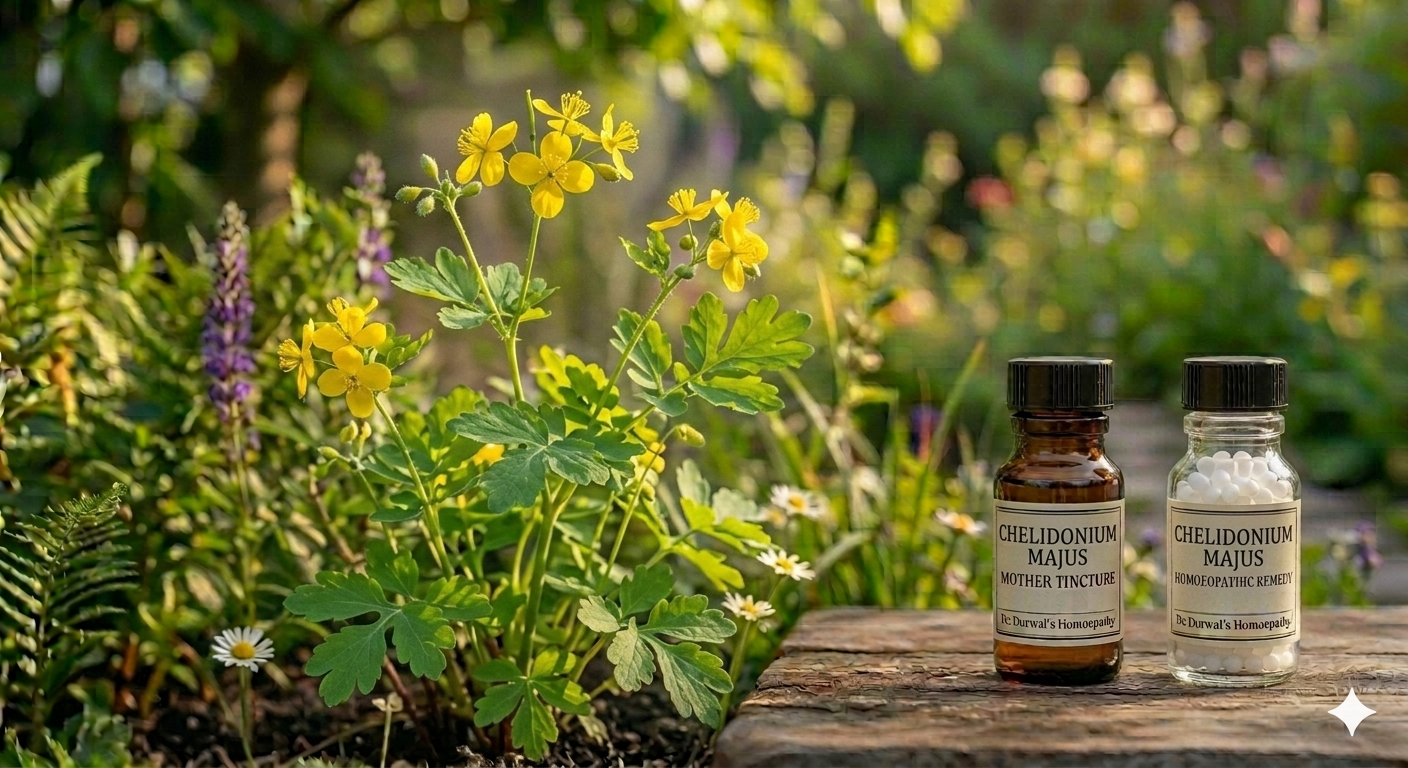
Chelidonium Majus, derived from the Greater Celandine plant, is one of the most reliable “organ-specific” remedies in homoeopathy. It is widely regarded as a cornerstone remedy for hepatic and biliary disorders, often identified by the patient’s craving for hot food and drinks and a characteristic pain under the right shoulder blade.
Key Clinical Indications and Benefits
Chelidonium Majus is highly valued for its affinity with the liver and gallbladder and is clinically indicated for several diagnosed conditions:
- Liver & Biliary Disorders: Primarily indicated for sluggish liver function, jaundice, and biliary colic. Clinically, it is a primary remedy for Gallstones (Cholelithiasis), Hepatitis, and Fatty Liver, especially when accompanied by a bitter taste in the mouth and yellow-coated tongue.
- Characteristic Referred Pain: Highly specific for pain located under the right scapula (shoulder blade). This is a ‘keynote’ symptom often seen in patients suffering from gallbladder inflammation (Cholecystitis) or liver congestion.
- Digestive Weakness & Metabolic Issues: Effective for constipation alternating with diarrhoea, where stools are bright yellow or clay-colored. It is clinically prescribed for indigestion, gastric pain, and bloating that improves after eating hot food.
- Respiratory Support: Occasionally used for right-sided pneumonia or bronchitis where the liver symptoms are also present. It helps in cases of cough with thick, difficult-to-expectorate mucus.
- Skin Manifestations: Useful in cases of jaundice where the skin and eyes turn a distinct yellow. It helps clear the systemic toxicity that manifests as skin dullness or yellow-tinted complexion.
Administration & Therapeutic Modalities
- Potency & Dosage: Often prescribed in mother tincture (Q) or low potencies (Like 30C) to support liver drainage and metabolic function.
- Observation: Because it has a strong action on the liver, it is vital to observe the patient’s bowel movements and general energy levels. If the patient feels a sudden relief in liver tension, the frequency of the dose may be reduced.
Dr. Dorwal’s Perspective
In my clinical practice, Chelidonium Majus is my “go-to” whenever a patient presents with right-sided abdominal discomfort or signs of liver stress. I often tell my patients that this remedy acts like a “liver cleanser.” When treating conditions like gallstones or chronic indigestion, if the patient has that classic right-shoulder-blade pain and a craving for hot drinks, this remedy is unmatched in its ability to restore biliary flow and metabolic balance.
Disclaimer: This content is for informational purposes only. Homoeopathic medicines should be taken under the guidance of a qualified homoeopathic physician. Do not self-medicate for chronic or serious medical conditions, and always seek professional advice for any health concerns.
Frequently Asked Questions (FAQs)
It is primarily used in homoeopathy as an organ-specific remedy to address liver congestion, gallbladder disorders, jaundice, and biliary colic.
Yes, it is clinically indicated for sluggish liver function and fatty liver by supporting liver drainage and metabolic processes.
While it is a powerful liver-cleansing remedy, it should only be used under the guidance of a qualified physician to avoid any potential adverse effects from improper dosing.
It is primarily focused on restoring biliary flow and liver health, which indirectly supports metabolic balance, though it is not typically prescribed solely as a cholesterol-lowering agent.
