
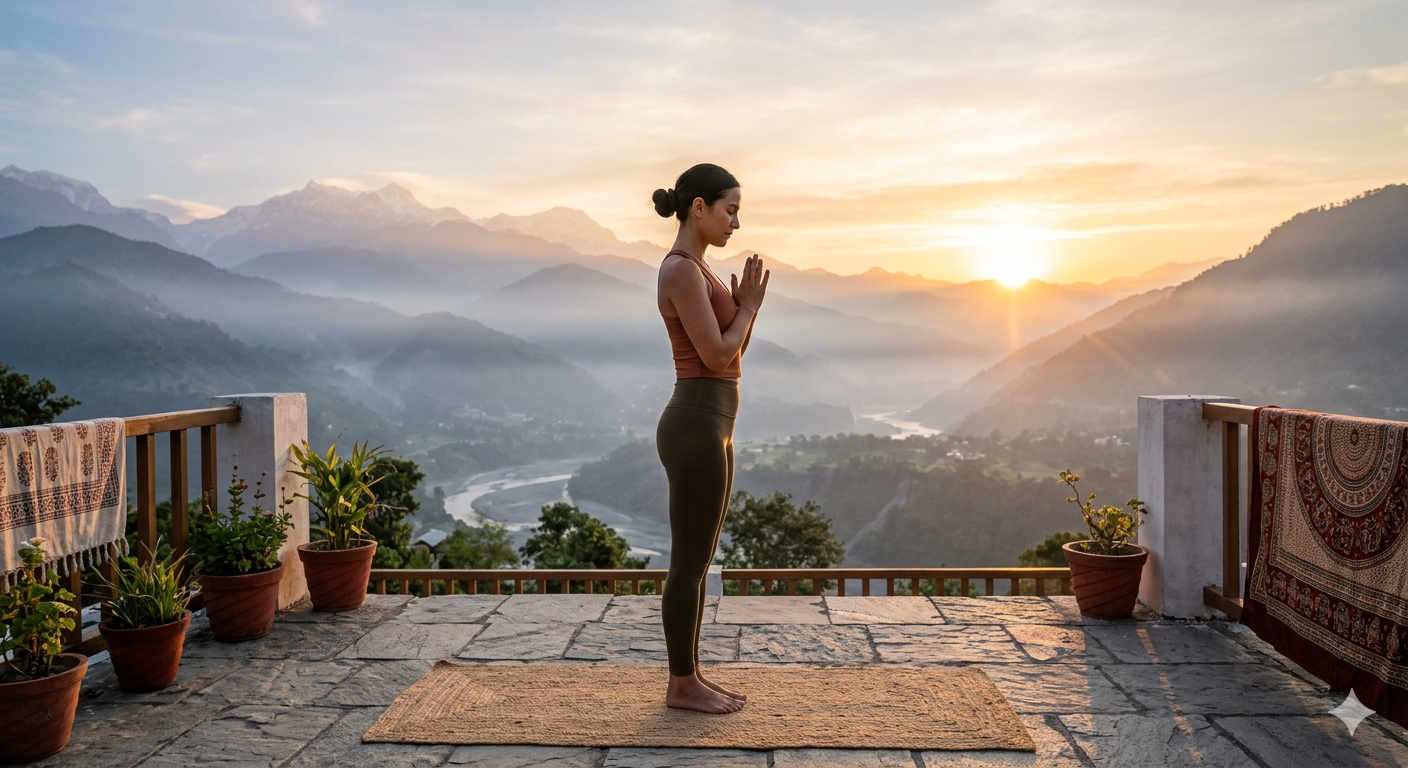
Surya Namaskar, or Sun Salutation, is a foundational yogic practice consisting of a synchronized sequence of twelve graceful, linked asanas (postures). Derived from the Sanskrit words Surya (Sun) and Namaskar (Salutation), this practice is a rhythmic homage to the source of all life and energy on Earth.
Beyond its symbolic meaning, Surya Namaskar is a sophisticated physical exercise. By engaging in deep, systematic stretching, it improves the flexibility of muscles, ligaments, and the spinal column, fostering relaxation at the mental, physical, and spiritual levels. When performed at sunrise, it serves as a powerful way to harness the day’s energy and cultivate positivity.
The Twelve Steps of Surya Namaskar
Each sequence is designed to transition fluidly from one movement to the next, emphasizing breath control.
| Step | Posture (Sanskrit Name) | Execution Focus |
| 1 | Pranamasana (Prayer Pose) | Stand straight, feet together; bring palms together at the chest. |
| 2 | Hastauttanasana (Raised Arms Pose) | Inhale, raise arms overhead, and lean back slightly; stretch the full body. |
| 3 | Hastapadasana (Hand to Foot Pose) | Exhale, bend forward from the waist; palms on the floor, forehead to knees. |
| 4 | Ashwa Sanchalanasana (Equestrian Pose) | Inhale, extend the right leg back; bend the left knee and look forward. |
| 5 | Dandasana (Stick Pose) | Exhale, bring the left leg back to form a straight line (plank position). |
| 6 | Ashtanga Namaskara (Eight-Limbed Pose) | Lower knees, chest, and chin to the floor; hips remain slightly raised. |
| 7 | Bhujangasana (Cobra Pose) | Inhale, lower hips, push chest forward and upward; gaze toward the ceiling. |
| 8 | Adho Mukha Svanasana (Mountain Pose) | Exhale, lift the hips high to form an inverted-V; keep heels toward the floor. |
| 9 | Ashwa Sanchalanasana (Equestrian Pose) | Inhale, bring the right leg forward between the palms. |
| 10 | Hastapadasana (Hand to Foot Pose) | Exhale, bring the left foot forward; fold forward, forehead to knees. |
| 11 | Hastauttanasana (Raised Arms Pose) | Inhale, rise up and stretch arms overhead; lean back slightly. |
| 12 | Tadasana / Pranamasana | Exhale, return to the prayer position. |
After completion, lie down in Savasana (Corpse Pose) to allow the body to fully absorb the benefits.
Health and Wellness Benefits
Regular practice of Surya Namaskar acts as a full-body workout that harmonizes the body and mind:
- Enhanced Physical Fitness: Increases muscle strength and overall flexibility through consistent, dynamic stretching.
- Cardiovascular Health: Improves blood circulation, aids in maintaining healthy blood pressure, and supports pulse rate management.
- Metabolic Efficiency: By stimulating the abdominal muscles and improving digestion, it aids in weight management and calorie burning.
- Mental Clarity: Promotes concentration, improves memory, and reduces anxiety by balancing endocrine gland activity.
- Radiant Skin: Improved circulation and detoxification processes contribute to a healthy, natural glow.
Important Safety Considerations
While Surya Namaskar is deeply beneficial, it is a high-intensity practice. It is recommended that you consult with a healthcare professional or a certified yoga instructor before beginning, especially if you have the following conditions:
- Pregnancy: Modifications are necessary.
- Spinal/Back Injuries: Intense forward and backward bending may aggravate these conditions.
- Hernia or Rheumatoid Arthritis: Joint stiffness or abdominal pressure can be contraindicated.
- Wrist Injuries: The weight-bearing nature of the practice may cause further strain.
- Menstruation: It is generally advised to avoid strenuous inverted postures or intense abdominal work during this time.
Dr. Dorwal’s Perspective
As a practitioner, I view Surya Namaskar as a powerful preventative tool that bridges traditional wisdom with physiological health. I frequently integrate it into treatment plans for various health conditions, as its systematic spinal engagement and mindful breathing optimize circulation and hormonal balance. When practiced consistently, it serves as a foundational habit that fosters the metabolic efficiency and psychological resilience essential for a balanced life.
Disclaimer: This article is for informational purposes only and does not constitute professional medical advice, diagnosis, or treatment. The physical movements described involve significant spinal and joint engagement. Always consult with a physician or a certified yoga therapist before beginning any new exercise regimen, particularly if you have pre-existing health conditions or injuries. Discontinue practice immediately if you experience pain or discomfort.
Frequently Asked Questions (FAQ)
The sequence consists of twelve linked postures is: Pranamasana (Prayer Pose), Hastauttanasana (Raised Arms Pose), Hastapadasana (Hand to Foot Pose), Ashwa Sanchalanasana (Equestrian Pose), Dandasana (Stick Pose), Ashtanga Namaskara (Eight-Limbed Pose), Bhujangasana (Cobra Pose), Adho Mukha Svanasana (Mountain Pose), Ashwa Sanchalanasana (Equestrian Pose), Hastapadasana (Hand to Foot Pose), Hastauttanasana (Raised Arms Pose), and Tadasana (Prayer Pose).
Regular practice enhances full-body muscle strength and flexibility while promoting cardiovascular health by improving circulation and blood pressure management. It aids in weight loss through metabolic stimulation, supports digestive health, improves mental focus and hormonal balance, and fosters a healthy, glowing complexion through detoxification.
Daily commitment fosters long-term physical vitality, improved posture, and greater bodily agility. Mentally, it builds discipline, reduces anxiety, and enhances emotional resilience. Consistent practice ensures ongoing hormonal homeostasis and metabolic efficiency, resulting in sustained energy levels and heightened concentration throughout the day.
Beginners should aim for 10 to 15 minutes, completing four to six rounds at a slow, controlled pace to prioritize proper form. As strength and stamina improve, practitioners may gradually increase the duration; however, the quality of breathing and movement remains more significant than the total time or quantity of repetitions.
