
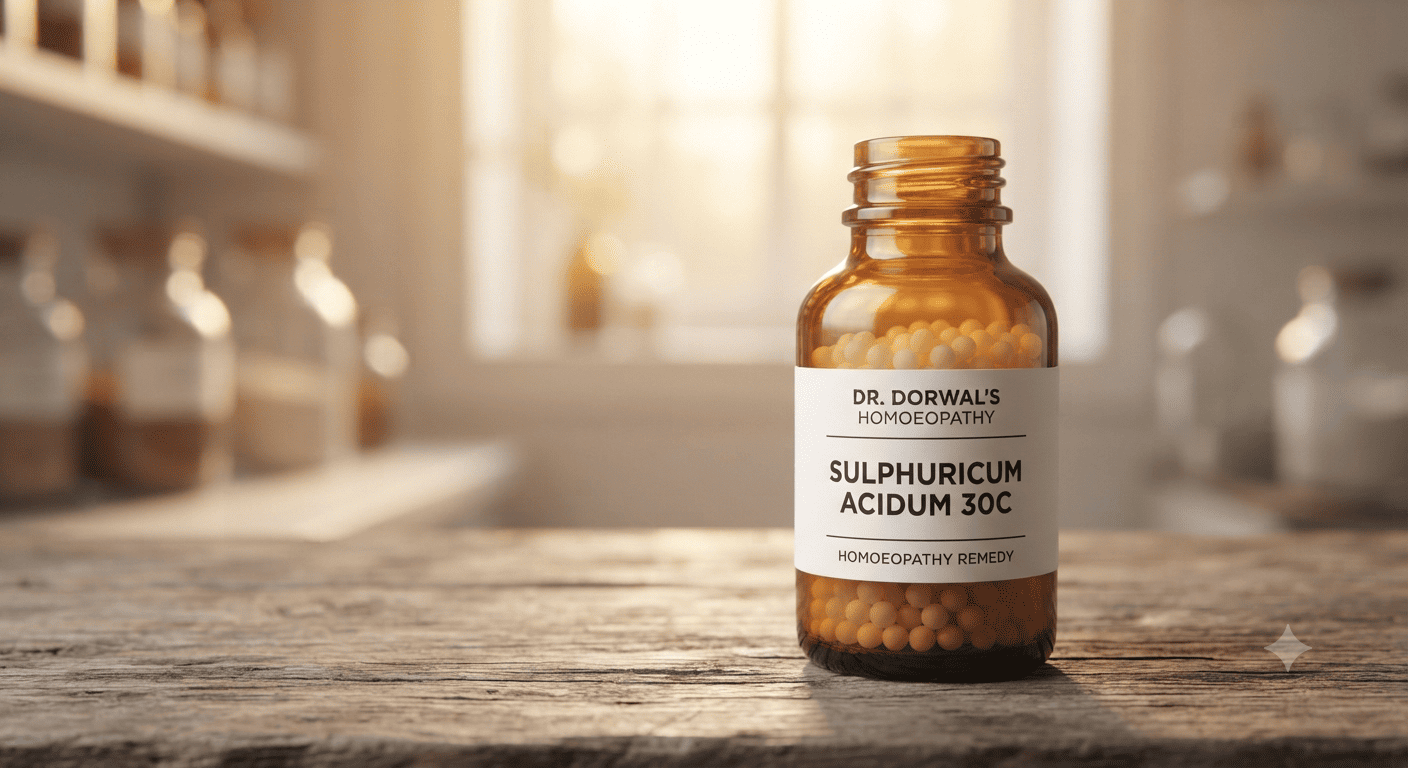
Sulphuricum Acidum (Sulphuric Acid) is a powerful homoeopathic remedy primarily recognized for addressing states of profound debility, particularly within the digestive tract, and for its specific efficacy in managing the aftermath of mechanical injuries and haemorrhagic tendencies.
Key Clinical Indications & Uses
The therapeutic profile of Sulphuricum Acidum covers a wide array of systemic and localized symptoms:
- Digestive Tract & Metabolism: It is indicated for a “relaxed” feeling in the stomach, often accompanied by heartburn, sour eructations, and a persistent craving for alcohol or stimulants. It is utilized in cases of gastralgia, hypochlorhydria, and offensive breath associated with pyorrhoea.
- Neurological & Mental States: Patients often exhibit significant fretfulness, impatience, and a sense of being in a constant “hurry”. It is a notable remedy for conditions like writer’s cramp and the neurological symptoms arising from lead poisoning.
- Haemorrhagic & Tissue Tendencies: A hallmark of this remedy is its affinity for haemorrhagic conditions, such as purpura haemorrhagica, intra-ocular haemorrhage, and easy bleeding from the gums. It is indicated for livid, bruised skin and is particularly useful in managing the sequelae of mechanical injuries, including a tendency toward gangrene or painful, discolored cicatrices.
- Respiratory & Female Health: It supports respiratory challenges such as bronchitis in children with a short, teasing cough, and addresses gynecological concerns like profuse menstruation and acrid, burning, or bloody leucorrhoea.
Administration & Modalities
- Dose: For general homoeopathic purposes, 30C potency is commonly utilized.
- Modalities:
- Worse: Symptoms typically worsen from excess heat or cold, especially during the forenoon and evening.
- Better: Patients generally feel improved by warmth and by lying on the affected side.
Dr. Dorwal’s Perspective
Sulphuricum Acidum is my primary consideration when the patient displays that characteristic “acid debility”—a pervasive feeling of weakness and relaxation, particularly in the stomach, paired with a frantic, hurried mental state. I have found it indispensable for patients suffering from the long-term effects of mechanical trauma, especially when skin tissues appear livid, bruised, or are slow to heal. When a patient presents with a history of alcohol dependency or shows signs of haemorrhagic fragility, this remedy provides the necessary structural support to restore internal balance. It acts effectively when the patient’s discomfort is quieted by warmth and the simple act of resting on the side that pains them.
Disclaimer: This content is for informational purposes only. Homoeopathic medicines should be taken under the guidance of a qualified homoeopathic physician. Do not self-medicate for chronic or serious medical conditions, and always seek professional advice for any health concerns.
Frequently Asked Questions (FAQs)
It is indicated for those with a strong craving for alcohol and has historically been used in higher-concentration protocols to help subdue that craving.
It is particularly indicated for mechanical injuries that result in bruising, petechiae, or a tendency toward gangrenous complications.
The patient is often fretful, impatient, and feels that everything must be done in a hurry.
The symptoms are worse in the forenoon and evening, especially with extremes of heat or cold, but the patient generally feels better with applied warmth.
