
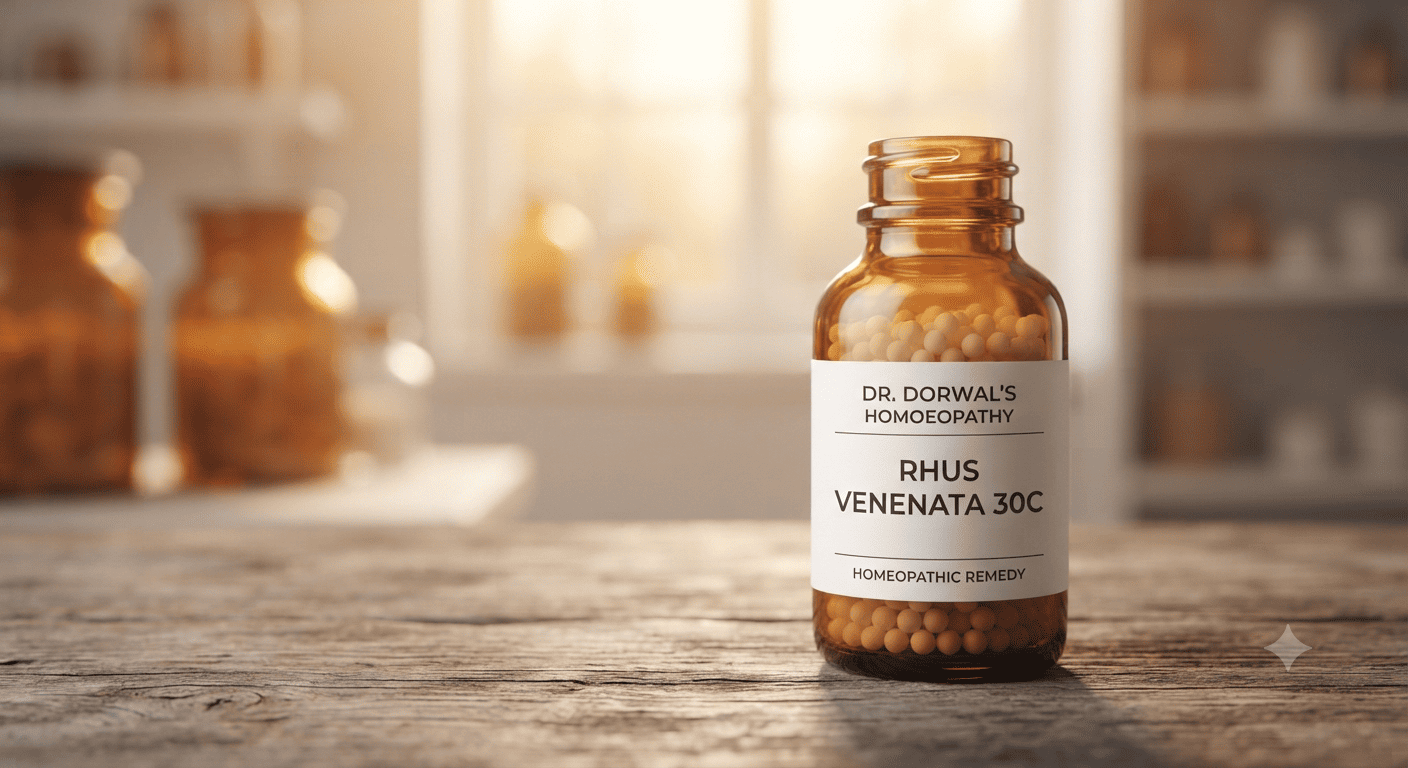
Rhus Venenata, commonly known as Poison-elder, is a potent remedy in our pharmacopeia, renowned for its profound impact on the skin and its accompanying systemic symptoms. It is particularly indicated when the clinical picture features severe vesicular inflammation and marked psychological distress.
Key Clinical Indications & Uses
Rhus Venenata is indicated for clinical pictures defined by acute inflammatory states and intense cutaneous reactions:
- Dermatological Manifestations: The skin symptoms of this remedy are characteristically severe, presenting with intense itching that is notably relieved by the application of hot water. It is indicated for conditions such as erysipelas, where the skin appears dark red, as well as erythema nodosum accompanied by nightly itching and pains in the long bones.
- Head & Sensory Presentations: Patients may present with significant facial swelling that nearly closes the eyes, a red and shiny nose, and vesicular inflammation of the ears. This is often associated with a heavy, frontal headache that worsens when walking or stooping.
- Gastrointestinal Symptoms: The remedy addresses profuse, watery, white stools occurring in the early morning (around 4 am), which are expelled with force and preceded by pain in the hypogastrium.
- Psychological Indicators: A hallmark of the Rhus Venenata patient is a state of great melancholy, characterized by a gloomy disposition and a lack of desire to live.
- Oral & Extremity Findings: Oral symptoms include a tongue that is red at the tip, fissured in the middle, and covered with vesicles on the underside. Extremity symptoms often manifest as a paralytic drawing sensation in the right arm, particularly in the wrist, extending down to the fingers.
Administration & Therapeutic Modalities
- Dose Selection: In clinical practice traditionally it is utilized in 30C potency.
Dr. Dorwal’s Perspective
In my clinical practice, Rhus Venenata is my primary consideration when faced with severe, vesicular skin eruptions that defy standard approaches. The modality of relief via hot water application is a crucial clinical sign that helps me distinguish this remedy from others in the Rhus family. Beyond the skin, I find it deeply effective for patients experiencing the specific combination of early-morning, forceful diarrhea and heavy, debilitating melancholy. It is a powerful remedy that requires a precise hand, but when the symptoms align—particularly the dark red erysipelatous inflammation—it acts with remarkable speed and efficiency to restore systemic balance.
Disclaimer: This content is for informational purposes only. Homoeopathic medicines should be taken under the guidance of a qualified homoeopathic physician. Do not self-medicate for chronic or serious medical conditions, and always seek professional advice for any health concerns.
Frequently Asked Questions (FAQs)
The intense itching is characteristically relieved by the application of hot water.
It treats profuse, watery, white stools that occur around 4 am, are expelled with force, and are preceded by hypogastric pain.
It acts as an antidote to Radium and is noted to follow it well in clinical treatment.
The 30C potency is the standard clinical range.
