
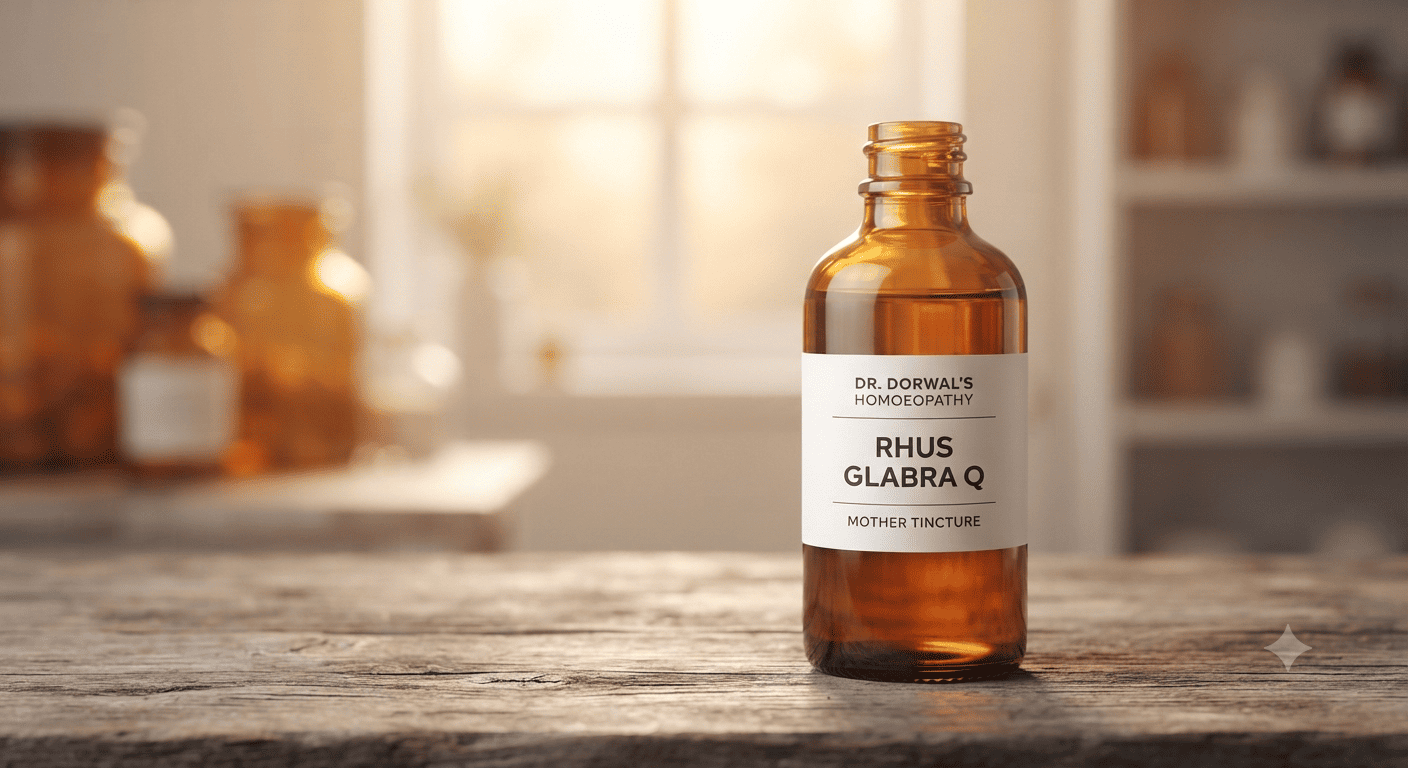
Rhus Glabra is a notable remedy in our pharmacopeia, particularly distinguished by its ability to address putrescent conditions and ulcerative processes within the oral cavity and gastrointestinal tract. It is indicated when there is a marked tendency toward debility and the development of fetid or foul-smelling discharges.
Key Clinical Indications & Uses
Rhus Glabra is indicated for clinical pictures defined by systemic debility and local ulceration:
- Oral & Mucosal Health: It is highly indicated for conditions such as scurvy, nursing sore mouth, and aphthous stomatitis, often manifesting as ulceration of the mouth and soft, spongy gums.
- Gastrointestinal & Systemic: It addresses fetid flatus and is noted for its ability to disinfect the bowels, helping to render flatus and stools free from odor. It is further indicated for patients presenting with profuse perspiration arising from debility, mirroring the state seen in China.
- Specific Symptoms: Patients may experience epistaxis (nosebleeds) accompanied by occipital headache. A unique mental symptom noted is the occurrence of dreams involving flying through the air.
- Putrescent States: It is a valuable agent in cases involving putrescent conditions with a clear tendency toward ulceration.
Administration & Therapeutic Modalities
- Dose Selection: Traditionally, the tincture is employed, often used locally for conditions such as spongy gums, aphthae, and pharyngitis. Internally, the 30C potency is generally utilized.
Dr. Dorwal’s Perspective
In my clinical practice, Rhus Glabra serves as an excellent “cleansing” remedy for the digestive and oral systems. When I see patients suffering from chronic aphthous stomatitis or gum tissue that remains soft and spongy, I look to this remedy to restore mucosal integrity. I am particularly impressed by its effectiveness in neutralizing the fetid nature of stools and flatus, which provides significant comfort to patients suffering from putrescent intestinal states. Furthermore, it is a crucial tool for practitioners when managing the lingering effects of mercury use, offering a path to recovery for those whose systems have been compromised by heavy metal therapeutic interventions.
Disclaimer: This content is for informational purposes only. Homoeopathic medicines should be taken under the guidance of a qualified homoeopathic physician. Do not self-medicate for chronic or serious medical conditions, and always seek professional advice for any health concerns.
Frequently Asked Questions (FAQs)
It is used for scurvy, nursing sore mouth, aphthous stomatitis, and ulcerations of the mouth and gums.
It helps disinfect the bowels, making flatus and stools free from odor, and addresses fetid flatus.
It is considered an antidote to the action of mercury and is used in treating secondary syphilis after mercury use.
The tincture (Q) is often used locally for oral and pharyngeal conditions, while the 30C potency is used for internal administration.
