
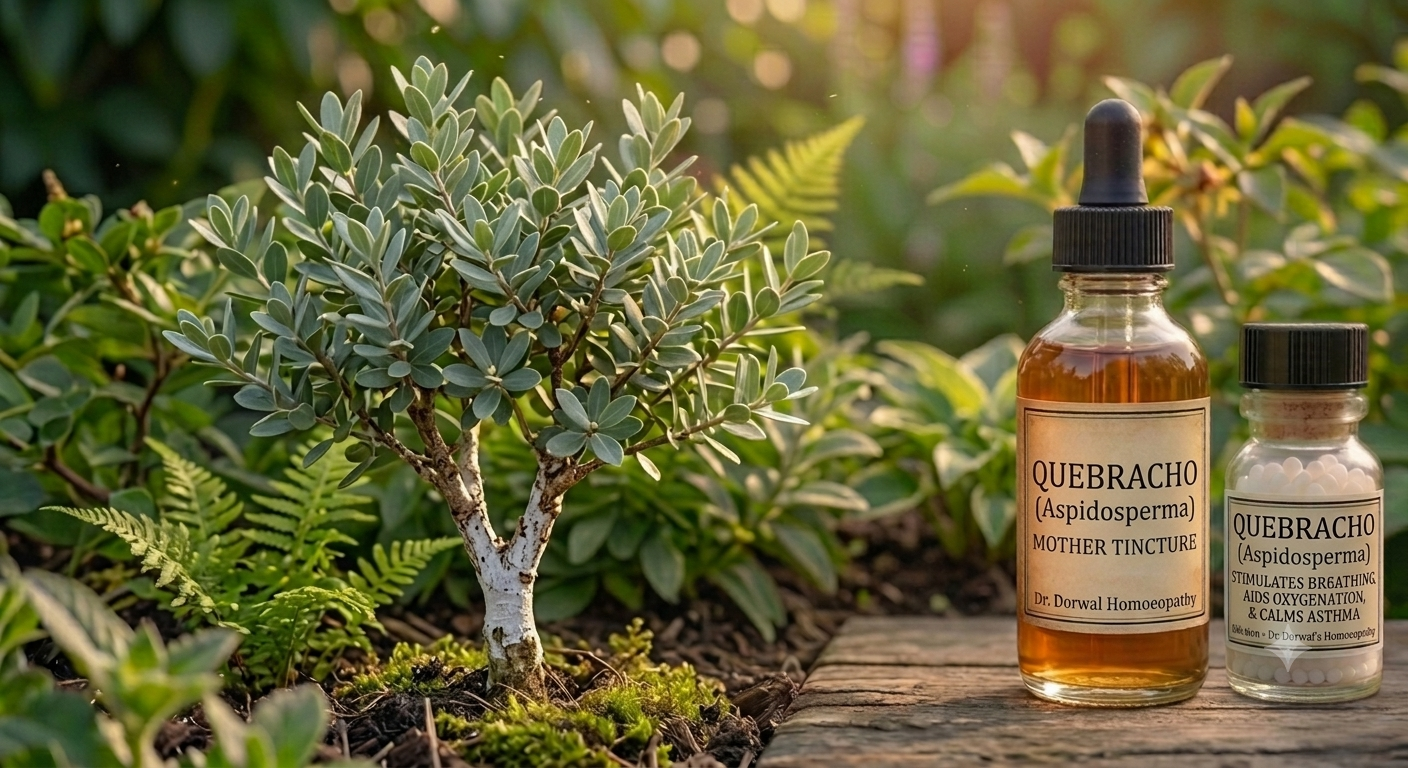
Quebracho (Aspidosperma), also known as a “tonic for the lungs,” is a specialized remedy that acts directly upon the respiratory system. It is uniquely indicated in clinical states where there is a deficiency in blood oxygenation or significant difficulty in breathing.
Clinical Profile and Key Indications
Quebracho (Aspidosperma) primary focus is to address “air hunger” and improve the body’s respiratory efficiency.
- Breathing Difficulties (Dyspnoea): It is mainly used for shortness of breath.
- Lung Issues: It is helpful for conditions like COPD (a lung disease that makes it hard to breathe) or Emphysema (where the lungs are damaged), helping to reduce the feeling of suffocation.
- Heart-Related Breathing Issues: Sometimes, if the heart is weak, it causes fluid buildup that makes breathing hard. Quebracho (Aspidosperma) is useful for Cardiac Asthma, especially if the patient feels like they are choking when they lie down flat and feels better sitting up.
- Improving Oxygen: It helps the body use oxygen better, which helps stabilize breathing when a person is struggling to catch their breath.
Administration & Therapeutic Modalities
- Potency Selection: For acute episodes of air hunger, lower potencies like mother tincture and dilutions are frequently employed to provide rapid support. For chronic respiratory maintenance or constitutional support, higher potencies may be used, but these must be strictly managed by a qualified homoeopath.
- Absorption Technique: In the form of globules, place globules directly on the tongue and allow it to dissolve completely. Avoid chewing to ensure maximum efficacy. In form of mother tincture (Q), Mix 5–10 drops in a half-glass of water and sip it. Avoid eating, drinking, or using strong-scented products (like peppermint or camphor) for at least 20 minutes before and after dosing.
- Supportive Care: The Quebracho (Aspidosperma) patient often finds breathing easiest when sitting upright or leaning forward. As respiratory health is fragile, patients are advised to ensure a dust-free environment and avoid heavy physical exertion during active episodes of distress.
Dr. Dorwal’s Perspective
In my clinical practice, I view Quebracho (Aspidosperma) as an essential supportive medicine, for managing cases of asthma. When a patient presents with ‘air hunger’—a state where they feel that no matter how deeply they breathe, it is never enough—I immediately consider it. It acts as a ‘rescue’ agent for respiratory muscles and lung function. Because shortness of breath can indicate critical cardiac or pulmonary issues, it must be used with a clear understanding of the underlying pathology.
Disclaimer: This content is for informational purposes only and is not medical advice. Shortness of breath can be a medical emergency. Always seek professional guidance from a qualified homoeopathic practitioner or medical professional for diagnosis and treatment before starting any medicine.
Frequently Asked Questions (FAQs)
Just as Digitalis is a classic heart remedy used to strengthen and regulate cardiac function, Quebracho (Aspidosperma) serves a similar role for the lungs. It provides support to the respiratory apparatus, effectively acting as a cardiac medicine specifically for respiratory distress.
No. It is specifically indicated for dyspnoea. If the breathlessness is caused by a severe infection (like pneumonia) or acute allergic asthma, other remedies—such as Antimonium Tartaricum or Arsenicum Album—may be required. A professional diagnosis is essential.
Quebracho (Aspidosperma) often provides rapid relief in acute episodes of ‘air hunger.’ However, for chronic respiratory conditions, it is part of a longer-term therapeutic plan that requires ongoing professional supervision.
Absolutely not. Homoeopathy serves as a supportive therapy. Never discontinue prescribed medical devices, oxygen, or inhalers without explicit instruction from your primary healthcare physician.
