
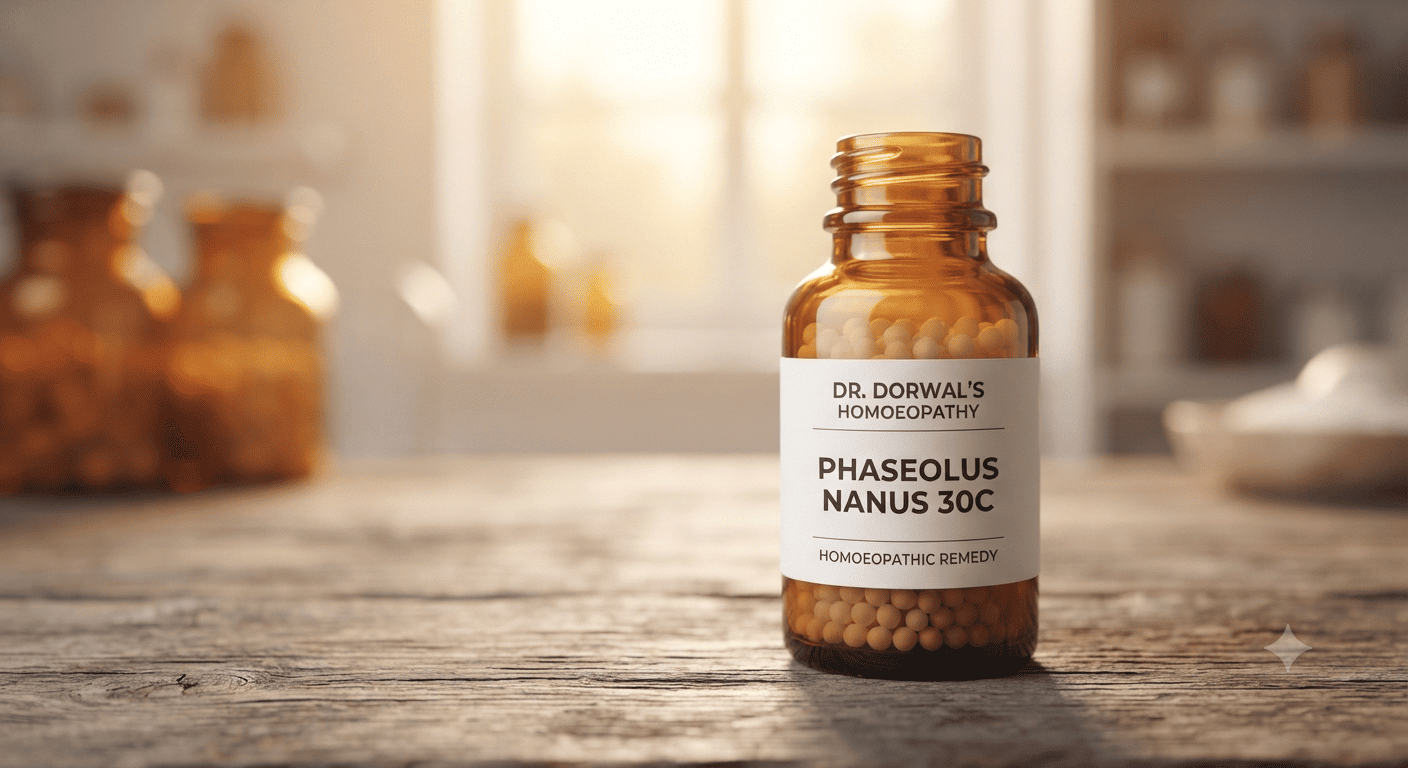
Phaseolus Nanus, or the Dwarf-bean, is a homoeopathic remedy characterized by its pronounced action on the cardiovascular system and its potential utility in managing specific symptoms associated with diabetes. It serves as a targeted consideration for patients presenting with complex cardiac rhythms and distress.
Key Benefits & Uses
Phaseolus Nanus is indicated for clinical pictures where cardiac disturbances and diabetic indicators are primary features:
- Cardiac Symptomatology: It is highly indicated for cases of fearful palpitation, often accompanied by an overwhelming sensation that death is approaching.
- Heart Distress: The remedy addresses a “sick” feeling localized about the heart, presenting with a rapid, weak pulse and slow, sighing respiration.
- Effusion Management: It may be considered in cases involving dropsical effusion into the pleura or the pericardium.
- Metabolic & Diabetic Utility: The remedy is indicated for the management of diabetic urine. Additionally, a decoction of the bean shells has been used as a drink for diabetes, though this requires careful monitoring due to the risk of inducing severe headaches.
- Cranial & Ocular Presentations: It is indicated for headaches localized in the forehead or orbits, exacerbated by movement or mental exertion. Ocular symptoms include dilated, light-insensitive pupils and painful sensitivity in the eyeballs.
Administration & Therapeutic Modalities
- Dose Selection: In clinical practice it is utilized in 30C potency and higher.
- Professional Guidance: As with all homoeopathic remedies, particularly those addressing systemic conditions like cardiac distress or diabetes, Phaseolus Nanus should be administered under the guidance of a qualified homoeopathic physician.
Dr. Dorwal’s Perspective
In clinical practice, Phaseolus Nanus is a fascinating remedy for those specific instances where cardiovascular anxiety—the “fearful palpitation”—is at the forefront of the patient’s complaints. When a patient describes an ominous, sinking, or “sick” feeling around the heart paired with a rapid yet weak pulse, I consider this remedy for its ability to address both the physical rhythm and the accompanying existential distress. While its traditional usage in diabetes management via decoctions is noted, I approach it with caution due to the potential for severe headache, preferring the precision of potentized forms. It serves as an essential tool in my repertoire for managing dropsical tendencies related to cardiac or pleural effusion, provided the clinical picture strongly demands it.
Disclaimer: This content is for informational purposes only. Homoeopathic medicines should be taken under the guidance of a qualified homoeopathic physician. Do not self-medicate for chronic or serious medical conditions, and always seek professional advice for any health concerns.
Frequently Asked Questions (FAQs)
It is indicated for fearful palpitation, a “sick” feeling about the heart, a rapid and weak pulse, and sighing respiration.
Yes, it is indicated for diabetic urine, and historically, a decoction of its shells has been used for diabetes, though this carries the risk of severe headache.
Patients may experience frontal or orbital headaches worsened by movement/exertion, alongside dilated, light-insensitive pupils and painful eyeballs.
In clinical practice 30C potency and higher is utilized.
