
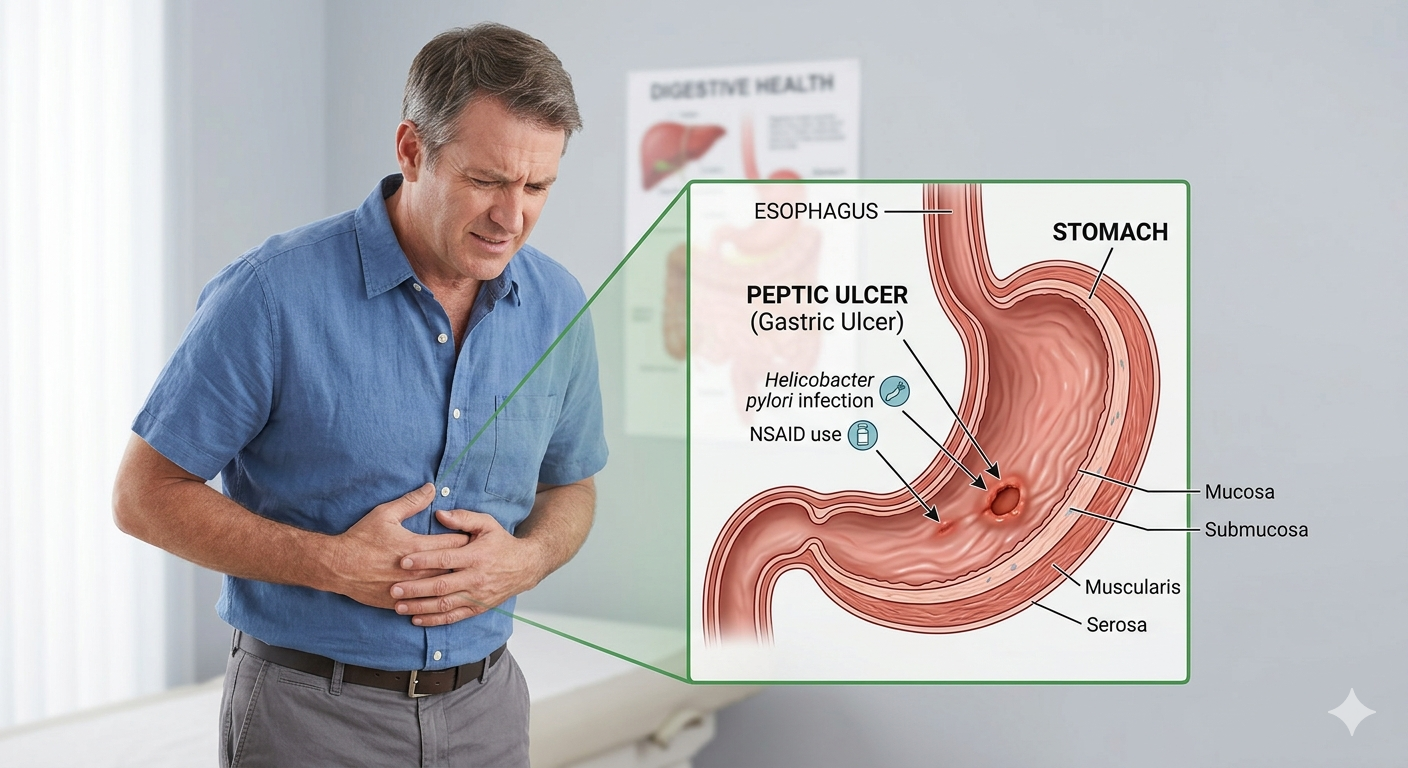
Peptic ulcers are open sores that develop on the inside lining of your stomach and the upper portion of small intestine (the duodenum). Occasionally, they occur in the lower portion of the esophagus.
The term “peptic” relates to digestion, while an “ulcer” is a break in a membrane that fails to heal properly. These ulcers are essentially lesions caused by an imbalance between the protective mucosal barrier of the digestive tract and the aggressive digestive juices—specifically hydrochloric acid (HCl) and the enzyme pepsin—produced by the stomach.
Types of Peptic Ulcers
- Gastric Ulcers: Formed within the stomach lining.
- Duodenal Ulcers: Located in the first part of the small intestine.
- Esophageal Ulcers: Developed in the lower esophagus, often associated with chronic acid reflux.
Signs and Symptoms
Symptoms vary from mild discomfort to severe, debilitating pain, often correlating with the chronicity of the ulcer.
- Primary Symptoms: Burning stomach pain, epigastric tenderness, persistent nausea, and vomiting.
- Digestive Distress: Bloating, poor appetite, persistent heartburn, and a feeling of fullness even after eating small amounts.
- Severe Indicators: Melaena (dark, sticky, tar-like stools indicating upper GI bleeding), haematemesis (vomiting blood), unexplained weight loss, and significant irregularities in bowel habits.
Causes and Risk Factors
Peptic ulcers are rarely caused by a single factor; they usually result from the interplay of biological, lifestyle, and chemical influences. Key causative and risk factors include:
- Bacterial Infection: Helicobacter pylori (H. pylori) is the most common cause. It can penetrate and weaken the protective mucus layer, allowing acid to damage the underlying tissue.
- Medication Misuse: Prolonged use of Non-Steroidal Anti-Inflammatory Drugs (NSAIDs) like ibuprofen, aspirin, and naproxen, as well as steroids, can erode the stomach lining.
- Lifestyle Triggers: Smoking impairs the digestive tract’s healing mechanisms and increases acid secretion. Excessive alcohol consumption acts as a direct irritant to the stomach lining.
- Psychological Stress: While stress does not directly cause ulcers, it can exacerbate existing symptoms and slow the healing process by affecting gastric acid secretion and immune function.
Complications
If left untreated, chronic ulcers can lead to life-threatening conditions like:
- Perforation: The ulcer erodes completely through the GI wall, allowing digestive contents to leak into the abdominal cavity.
- Internal Bleeding: Chronic erosion of blood vessels causes anemia, which may require urgent medical intervention or blood transfusions.
- Pyloric Stenosis: Scarring from repeated ulcerations can thicken the opening between the stomach and small intestine, causing a dangerous blockage.
- Hourglass Contracture: Scar tissue causes the stomach to constrict, dividing it into two cavities and severely impeding digestion.
Diagnosis
Doctors confirm the presence of ulcers through:
- Gastroscopy (Endoscopy): A thin, lighted tube with a camera is passed down the throat to directly visualize the esophagus, stomach, and duodenum.
- Urea Breath Test: This detects $H. pylori$ by checking for specific metabolic byproducts (carbon dioxide) produced by the bacteria after the patient consumes a urea-labeled capsule.
- Barium Meal Examination: An X-ray procedure where a barium swallow coats the lining of the digestive tract, making ulcers visible on X-ray films.
Treatment Approaches
1. Conventional Treatment Approach
Standard medical treatment focuses on neutralizing the environment and eliminating the infection:
- Antibiotics: A combination regimen (often including amoxicillin, clarithromycin, or levofloxacin) is used to eradicate H. pylori.
- Acid Suppression: Proton pump inhibitors (PPIs) and H_2 receptor antagonists (e.g., famotidine, cimetidine) are prescribed to decrease the amount of acid the stomach produces, allowing the ulcerated tissue time to heal.
2. Holistic Management and Lifestyle
A multi-faceted approach is often the most effective way to support the body’s natural healing. It includes:
- Small, Frequent Meals: Avoid large meals that over-distend the stomach.
- Limit Irritants: Steer clear of heavy spices, caffeine, excessive alcohol, and highly processed or “outside” foods.
- Hydration: Drink 6–10 glasses of water daily to maintain mucosal health.
- Probiotic Support: Including yogurt or fermented foods may help balance stomach flora.
- Stress Reduction: Practice Yoga and Meditation techniques like Pranayama (breath control) and Shavasana (corpse pose) that help to calm the autonomic nervous system, which directly influences gastric secretions.
- Elimination: Complete cessation of smoking is vital for the successful healing of the mucosa.
3. Homoeopathic Approach
Homoeopathic approach to treat peptic ulcers is highly individualized. Rather than focusing solely on the ulcer itself, a practitioner evaluates the “totality of symptoms,” which includes the patient’s physical sensations, emotional state, lifestyle habits, and underlying constitutional weaknesses (miasms). Following homoeopathic preparations are utilized in clinical practice by homoeopathic physicians:
1. Homoeopathic Dilutions (Constitutional & Acute)
Dilutions are typically prescribed based on the specific “symptom picture” of the patient. These are often administered in various potencies (e.g., 30C, 200C) depending on the intensity and duration of the condition.
- Nux Vomica: The primary remedy for individuals whose ulcers are triggered by a high-stress lifestyle, lack of sleep, and reliance on stimulants like coffee, alcohol, or tobacco. Symptoms often include a sensation of a “stone” in the stomach, bloating, and irritability.
- Argentum Nitricum: Indicated when there is intense, radiating pain, often accompanied by severe flatulence (belching) and a craving for sweets which may aggravate the condition.
- Phosphorus: Often used in cases of chronic, burning pain in the stomach that feels better after drinking cold water. It is also indicated when there is a tendency toward easy bleeding (haematemesis).
- Arsenicum Album: Indicated for severe, burning, “fire-like” pains in the stomach. The patient is typically very restless, anxious, and finds relief from warm drinks.
- Kali Bichromicum: A specific choice for round, deep-seated ulcers. The pain is often sharp, cutting, and localized to a small, specific spot.
2. Mother Tinctures (Organ Specific Support)
Mother tinctures are liquid extractions used to provide targeted support to the digestive system or to soothe irritation. They are often taken in a few drops diluted in a small amount of water.
- Hydrastis Canadensis Q: Excellent for cases characterized by weak digestion, sluggishness, and a persistent sensation of soreness in the stomach. It is specifically noted for its affinity to mucosal membranes.
- Condurango Q: Often used in cases where there is severe constriction or pain in the stomach, particularly when there is a history of chronic, slow-healing ulcers.
- Calendula Officinalis Q: Known for its healing properties, this can be used to support the regeneration of the gastric mucosa and soothe irritation.
- Geranium Maculatum Q: Occasionally indicated in cases of peptic ulcer with a tendency toward internal bleeding or “oozing” from the lining.
3. Bio-Chemic (Tissue Salt) Medicines
Bio-chemic salts are based on the theory of correcting mineral imbalances at the cellular level. They are often taken in 6X or 12X potency.
- Magnesia Phosphorica (Mag Phos): Often considered the “anti-spasmodic” salt. It is highly effective for cramping or spasmodic pain that is relieved by heat and firm pressure on the abdomen.
- Natrum Phosphoricum (Nat Phos): The primary bio-chemic remedy for hyperacidity. It helps neutralize excess stomach acid, making it useful for symptoms like heartburn, sour eructations, and a coated tongue.
- Kali Muriaticum: Indicated for conditions involving thick, white, or greyish mucus secretions. It is often used to resolve the inflammatory process and prevent scar tissue formation.
- Ferrum Phosphoricum: Used in the early stages of inflammation, especially if there is a tendency toward redness, heat, and initial signs of blood loss or tenderness.
Important Note: Homoeopathy is a highly specialized system. The effectiveness of these medicines depends on accurate “repertorization”—the process of matching the exact remedy to your specific symptoms. Always consult with a qualified, licensed Homoeopathic physician before starting homoeopathy treatment.
Conclusion
Peptic ulcers represent a significant disturbance in the delicate balance of the digestive system. Whether the cause is bacterial, medication-induced, or lifestyle-driven, the path to recovery requires a combination of clinical diagnosis and proactive self-care. By integrating conventional medical treatment for acute management with a holistic lifestyle shift—focusing on stress reduction, healthy diet, and personalized support—patients can not only heal existing ulcers but also prevent recurrence. Always consult a healthcare professional before starting any new treatment regimen, especially for severe abdominal pain.
Disclaimer: This information is for educational purposes only. Consult a licensed healthcare provider before initiating any medical, nutritional, or homoeopathic treatment.
