
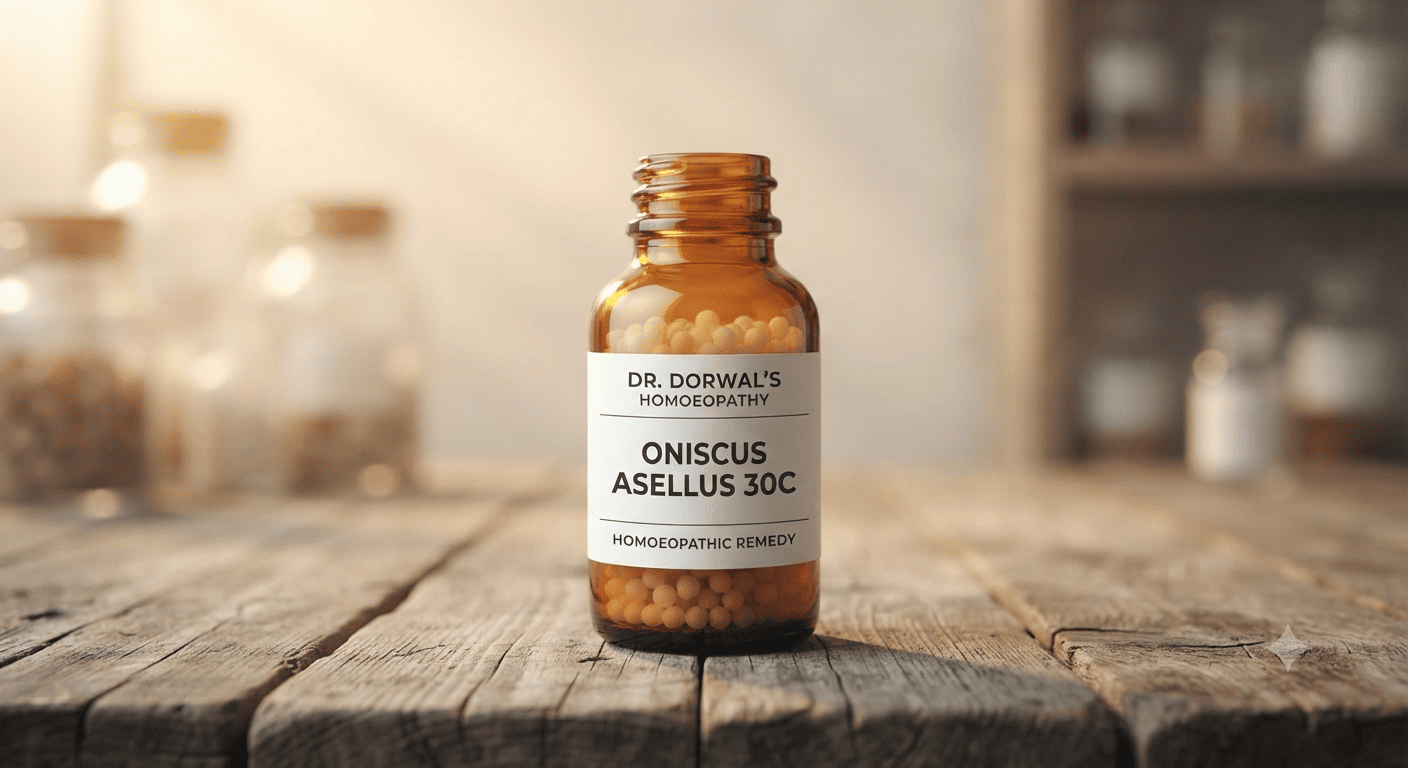
Oniscus Asellus, commonly referred to as the wood-louse or millepedes, is a unique remedy in the homoeopathic pharmacopoeia noted for its marked diuretic properties and its targeted action on respiratory and abdominal systems. It is primarily indicated for conditions involving fluid retention and catarrhal congestion, offering a specific therapeutic approach for complex systemic distress.
Key Benefits & Uses
Oniscus Asellus is indicated for states of localized congestion and excretory obstruction:
- Diuretic & Dropsical Support: It possesses distinct diuretic properties, making it a valuable remedy in the management of dropsical conditions.
- Respiratory & Bronchial Relief: It is effective in addressing asthmatic conditions, particularly when complicated by bronchial catarrh.
- Urinary & Rectal Regulation: The remedy addresses severe tenesmus of both the bladder and rectum, often occurring in the absence of stool or urine. Patients may also experience cutting and burning sensations within the urethra.
- Abdominal & Gastric Comfort: It is indicated for abdominal distension and severe meteorism, accompanied by intense colic. Additionally, it targets persistent pressure in the cardiac orifice of the stomach, sometimes associated with vomiting.
- Cephalic Support: It addresses specific head pains, including violent arterial pulsations and boring pain located behind the right ear in the mastoid process. It is also indicated for painful pressure localized above the root of the nose.
Administration & Therapeutic Modalities
- Potency Selection: Clinical literature generally suggests the use of the 30C potency.
- Absorption: To ensure maximum sublingual absorption, avoid eating or drinking for 20 minutes before or after administration.
Dr. Dorwal’s Perspective
In my clinical practice, Oniscus Asellus is an indispensable remedy when the body’s primary excretory pathways appear obstructed. When I see a patient suffering from the dual burden of dropsical fluid retention and respiratory asthmatic catarrh, I look to this remedy to restore balance. Its specific action on the bladder and rectum—particularly in cases of painful tenesmus where natural evacuation is blocked—highlights its role as a powerful regulator of systemic stasis. It is not just a diuretic; it is a profound cleanser for a system struggling with distension, meteorism, and localized congestion, helping to relieve the internal pressure that often accompanies these stubborn conditions.
Disclaimer: This content is for informational purposes only. Homoeopathic medicines should be taken under the guidance of a qualified homoeopathic physician. Do not self-medicate for chronic or serious medical conditions, and always seek professional advice for any health concerns.
Frequently Asked Questions (FAQs)
It is primarily valued for its distinct diuretic properties and is used to treat dropsical conditions.
Yes, it is indicated for asthmatic conditions that are accompanied by bronchial catarrh.
It addresses burning and cutting sensations in the urethra, as well as tenesmus of the bladder when accompanied by an inability to pass urine.
It is effective for severe colic, abdominal distension, and meteorism.
