
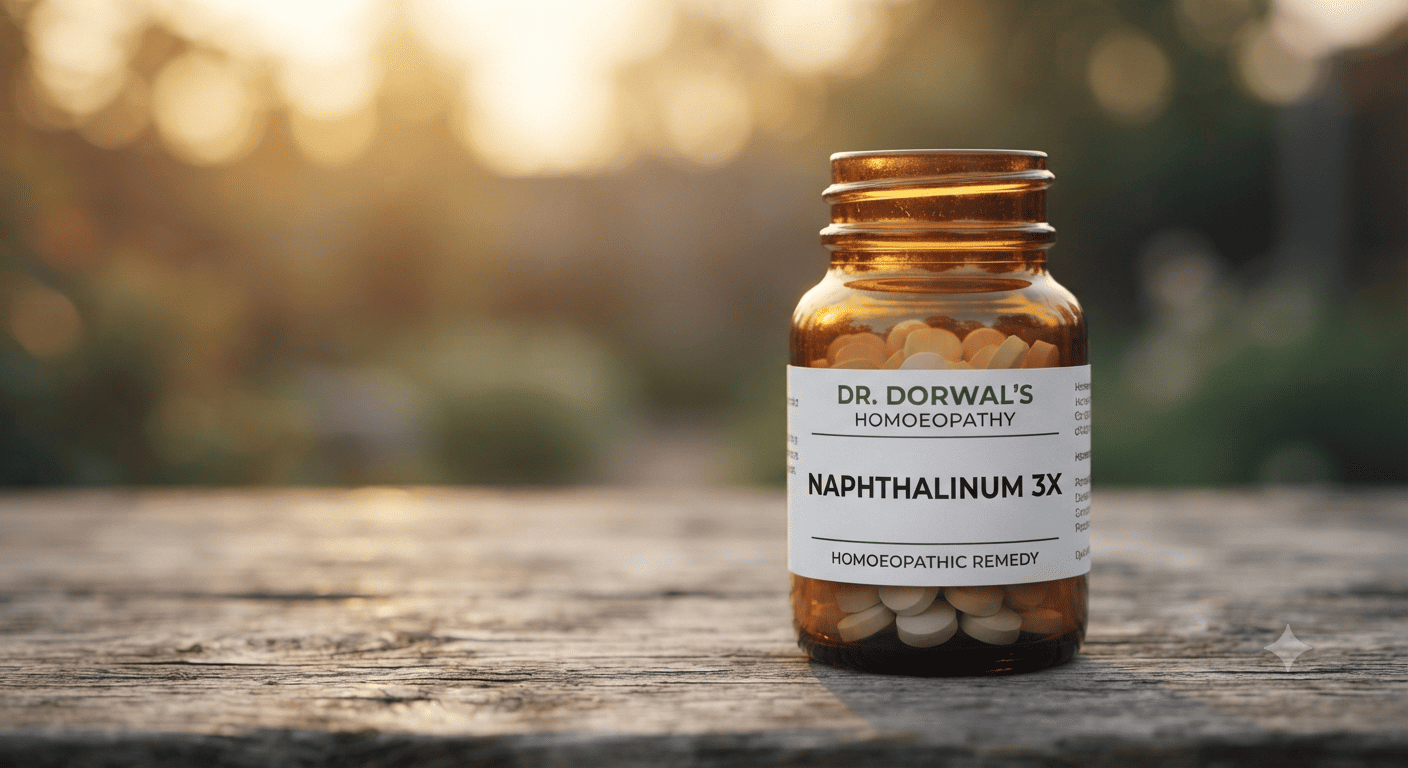
Naphthalinum (Tar Camphor), a chemical compound derived from coal-tar, is a potent remedy in the homoeopathic pharmacopoeia recognized for its specific affinity for the respiratory tract, the eyes, and the urinary system. While it acts as a focused intervention for acute inflammatory states, its utility extends to deep-seated conditions involving spasmodic irritation and catarrhal processes.
Key Benefits & Uses
Naphthalinum is indicated for states of deep-seated physical distress and specific inflammatory processes:
- Respiratory & Laryngeal Support: This remedy is highly regarded for its efficacy in treating hay fever, often accompanied by sneezing, eye inflammation, and a hot head. It is a vital remedy for spasmodic asthma—notably improved in the open air—as well as acute laryngo-tracheitis and bronchitis characterized by tenacious expectoration and chest oppression. Furthermore, it is indicated for whooping-cough involving long, continued paroxysms that hinder respiration, and for emphysema in the elderly associated with asthma.
- Ocular Integrity: Naphthalinum possesses a marked affinity for the eye, producing significant effects such as detachment of the retina, papillo-retinal infiltration, and the formation of patch deposits on the retina. It is also indicated for amblyopia, amaurosis, sparkling synchisis, soft cataracts, and corneal opacity.
- Urinary Tract Integrity: It is utilized for pyelonephritis and irritation of the periphery of the urinary apparatus. It is specifically indicated when there is an irresistible desire to urinate, a red and swollen meatus with edema of the prepuce, and urine that has a terribly offensive, decomposing, ammoniacal odor.
Administration & Therapeutic Modalities
- Potency Selection: Homeopathic literature suggests that the third trituration (3X) is commonly employed to address these systemic conditions.
- Absorption: To ensure maximum absorption, avoid eating or drinking for 20 minutes before or after administration.
Dr. Dorwal’s Perspective
In my clinical practice, Naphthalinum is the remedy I turn to when the patient presents with a highly reactive, hypersensitive respiratory system—particularly in the context of seasonal hay fever or spasmodic asthma. I find it remarkably effective when the patient describes their symptoms as ‘spasmodic,’ where the chest feels oppressed and the eyes are streaming with intense, painful inflammation. It is also an invaluable tool for those difficult cases of urinary bladder irritation where the symptoms are marked by offensive, ammoniacal-smelling urine. By addressing mucosal hypersensitivity directly, Naphthalinum helps to modulate the body’s exaggerated response to irritants, restoring a state of respiratory and urinary ease.
Disclaimer: This content is for informational purposes only. Homoeopathic medicines should be taken under the guidance of a qualified homoeopathic physician. Do not self-medicate for chronic or serious medical conditions, and always seek professional advice for any health concerns.
Frequently Asked Questions (FAQs)
Yes. It is frequently indicated for hay fever symptoms that include intense sneezing, eye inflammation, and a sensation of heat in the head.
It is indicated for spasmodic asthma characterized by a sensation of chest constriction and difficult breathing, which typically improves in the open air.
It is useful for pyelonephritis and irritation of the urinary apparatus, particularly when accompanied by frequent urging, painful bladder sensations, and urine that smells intensely offensive or ammoniacal.
Yes. It has a marked affinity for the eye and is indicated for conditions such as retinal infiltration, corneal opacity, and soft cataracts.
