
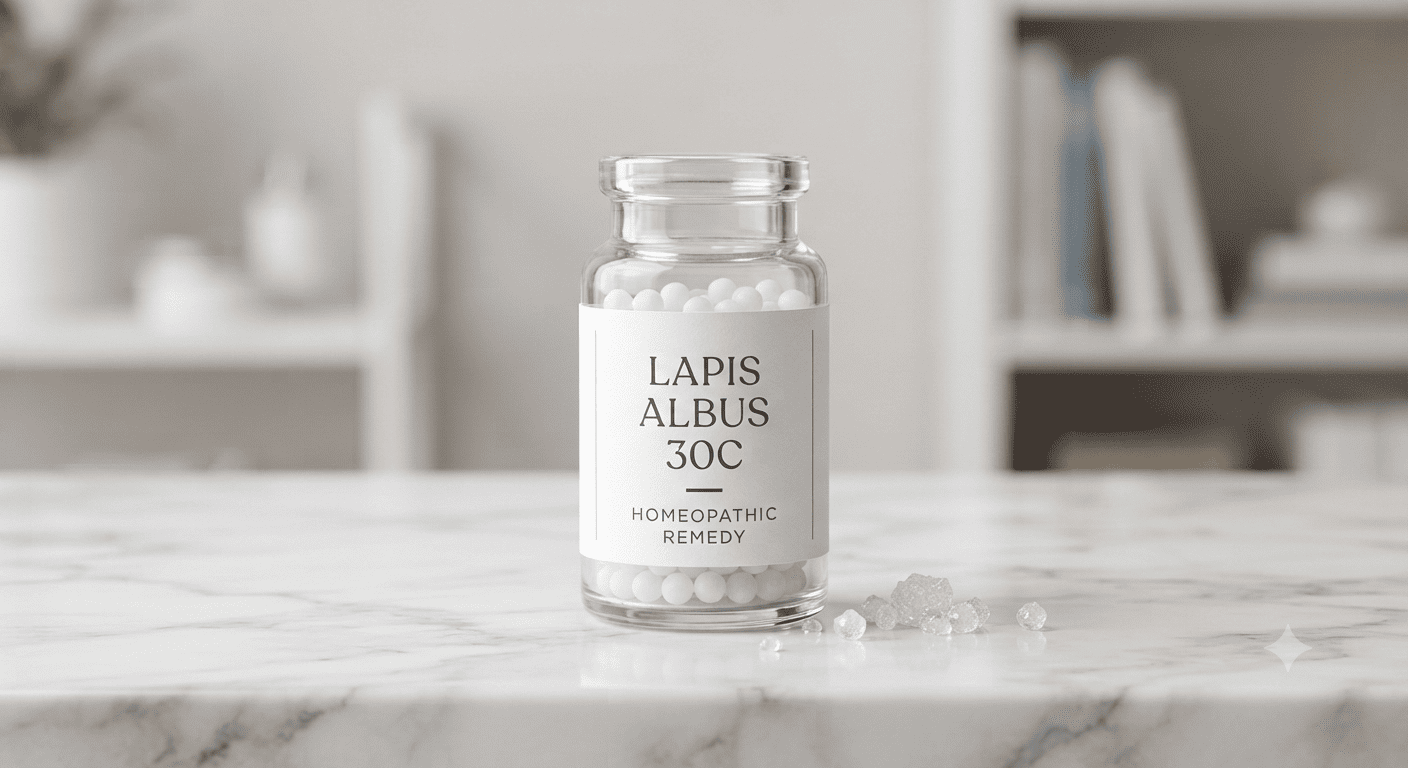
Lapis Albus, or the Silico-fluoride of Calcium, holds a specialized place in the homoeopathic pharmacopoeia, particularly concerning its profound influence on glandular tissues and its role in managing chronic structural disturbances. It acts as a deep-acting agent, targeting the connective tissue framework of the body and offering support where there is a tendency toward induration (hardening) or cellular dysregulation.
Key Benefits & Uses
Lapis Albus is indicated for states of glandular dysfunction and chronic tissue affections, characterized by a specific set of clinical manifestations:
- Glandular Regulation: It is highly effective for enlargement and induration of glands, particularly in the cervical region. Unlike other remedies that address “stony” hardness, Lapis Albus is indicated when the tissue retains a degree of elasticity and pliability.
- Support in Pre-ulcerative Conditions: It is clinically utilized during the pre-ulcerative stages of cellular growth, helping to address systemic imbalances before they progress further.
- Pain Modulation in Sensitive Areas: It provides relief from characteristic burning and stinging pains in the breast, stomach, and uterine regions, often associated with deep-seated glandular irritation.
- Pediatric & Metabolic Support: It is often indicated for infants who appear anaemic despite having a ravenous appetite, helping to regulate metabolic absorption in scrofulous or debilitated states.
- Aural & Integumentary Health: It is employed in cases of Otitis media suppurativa, where it can accelerate the healing process when the patient’s constitutional state aligns with its action. Additionally, it addresses chronic scrofulous abscesses, sores, and lipomas.
Administration & Therapeutic Modalities
- Potency Selection: Clinical outcomes are typically observed in the potencies (Such as 30C), depending on the chronicity of the glandular affection.
- Absorption: As with all homeopathic remedies, maintain a 20-minute window before or after food or beverage intake to ensure optimal sublingual absorption.
- Supportive Role: Lapis Albus is frequently used as an intercurrent remedy to support the structural framework when other constitutional medicines are indicated but progress is slow or hindered by local glandular stagnation.
Dr. Dorwal’s Perspective
In clinical practice, Lapis Albus is my primary consideration when I observe the ‘pliable but firm’ glandular swelling. It does not merely act on the surface; it penetrates the connective tissue, attempting to restore the cellular integrity that has been compromised. I find it particularly valuable in managing the anxieties surrounding fibroid tumors or glandular hardiness, as it addresses the underlying systemic irritability that drives these local manifestations. It is a remedy of depth, requiring patience and careful observation of the tissue’s response over time.
Disclaimer: This content is for informational purposes only. Homoeopathic medicines should be taken under the guidance of a qualified homoeopathic physician. Do not self-medicate for chronic or serious medical conditions, and always seek professional advice for any health concerns.
Frequently Asked Questions (FAQs)
It has a specific affinity for glands that exhibit a certain elasticity or pliability. It is most successful when the tissue is not yet fully hardened and when the constitutional state reflects the specific hunger and metabolic profile associated with the remedy.
Lapis Albus is primarily a constitutional and chronic-acting remedy. While it supports acute flare-ups (like localized abscesses or ear infections), its true value lies in addressing long-standing, systemic glandular disturbances.
It helps manage the associated symptoms, specifically the intense burning pains and issues related to profuse haemorrhaging. By addressing the cellular environment of the connective tissue, it aims to reduce the underlying irritation contributing to the growth.
Homoeopathic preparations are highly diluted and generally safe. However, because Lapis Albus impacts deep-seated cellular processes, it must be administered by a qualified professional to ensure the potency and frequency are appropriate for the patient’s specific pathology.
