
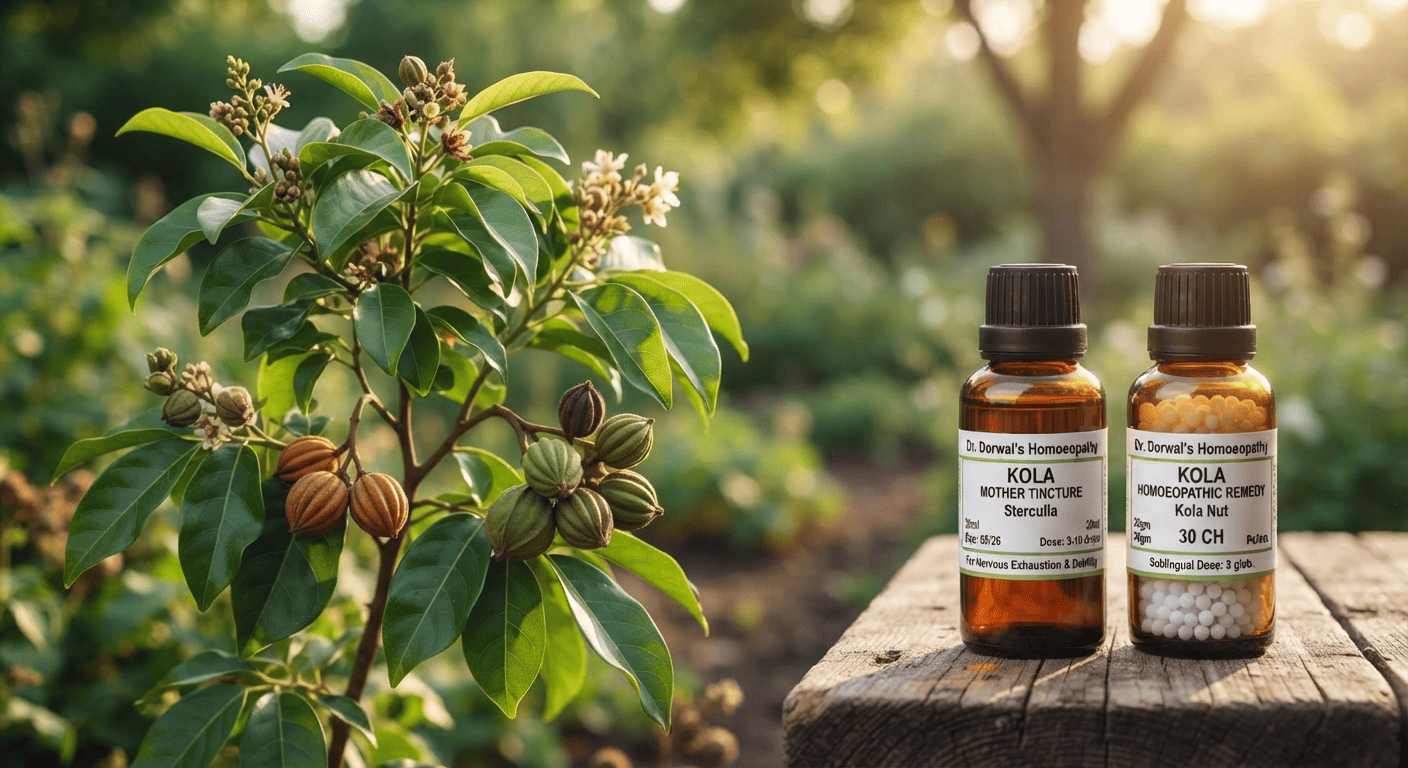
Kola, derived from the Sterculia genus, stands as a potent botanical ally in the homoeopathic pharmacopoeia, revered for its robust tonic properties and its profound affinity for physical and mental stamina. While many remedies address specific localized symptoms, Kola acts as a systemic “vitality regulator,” helping to bridge the gap between fatigue and endurance, and between habit-driven cravings and metabolic balance.
Key Benefits & Uses
Kola Nut is indicated for states of profound exhaustion, weakness, and conditions where the body’s internal rhythm requires stabilization:
- Physical & Mental Stamina (Neurasthenia): Kola is a primary remedy for nervous exhaustion and general debility. It provides the capacity to endure prolonged physical exertion, allowing the body to sustain high levels of activity without the immediate onset of fatigue.
- Circulatory & Cardiac Support: It acts as a regulator for the circulatory system, assisting in the stabilization of cardiac rhythm. It is particularly indicated for those experiencing symptoms of a “weak heart” characterized by irregular or sluggish circulation.
- Digestive & Metabolic Balance: Kola promotes healthy appetite and digestion. Beyond its tonic effects, it is notably indicated as a supportive remedy for breaking the drinking habit, helping to diminish the intense craving for alcohol while restoring digestive integrity.
- Respiratory Support: It is utilized for asthma, offering support to the respiratory system when breathing difficulties coincide with low vitality.
- Diuretic Action: Its gentle diuretic effect helps the body maintain fluid balance, further supporting the circulatory system’s efficiency.
Administration & Therapeutic Modalities
- Potency & Dosage: In therapeutic practice, Kola is often utilized in lower potencies or mother tinctures. Dosage can range from three to ten drops, though historical clinical use has noted higher doses (up to one dram) when the goal is to counteract severe exhaustion or systemic collapse. As with all potent remedies, the specific dilution should be determined by a qualified practitioner.
- Absorption: To ensure optimal efficacy, avoid consuming food or drink for 20 minutes before or after administration to facilitate sublingual absorption.
- Relationship to Other Remedies: Kola shares a clinical affinity with Coca, another powerful stimulant and tonic remedy, and they are often considered in similar profiles of physical and mental weariness.
Dr. Dorwal’s Perspective
In clinical practice, I consider Kola to be the quintessential ‘endurance tonic.’ When a patient presents with a feeling of being ‘run down’—where the heart feels weak, the digestion is sluggish, and the spirit is burdened by persistent fatigue—Kola acts as a catalyst for restoration. It does not merely mask the fatigue; it bolsters the body’s innate ability to produce and regulate energy.
Furthermore, its unique ability to assist those seeking to overcome the drinking habit makes it an invaluable tool. It addresses the physical craving at the metabolic level, helping to restore appetite and digestive health, which are often the first casualties of prolonged substance reliance. For the individual struggling to keep pace with the demands of life, Kola serves as a reliable support for both heart and mind.
Disclaimer: This content is for informational purposes only. Homoeopathic medicines should be taken under the guidance of a qualified homoeopathic physician. Do not self-medicate for chronic or serious medical conditions, and always seek professional advice for any health concerns.
Frequently Asked Questions (FAQs)
While it provides energy and endurance, it acts as a tonic that supports the body’s natural rhythms. It helps regulate the heart and circulation rather than simply forcing the nervous system into an artificial state of hyperactivity.
It helps by promoting appetite and improving digestive function, which are often compromised by alcohol use. By restoring metabolic balance, it helps reduce the physiological drive to consume liquor.
Kola is a classic remedy for neurasthenia (nervous exhaustion). While it may be a valuable component in a management plan, chronic conditions should always be evaluated and treated through a comprehensive, professional homoeopathic approach.
Because Kola has a direct effect on the heart and circulation, it is essential to use it under the supervision of a physician. This ensures that the dosage is appropriate for the patient’s individual cardiac and systemic needs.
