
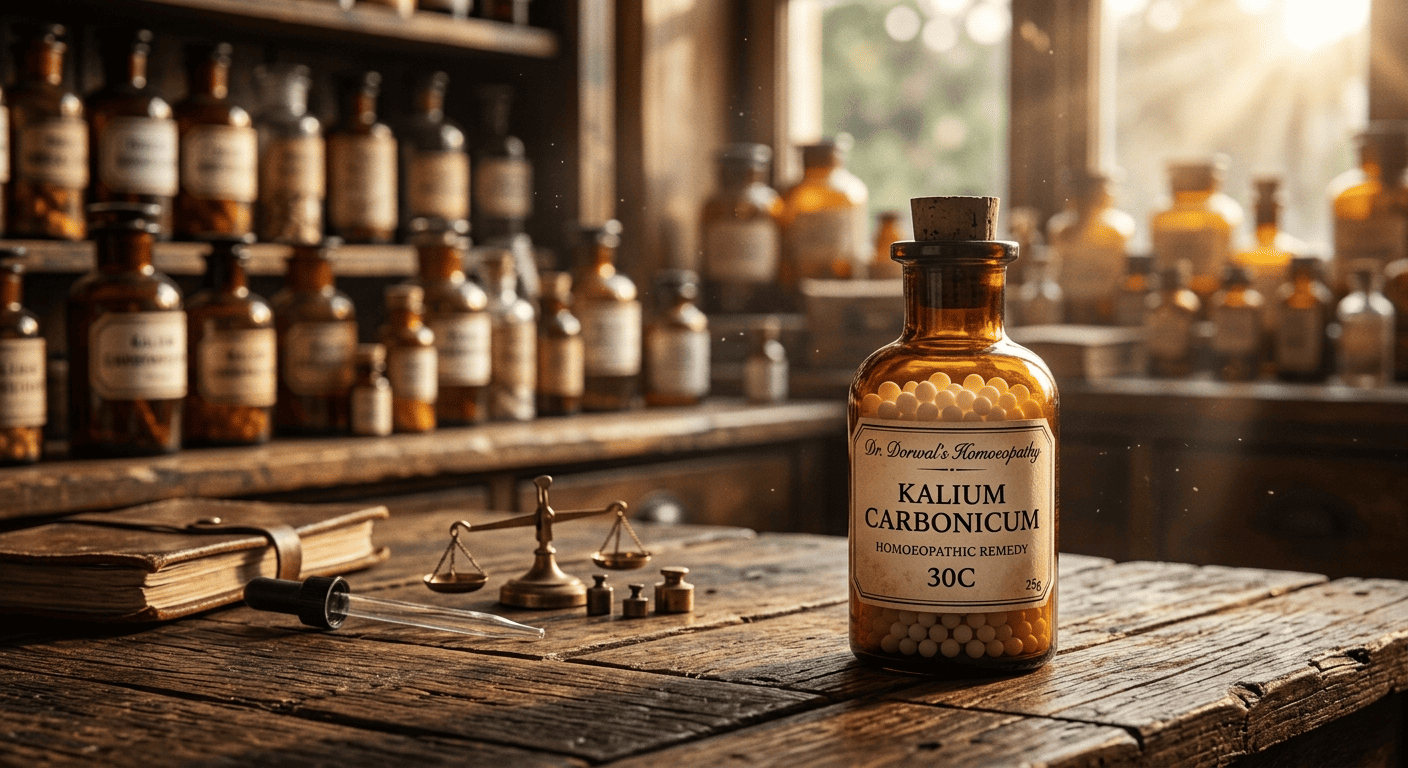
Kalium Carbonicum (Carbonate of Potassium) serves as a vital homoeopathic agent, fundamentally characterized by its influence on fibrous tissues, the skeletal system, and the mucous membranes. It is primarily indicated for states of profound weakness, general depression, and systemic debility, often accompanied by a characteristic tendency toward dropsy and paretic conditions.
Clinical Indications & Benefits
In clinical practice, Kalium Carbonicum is utilized for several specific scenarios:
- Respiratory & Catarrhal Conditions: Highly indicated for bronchitis and chronic catarrh, marked by a dry, hard cough—particularly around 3:00 AM—and the presence of scanty, tenacious expectoration.
- Musculoskeletal & Rheumatoid Affections: Indicated for sharp, cutting, or stitching pains in muscles and joints, often associated with stiffness and a “giving-out” sensation in the limbs and back.
- Gastrointestinal Disorders: Clinically useful for dyspepsia in the elderly, characterized by burning acidity, flatulence, and a constant feeling of fullness in the stomach.
- Female Health & Reproductive Support: Frequently utilized in cases involving menstrual irregularities, uterine haemorrhaging following parturition, and general debilitated states following miscarriage.
- Urinary & Renal Affections: Indicated for conditions involving pressure on the bladder, nocturnal enuresis, and involuntary urination during coughing or sneezing.
Administration & Therapeutic Modalities
- Potency & Dosage: Practitioners typically employ 30C potency or higher. It is recommended to use the remedy cautiously, particularly in advanced cases of gout, Bright’s disease, and tuberculosis, and practitioners are advised not to repeat doses too frequently.
- Clinical Observation: The hallmark of Kalium Carbonicum is the presence of sharp, stitching pains that can occur in any part of the body. Key modalities include an aggravation of symptoms in the early morning (around 3:00 AM) and in cold weather, while symptoms generally improve with movement and in warm, albeit moist, climates.
Dr. Dorwal’s Perspective
In my clinical practice, Kalium Carbonicum is the foundational remedy for the “exhausted and sensitive” patient. I have observed that individuals requiring this remedy often possess a constitutional weakness that leaves them incredibly sensitive to atmospheric changes and cold drafts. It is my go-to intervention for patients whose physical systems are struggling to recover, whether from the aftereffects of labor, chronic digestive issues, or deep-seated rheumatic pain. By addressing this underlying lack of vitality, Kalium Carbonicum helps to rebalance the patient’s internal state, providing support where other remedies might fail to gain traction.
Disclaimer: This content is for informational purposes only. Homoeopathic medicines should be taken under the guidance of a qualified homoeopathic physician. Do not self-medicate for chronic or serious medical conditions, and always seek professional advice for any health concerns.
Frequently Asked Questions (FAQs)
The hallmark pain of this remedy is sharp, cutting, and stitching, which may be felt in any part of the body or in connection with any affection.
Yes, it is highly regarded for bronchitis and chronic catarrh, especially when there is a dry, hard cough occurring around 3:00 AM.
Symptoms typically worsen in the early morning (specifically around 3:00 AM), in cold weather, and when lying on the left or painful side; they generally improve while moving about during the day.
Yes, it is often indicated for dyspepsia in older individuals, presenting with burning acidity, bloating, and a general feeling of gastric weakness.
