
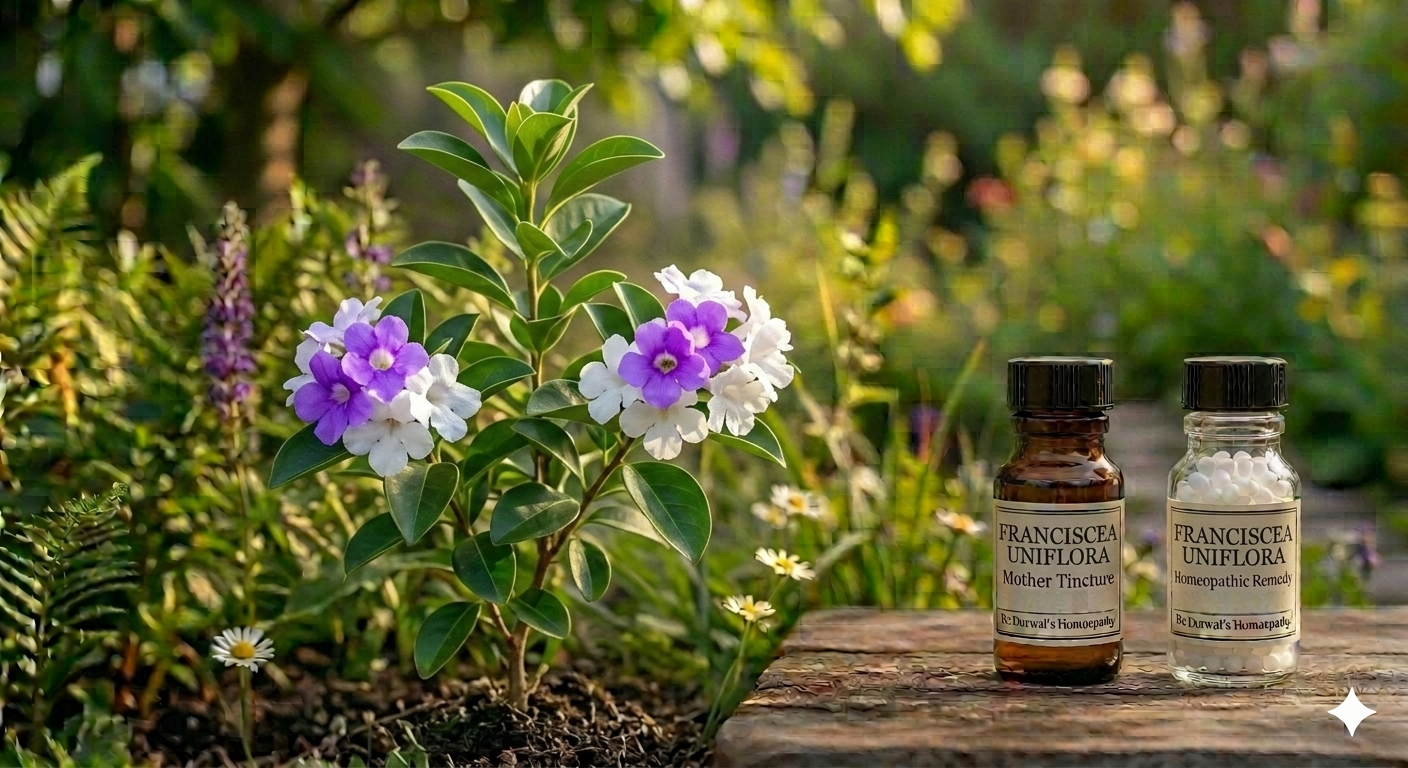
Franciscea uniflora, also known as Manaca, is a remedy in homoeopathy noted for its profound action on the musculoskeletal system and its use in managing chronic rheumatic complaints.
Clinical Indications & Benefits
In clinical practice, Franciscea uniflora is primarily indicated for conditions involving deep-seated inflammation and pain:
- Rheumatic & Arthritic Affections: It is highly valued for its efficacy in treating chronic rheumatism and arthritis, particularly when accompanied by stiffness, soreness, and intense pain in the joints.
- Musculoskeletal Support: Often employed in cases of muscular pain and inflammation, providing relief where there is a feeling of contraction or tension in the limbs.
- Lymphatic & Glandular Action: It is sometimes considered for its influence on the lymphatic system, particularly when chronic inflammation is associated with glandular swellings.
- Syphilitic or Chronic Taints: Historically, it has been explored in cases where there is a suspicion of deep-seated, chronic, or sycotic-syphilitic miasmatic influence, often indicated by obstinate, long-standing complaints.
Administration & Therapeutic Modalities
- Potency & Dosage: Practitioners typically utilize this remedy in various potencies (Like Mother Tincture or 30C) depending on the chronicity and depth of the patient’s condition. It is selected when the symptom picture matches its strong affinity for the joints and muscular tissues.
- Clinical Observation: The hallmark of this remedy is its restorative action in long-standing rheumatic cases. Success is observed through a gradual reduction in joint stiffness, increased ease of movement, and a decrease in the intensity of chronic muscular pain.
Dr. Dorwal’s Perspective
In my clinical practice, Franciscea uniflora is a specialized remedy I consider for patients presenting with stubborn, chronic rheumatic pains that have proven resistant to initial treatments. I find it particularly valuable when the pain is associated with a deep sense of stiffness or tension in the musculature. While I have not utilized it in every case, it remains an essential tool to keep in consideration for patients dealing with long-standing joint issues where the underlying pathology seems to be deeply rooted in the musculoskeletal and lymphatic systems. It is a remedy that respects the complexity of chronic inflammatory states.
Disclaimer: This content is for informational purposes only. Homoeopathic medicines should be taken under the guidance of a qualified homoeopathic physician. Do not self-medicate for chronic or serious medical conditions, and always seek professional advice for any health concerns.
Frequently Asked Questions (FAQs)
It is primarily utilized in homoeopathy for treating chronic rheumatism, arthritis, and deep-seated muscular pain.
It is indicated for cases where there is significant stiffness, soreness, and pain in the joints, helping to improve mobility over time.
Yes, it is occasionally considered for its influence on the lymphatic system, especially when associated with chronic inflammation.
The hallmark of this remedy is its effectiveness in long-standing rheumatic complaints characterized by contraction and tension in the muscles and joints.
