
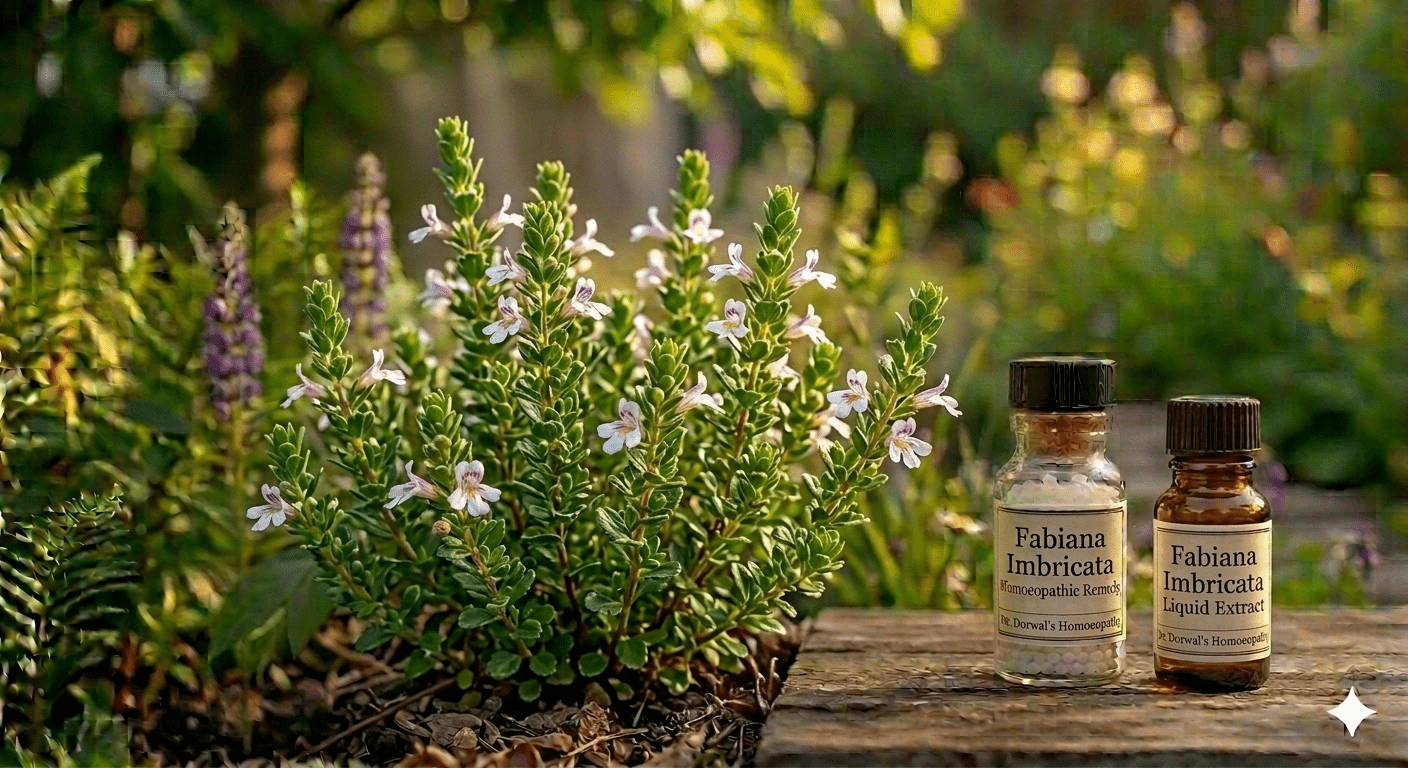
Fabiana Imbricata, commonly known as Pichi-Pichi, is a significant homoeopathic remedy derived from the shrub Fabiana imbricata, native to the mountainous regions of South America. It is highly valued in clinical practice for its specific affinity for the urinary tract and the liver, functioning as a potent cleanser and sedative for the renal system.
Clinical Indications & Benefits
In clinical practice, Fabiana Imbricata is primarily indicated for conditions where urinary irritation and congestion are the focus of pathology:
- Urinary Irritation: Indicated for catarrhal conditions of the urinary bladder (cystitis) and ureters. It is particularly useful when there is a persistent urge to urinate, often accompanied by a sense of irritation or rawness in the bladder.
- Renal Support: Addresses the presence of gravel or small calculi. It acts as a diuretic and urinary antiseptic, helping to increase urine flow and facilitate the passage of gravel or sand, thereby reducing irritation caused by their presence.
- Dysuria & Urethral Sensitivity: Helpful in cases of difficult or painful urination, specifically when symptoms of urethritis or bladder sensitivity are present. It is often employed when the urine is loaded with mucus or pus.
- Hepatic & Digestive Reflex: It is unique in that it often addresses urinary symptoms that coincide with mild liver sluggishness or digestive disturbances, acting as a supportive remedy for the biliary system as well.
Administration & Therapeutic Modalities
- Potency & Dosage: Practitioners typically utilize the mother tincture (Q) or low potencies (30C) to exert its direct physiological action on the urinary tract and facilitate drainage. The dosage is adjusted based on the intensity of the inflammatory symptoms.
- Clinical Observation: The hallmark of this remedy is the “soothing” effect it provides to an irritated, catarrhal bladder. Monitoring the patient for a reduction in the “burning” or “raw” sensations during urination and an improvement in the clarity of the urine is essential for assessing the efficacy of the treatment.
Dr. Dorwal’s Perspective
In my clinical practice, Fabiana Imbricata is a go-to remedy when I encounter patients suffering from chronic cystitis or the discomfort of small urinary stones. I find it uniquely effective because it combines a soothing action on the mucous membranes of the bladder with a gentle, stimulating effect on the kidneys to promote better drainage. It is particularly reliable when the patient describes a sensation of raw irritation that keeps them in a state of constant urinary distress. By calming the local inflammation and encouraging the flushing of sediment, Fabiana Imbricata provides much-needed relief in complex, irritative urinary presentations.
Disclaimer: This content is for informational purposes only. Homoeopathic medicines should be taken under the guidance of a qualified homeopathic physician. Do not self-medicate for chronic or serious medical conditions, and always seek professional advice for any health concerns.
Frequently Asked Questions (FAQs)
It is primarily utilized in homoeopathy for managing cystitis, urinary catarrh, and the passage of small urinary gravel or calculi.
It acts as a urinary antiseptic and sedative, soothing raw, irritated bladder linings and promoting the flow of urine to flush out mucus, pus, or sediment.
Yes, it is also traditionally used to support liver function and improve digestion, often being prescribed when urinary complaints are accompanied by biliary sluggishness.
The core indications are a persistent desire to urinate, a sensation of rawness or irritation in the bladder and urethra, and the presence of mucous or sandy sediment in the urine.
