
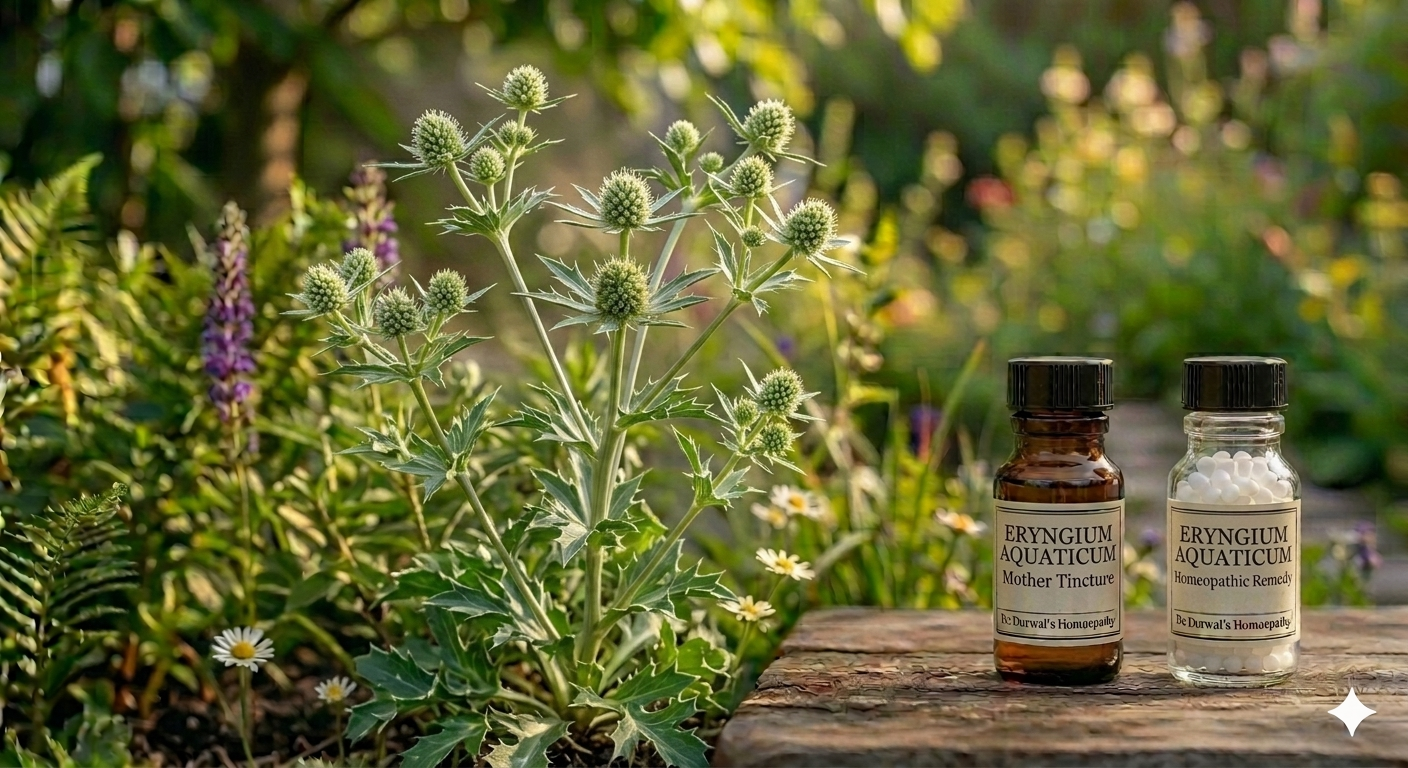
Eryngium Aquaticum, commonly known as Button Snakeroot, is a distinctive homoeopathic remedy recognized for its specific affinity for the urinary tract and the pelvic organs. It is highly valued in clinical practice for managing conditions involving bladder irritation, discomfort, and specific reproductive system complaints.
Clinical Indications & Benefits
In clinical practice, Eryngium Aquaticum is indicated for several distinct scenarios:
- Urinary Tract Irritation: Highly indicated for bladder and urethral irritation, often presenting with a sensation of burning, itching, or pain during urination.
- Dysuria & Frequency: Effectively used for frequent urging to urinate, where the act itself may be difficult, painful, or incomplete.
- Pelvic & Reproductive Concerns: Clinically useful for discomfort in the pelvic region, sometimes associated with prostatic issues in men.
- Mucosal Sensitivity: Known for its tonic action on the mucous membranes of the urinary passages, helping to alleviate the raw, sore feeling often reported by patients.
Administration & Therapeutic Modalities
- Potency & Dosage: Practitioners typically utilize the mother tincture (Q) or lower potencies (such as 30C) to address both the inflammatory and catarrhal aspects of the urinary conditions.
- Clinical Observation: The hallmark of this remedy is the combination of urinary irritability with a dull, aching soreness in the pelvic basin. Monitoring the patient for the specific character of the burning sensation and the urgency of urination is essential for an accurate prescription.
Dr. Dorwal’s Perspective
In my clinical practice, Eryngium Aquaticum is a focused remedy for those suffering from persistent, nagging urinary discomfort. I have found it particularly effective for patients who describe a feeling of rawness or heat along the urethra, which often interferes with their daily comfort and sleep. By soothing the irritated mucosa and reducing the inflammatory impulse within the urinary tract, I utilize Eryngium to restore bladder function and comfort. It remains a reliable choice when the clinical presentation points clearly to localized urinary and pelvic distress.
Disclaimer: This content is for informational purposes only. Homoeopathic medicines should be taken under the guidance of a qualified homeopathic physician. Do not self-medicate for chronic or serious medical conditions, and always seek professional advice for any health concerns.
Frequently Asked Questions (FAQs)
It is primarily utilized in homoeopathy for treating bladder and urethral irritation, frequent/painful urination, and associated pelvic discomfort.
It acts to soothe the irritated and inflamed mucous membranes of the urinary tract, reducing burning sensations and the constant urge to urinate.
Yes, it is often considered in cases where there is aching or discomfort in the pelvic region, including concerns related to the prostate or reproductive system irritation.
While effective for symptoms of irritation and burning, it should be part of a professional assessment to determine the underlying cause of the distress.
