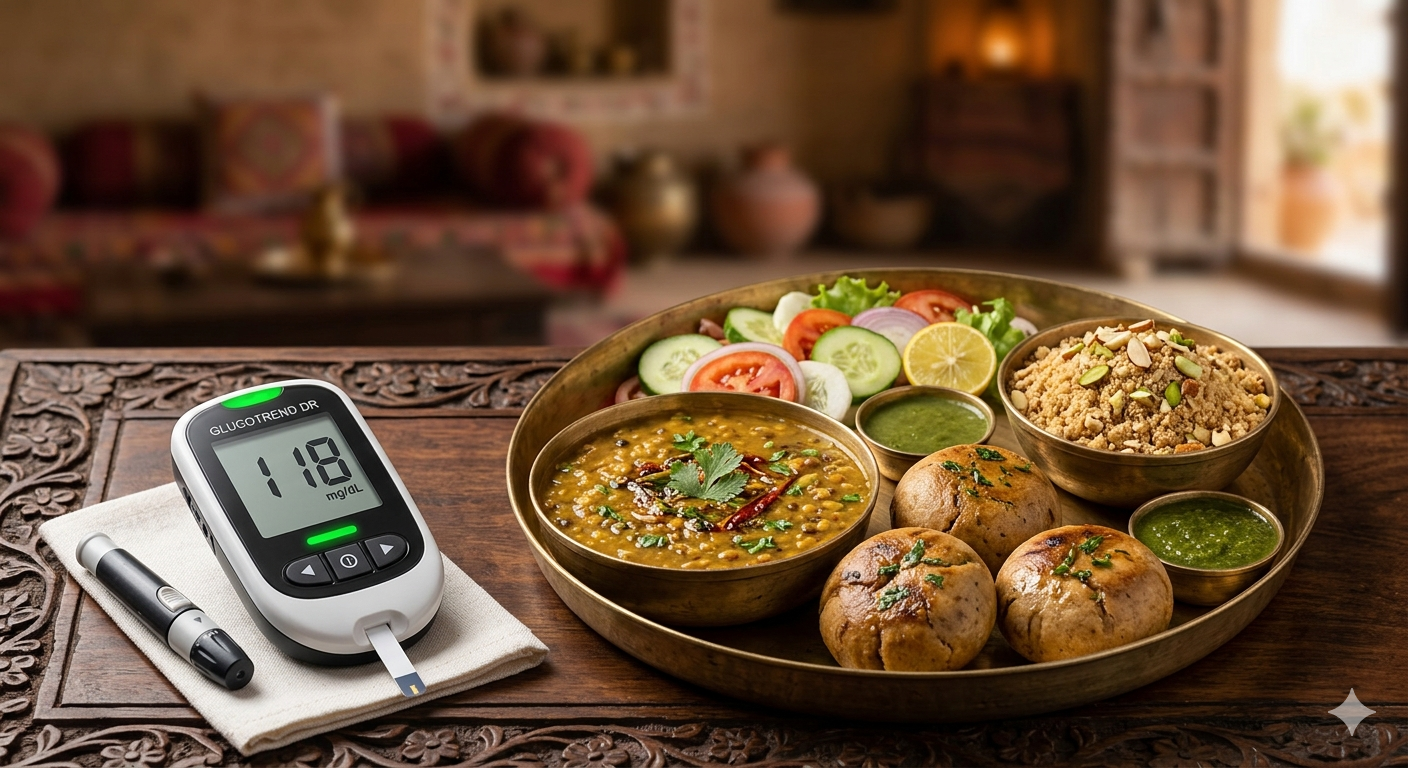
Quick Overview: Dal-Bati-Churma is a cultural cornerstone of Rajasthan, but its traditional preparation poses a metabolic challenge for patients having diabetes due to refined flour, heavy ghee, and concentrated sweeteners. This clinical overview explores how to modify the dish using multigrain flours, smart portioning, and natural sweeteners to enjoy it safely without adverse glucose spikes.
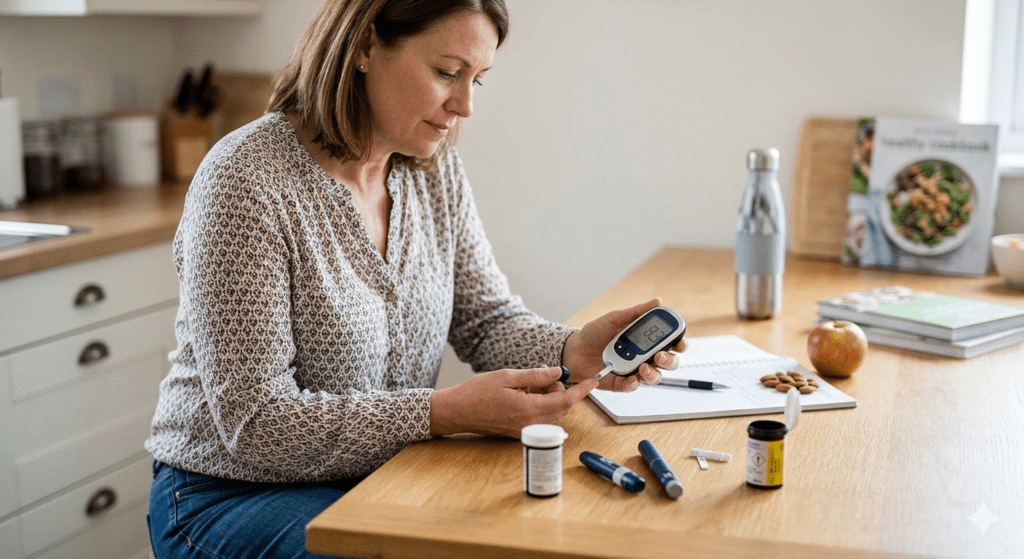
Dal-Bati-Churma is the cultural cornerstone of Rajasthan, representing a rich culinary legacy. However, for patients navigating diabetes, the traditional preparation poses a real metabolic challenge. In its classic form, the dish carries a high glycemic load due to refined flour, generous ghee, and processed sweeteners in the churma — a combination that can trigger sharp post-meal glucose spikes. As a clinical practitioner, my goal isn’t to take this dish away from patients, but to show them how to enjoy it without paying for it in blood sugar.
Dal, Bati, Churma: Combination and Nutritional Facts
To understand the dish, we must deconstruct its nutritional impact:
- Bati: Traditionally made from wheat flour (atta) or refined flour (maida), it’s a dense carbohydrate ball. Deep-frying or dipping it in ghee multiplies its caloric density and slows (but doesn’t eliminate) its glycemic impact.
- Dal: The nutritional anchor of the meal. Lentils are high in protein and fibre, and when prepared with minimal oil, they provide satiety and help stabilise the overall glycemic response of the meal.
- Churma: The most problematic element for diabetic patients — a mix of crumbled bati, ghee, and sugar or jaggery, delivering a concentrated hit of simple carbohydrates and fat in a small volume.
Impact on Glucose Levels and Glycemic Load
Eaten in its traditional, high-sugar, high-fat form, this meal makes the pancreas work hard. The fibre from the lentils is often outweighed by the sheer volume of refined starch in the bati and concentrated sugar in the churma, leading to a sustained blood glucose rise that isn’t ideal for long-term insulin sensitivity.
Modified Consumption of Dal-Bati-Churma for Diabetic Patients
You do not need to abandon tradition; you must redefine it. Here is how to enjoy it safely:
- Flour transformation: Replace refined flour with a multigrain blend — jau (barley), chana atta (gram flour), or bajra (pearl millet) — to raise fibre content and lower the overall glycemic index.
- “Sugar-free” churma: Use a natural sweetener like stevia, or skip added sweetener entirely and lean on the natural nuttiness of roasted grains.
- Ghee in moderation: Ghee is traditional and, in small amounts, not the enemy — but excess adds unnecessary calories. Use it sparingly, or use cold-pressed mustard oil in the dal instead.
- Salad first: A large bowl of fibre-rich salad before the meal blunts the blood-sugar impact of what follows.
Dr. Dorwal’s Perspective
I see lifestyle management as a combination of diet, movement, and constitutional support, not diet alone. When diabetic patients ask about Dal-Bati-Churma, I don’t tell them to avoid it for life — I show them how to rebuild it with multigrain flours and natural sweeteners so they can still enjoy it without paying for it in their next blood sugar reading. Alongside this, I recommend a short walk or gentle post-meal movement to support glucose utilisation, and I look at the patient’s overall metabolic picture — not just this one meal — when considering complementary homoeopathic support.
Disclaimer: This content is for informational purposes only. Nutritional changes, especially for diabetic patients, must be discussed with a qualified healthcare professional. Do not make significant dietary shifts without professional medical guidance. Homoeopathic treatment should always be conducted under the supervision of a registered physician.
Frequently Asked Questions (FAQs)
Bati made from refined flour and deep-fried in ghee has a fairly high glycemic load, so traditional bati isn’t ideal for diabetes. A multigrain version (barley, gram flour, or pearl millet), baked rather than deep-fried, is a much better fit and can be enjoyed in a controlled portion alongside dal and vegetables.
It depends heavily on preparation and portion size. The dal component is genuinely healthy — high in protein and fibre. The bati and, especially, the churma are the parts that need modification (multigrain flour, less ghee, no added sugar) to make the overall dish diabetes- and heart-friendly.
Most lentils (moong, chana, arhar/toor, masoor) are fine for diabetics in moderate portions, since they’re high in fibre and protein and have a relatively low glycemic index. What matters more than the type of dal is how it’s prepared — dal cooked with a heavy ghee tadka or extra sugar (as in some sweet dal preparations) adds unnecessary glycemic and caloric load, even though the lentil itself is a good choice.
Traditional churma (made with wheat flour, ghee, and sugar/jaggery) typically runs 330–450 kcal per 100 grams, depending on how much ghee and sugar is used — it’s the most calorie-dense part of the meal by far. A “sugar-free,” lower-ghee version brings this down meaningfully, though it will still be more calorie-dense than the dal or a plain baked bati.
A typical serving of Dal Bati (roughly 150–250g) provides approximately 7–19 grams of protein, mostly from the dal. The wide range reflects differences in portion size and how much dal versus Bati is served — a Dal-heavy portion will be noticeably higher in protein than a Bati-heavy one.
Beyond its cultural significance as a Rajasthani staple, the dish (when balanced) offers a genuinely useful combination: protein and fibre from the dal, sustained energy from the bati, and quick energy from the churma — traditionally suited to physically demanding, calorie-hungry lifestyles. For a modern, less physically active lifestyle (or for someone managing diabetes), the same combination needs smaller portions and the modifications described above to stay appropriate.
For most people, and especially for diabetics, eating it at lunch rather than dinner is preferable — this gives the body more time and activity through the day to use the energy from the meal, rather than digesting a dense meal right before rest. Following it with a short walk, regardless of the time of day, further helps blunt the glucose response.