
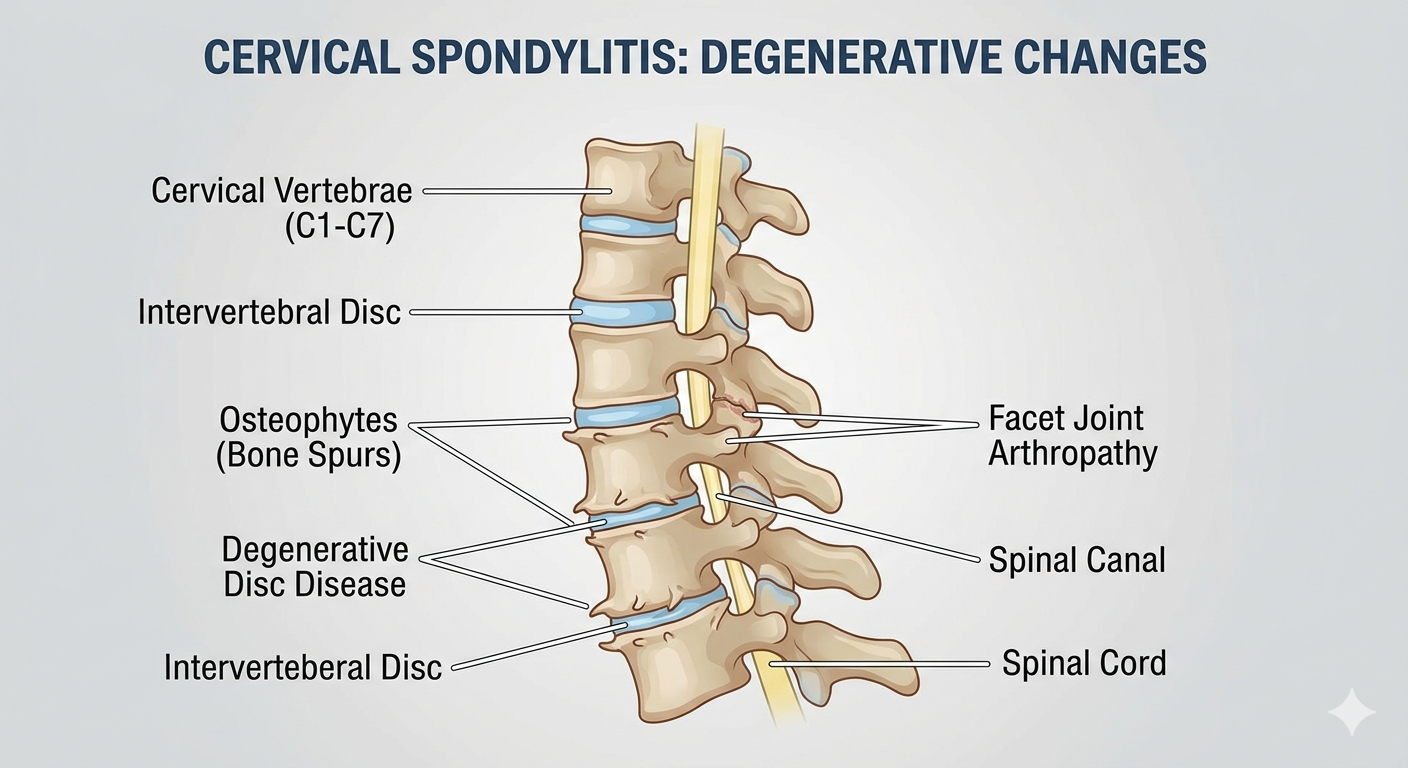
Cervical spondylosis is a degenerative condition of the cervical spine (the neck region) that is most commonly found in individuals over 50 years of age. Health institutions estimate that at least two-thirds of the population will suffer from neck pain at least once in their lifetime, though not all cases are diagnosed as cervical spondylosis. Persistent neck pain accompanied by stiffness, tenderness, and a restricted range of motion in the neck and shoulders can be alarming and should prompt a medical check-up.
Generally, cervical spondylosis involves the bones, discs, joints, and nerves of the neck, shoulder, and upper back. As the intervertebral discs degenerate, the space between the vertebrae reduces, leading to the formation of peripheral osteophytes (bone spurs). If these bone spurs impinge on adjacent nerve roots, they can cause radicular pain that travels down the limbs. In severe cases, osteophytes may press against the spinal cord itself, resulting in numbness, weakness, and severe tingling. This narrowing of the spinal column or nerve exits can lead to spinal stenosis and cervical radiculopathy.
Signs and Symptoms
The onset of cervical spondylosis is usually insidious and painless in its initial stages. Over time, the symptoms typically undergo cycles of spontaneous remission (temporary improvement) and exacerbation (flaring up). Common signs and symptoms include:
- Neck pain accompanied by stiffness and tenderness
- Occipital headaches (pain originating at the base of the skull)
- Radiating pain traveling into the shoulders and arms
- Restricted neck and head movements
- Tingling sensations, numbness, and weakness in the arms and hands
- Clumsiness of the hands or loss of fine motor skills
- Lack of coordination and localized muscle spasms
- Sensory loss in the upper limbs
- Cervical disc prolapse (herniation) in advanced cases
- Plexopathy or radiculopathy (nerve network irritation)
- Incontinence of the bladder and bowel (a rare but serious sign of severe spinal cord compression)
What Causes Cervical Spondylosis?
- Disc Degeneration: Aging causes the spinal discs to lose their water content and cushioning ability. This leads to fragmentation, flattening, and occasional herniation of the discs between the vertebrae, usually accelerating after age 50.
- Bone Spurs (Osteophytes): As the discs thin, the body often produces extra bone growth to stabilize and strengthen the spine. However, these bone spurs can narrow the spinal canal and pinch vulnerable nerve roots.
- Stiff Ligaments: Age-related changes and prolonged periods of rest or immobility can cause the tough cords connecting your spinal bones (ligaments) to become stiff and calcified, restricting neck movement and causing pain.
- Injury and Strain: Carrying heavy loads, repetitive occupational strain, or improper exercise techniques can cause micro-trauma to the cervical spine. Over time, the resulting inflammatory responses accelerate disc degeneration.
How is Cervical Spondylosis Diagnosed?
A medical professional typically diagnoses cervical spondylosis by checking for a loss of normal cervical lordosis (the natural inward curve of the neck) and checking for limitations in neck movement. The upper limbs are also evaluated for clinical signs of nerve compression. Diagnostic imaging and testing include:
- X-ray: Visualizes the narrowing of intervertebral disc spaces, the presence of osteophytes at the vertebral margins, and the narrowing of the intervertebral foramen (nerve exit pathways).
- CT Scan: Provides detailed, cross-sectional bony views of the cervical spine architecture.
- MRI (Magnetic Resonance Imaging): The gold standard for locating the exact site of soft-tissue issues, such as herniated discs or spinal cord compression.
- Electromyography (EMG): Conducted to measure the electrical activity of peripheral muscles to see if nerve pathways are functioning properly.
Prevention and Daily Management
During periods of symptom remission, preventing subsequent flare-ups is essential. Active lifestyle modifications and smart ergonomics include:
- Ergonomic Positioning: Avoid holding the neck in a single, rigid position for long periods (e.g., staring at computers or phones). Take regular breaks.
- Proper Sleep Posture: Use a thin, supportive orthopedic pillow at night to maintain natural alignment.
- Stress Reduction: Minimize physical and psychological stress that causes unconscious shrugging and neck muscle tension.
- Temperature Therapy: Apply heat packs to relieve muscle spasms or cold packs to reduce acute inflammation.
- Bracing & Collars: A soft neck brace can provide temporary pain relief. Wearing a soft neck collar while traveling is highly recommended to protect the spine from sudden jerks and vibrations.
- Anti-Inflammatory Diet: Incorporate foods rich in natural anti-inflammatory properties (like omega-3 fatty acids, turmeric, and leafy greens).
Treatment Approaches
Managing cervical spondylosis requires a balanced care plan. Below are the conventional, physical, and holistic avenues available to patients.
1. Conventional Medical Treatment
Conventional therapies focus primarily on symptom management, pain relief, and reducing inflammation during acute flare-ups:
- NSAIDs (Non-Steroidal Anti-Inflammatory Drugs): Medications like ibuprofen or naproxen help reduce pain and swelling, allowing patients to maintain daily activities.
- Muscle Relaxants: Prescribed to alleviate painful muscle spasms in the neck and upper back, naturally reducing stiffness.
- Corticosteroids: Oral medications (like prednisone) or localized steroid injections are utilized for high-intensity pain to quickly suppress joint and tissue inflammation.
- Anti-Epileptic/Nerve Medications: Drugs such as gabapentin (Neurontin) or pregabalin (Lyrica) are used specifically to calm nerve-conduction pain caused by compression.
- Analgesics & Narcotics: Used cautiously and short-term when acute pain is severe enough to cause severe restlessness.
- Mechanical Traction: Cervical mechanical traction helps widen the intervertebral spaces, loosening adhesions and relieving pressure from radiculopathy. Clinical observations show it provides noticeable relief to roughly 81% of patients.
- Surgery: Reserved for severe, progressive cases where conservative approaches fail. Procedures involve removing bone spurs, herniated discs, or a segment of a vertebra (laminectomy) to decompress the spinal cord and nerves.
2. Physiotherapy and Yogic Approaches
Physical rehabilitation is vital for restoring mechanical balance to the neck, strengthening supporting structures, and ensuring long-term mobility.
- Physiotherapy: A structured physical therapy program targets muscle imbalances. Techniques include passive manual therapy, ultrasound therapy, and targeted home exercises like:
- Neck Stretch Exercise: Keeping your body straight, gently push your chin forward to glide the head out, tensing the neck muscles safely. Hold for 5 seconds, return to the center, and repeat 5 times daily.
- Neck Tilt Exercise: Slowly lower your ear toward your shoulder on one side until a gentle stretch is felt, holding for 5 seconds. Return to neutral and repeat on both sides 5 times daily.
- Yogic Approach: Yoga emphasizes gentle, controlled stretches and mindful alignment. Specific asanas (postures) help open the chest and shoulders while strengthening the neck without straining it. Gentle postures like Bhujangasana (Cobra Pose—modified for neck comfort), Marjariasana (Cat-Cow Stretch), and Tadasana (Mountain Pose) focus on spinal elongation and correct posture. Pranayama (breathing exercises) also aids in reducing systemic stress and muscle tension.
3. Homoeopathic Treatment Strategy
While conventional medicine provides effective relief from acute flare-ups, homoeopathy is often sought by patients looking to manage chronic symptoms holistically and slow down degenerative tendencies. Homoeopathic remedies are selected based on the unique constitutional profile of the individual, taking both physical symptoms and mental well-being into account. Some Homoeopathic medicines are given below that are used by the homoeopathy doctors to manage cases of cervical spondylosis includes:
- Actea Racemosa (Cimicifuga): Frequently considered for its action on the heavy muscles of the neck and back. It is indicated when neck muscles feel intensely stiff and cramped—often worse from morning movement or cold air—and where warm applications offer comfort.
- Rhus Toxicodendron: Prescribed when the neck muscles feel stiff, rigid, or nearly paralyzed, particularly after exposure to damp cold or overexertion. Characteristically, the pain and stiffness improve with gentle, continuous movement.
- Cuprum Metallicum: Indicated when severe, twitching muscle cramps occur in the cervical region and fingers, particularly if the spasms are accompanied by systemic symptoms like tension headaches or lightheadedness.
- Colocynthis: Suited for neuralgic, sharp pains resulting from sedentary habits. It helps when joint stiffness is tied to shortened tendons and when deep pressure or warmth brings noticeable relief.
- Ledum Palustre: Often used when there is a throbbing, localized discomfort in the shoulder and neck region that feels worse under direct pressure or warmth, showing a unique preference for cold compresses.
- Dulcamara: Indicated for individuals whose neck stiffness and lameness flare up specifically during weather transitions, such as the damp, cooling shift at the close of summer.
In addition, Bryonia Alba, Hypericum Perforatum, Calcarea Fluorica, Guaiacum Officinale, Paris Quadrifolia, Kalmia Latifolia, Silicea and many more may also be used by homoeopathic physicians on symptom profile.
Conclusion
Cervical spondylosis stands as a highly prevalent global health challenge for the aging population. Modern patients increasingly look for comprehensive treatment strategies that offer sustainable relief from chronic pain with minimal side effects. Incorporating a multidisciplinary approach—combining conventional medical diagnostics and acute symptom relief with tailored physiotherapy, ergonomic discipline, yogic postures, and individualized homoeopathic care—allows patients to address the underlying structural strain holistically. By preserving disc mobility, supporting the body’s natural alignment, and strengthening the surrounding musculature, individuals can successfully manage degeneration and maintain an active, fulfilling lifestyle.
References
- HCAH Health Advantage. Cervical Spondylitis: Causes, Symptoms, and Treatment. https://hcah.in/health-advantage/cervical-spondylitis-cause-symptoms-treatment/
- Mayo Clinic. Cervical Spondylosis: Symptoms and Causes. https://www.mayoclinic.org/diseases-conditions/cervical-spondylosis/symptoms-causes/syc-20370787
- National Spine Society. Lumbar and Cervical Degenerative Disc Disease. https://www.spine.org/KnowYourBack/Conditions/Degenerative-Conditions/Lumbar-Degenerative-Disc-Disease
- Boericke, W. Boericke’s New Manual of Homeopathic Materia Medica with Repertory.
