
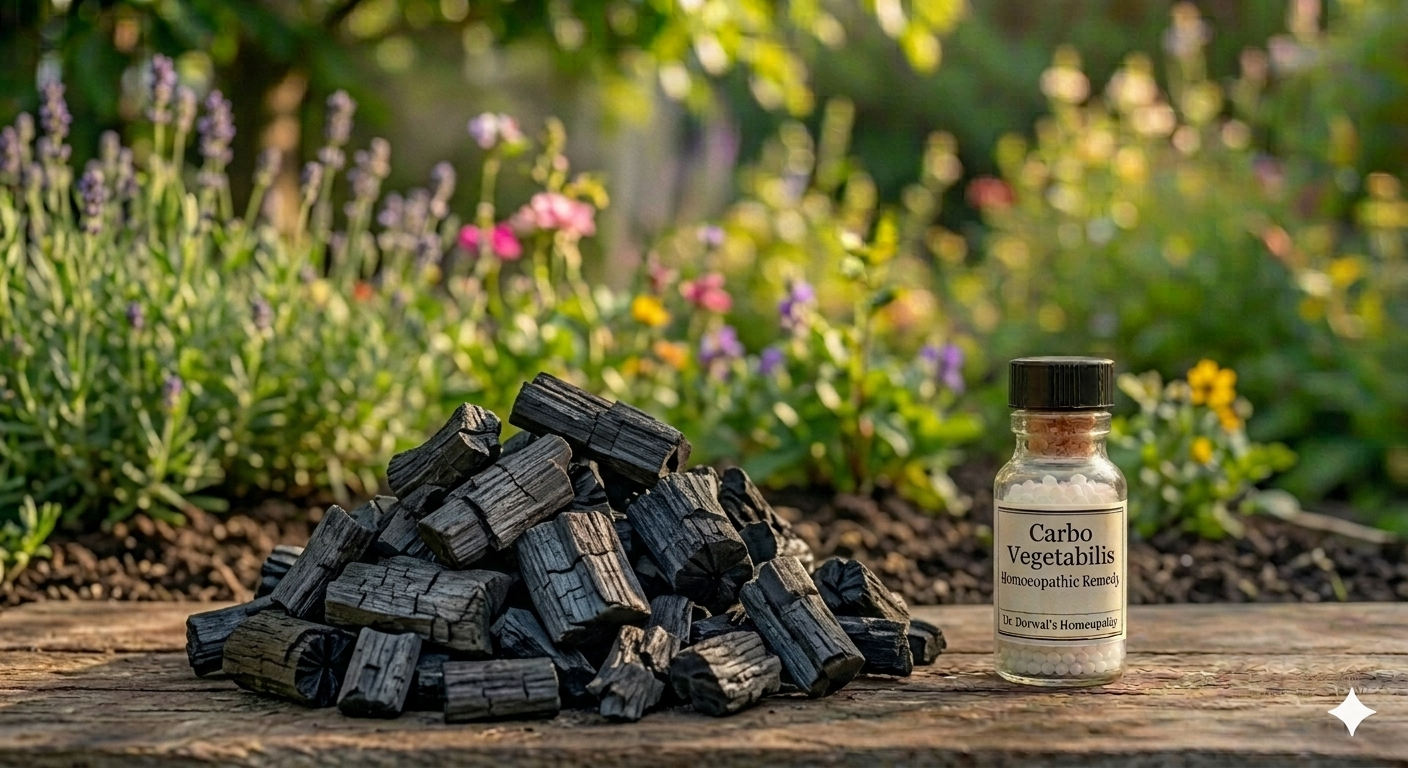
Carbo Vegetabilis, commonly known as Vegetable Charcoal, is one of the most vital remedies in homoeopathy, often referred to as the “corpse reviver” due to its profound ability to restore vitality in states of collapse, oxygen deprivation, and sluggishness. It is a cornerstone remedy for addressing conditions where the life force is at its lowest ebb.
Key Clinical Indications and Benefits
Carbo Vegetabilis is highly valued for its targeted therapeutic actions and is clinically indicated for several diagnosed conditions:
- Digestive Weakness & Bloating: Primarily indicated for extreme flatulence, excessive distension of the abdomen, and poor digestion where even simple food causes gas. Clinically, this makes it a primary remedy for Chronic Dyspepsia, Flatulent Colic, and Gastroesophageal Reflux Disease (GERD) characterized by a “heavy” feeling.
- States of Collapse & Vitality: Excellent for patients who are cold, have a pale or blueish tint to the skin, and feel like they are “fading away.” It is frequently used in the clinical management of severe exhaustion following debilitating illnesses, shock, and states of near-collapse where the patient craves fresh air or to be fanned.
- Respiratory & Oxygenation Issues: Effective for conditions where there is insufficient oxygenation of the blood. It is clinically prescribed for Chronic Obstructive Pulmonary Disease (COPD), Bronchitis, and Asthma where the patient suffers from rattling, wheezing, and a desperate need for air.
- Circulatory & Venous Affections: Indicated for sluggish venous circulation, leading to coldness in the extremities and susceptibility to haemorrhages. It serves as a supportive treatment for Varicose Veins, cold extremities, and chronic venous insufficiency.
- Haemorrhagic Tendencies: Highly useful for passive haemorrhages where the blood is dark, thin, and decomposes quickly. Clinically, it is indicated for conditions like Epistaxis (nosebleeds) or post-operative weakness where the patient is slow to recover.
Administration & Therapeutic Modalities
- Potency & Dosage: Often prescribed in mid-to-higher potencies (30C, 200C) to stimulate vitality in constitutional or chronic states. In acute, near-collapse scenarios, it may be used frequently according to the severity of the symptoms.
- Observation: As a remedy for profound debility, it is vital to observe the patient’s return of color, warmth, and breathing capacity as indicators that the vital force is responding.
Dr. Dorwal’s Perspective
In my clinical practice, Carbo Vegetabilis is my “resurrection” remedy. When I see a patient—often elderly or someone recovering from a long illness—who is cold, blueish, and gasping for air while simultaneously demanding to be fanned, this remedy is unmistakable. I emphasize to my patients that this remedy helps “reignite the internal furnace.” It is indispensable not just for the digestive bloating that many associate with it, but for the profound underlying sluggishness that prevents a full recovery.
Disclaimer: This content is for informational purposes only. Homoeopathic medicines should be taken under the guidance of a qualified homoeopathic physician. Do not self-medicate for chronic or serious medical conditions, and always seek professional advice for any health concerns.
Frequently Asked Questions (FAQs)
It earned this nickname due to its remarkable effectiveness in reviving patients who are in a state of near-collapse, characterized by coldness, cyanosis (blueish skin), and extreme exhaustion.
While it is excellent for flatulence and bloating, its scope is much wider, covering respiratory insufficiency, circulatory collapse, and recovery from severe exhaustion.
The classic profile is a patient who feels cold, appears pale or cyanotic, experiences extreme weakness, and has a strong desire for fresh air or to be fanned.
It helps by improving venous circulation and respiratory efficiency, which in turn boosts the body’s overall oxygenation and metabolic vitality after long-term sickness.
