
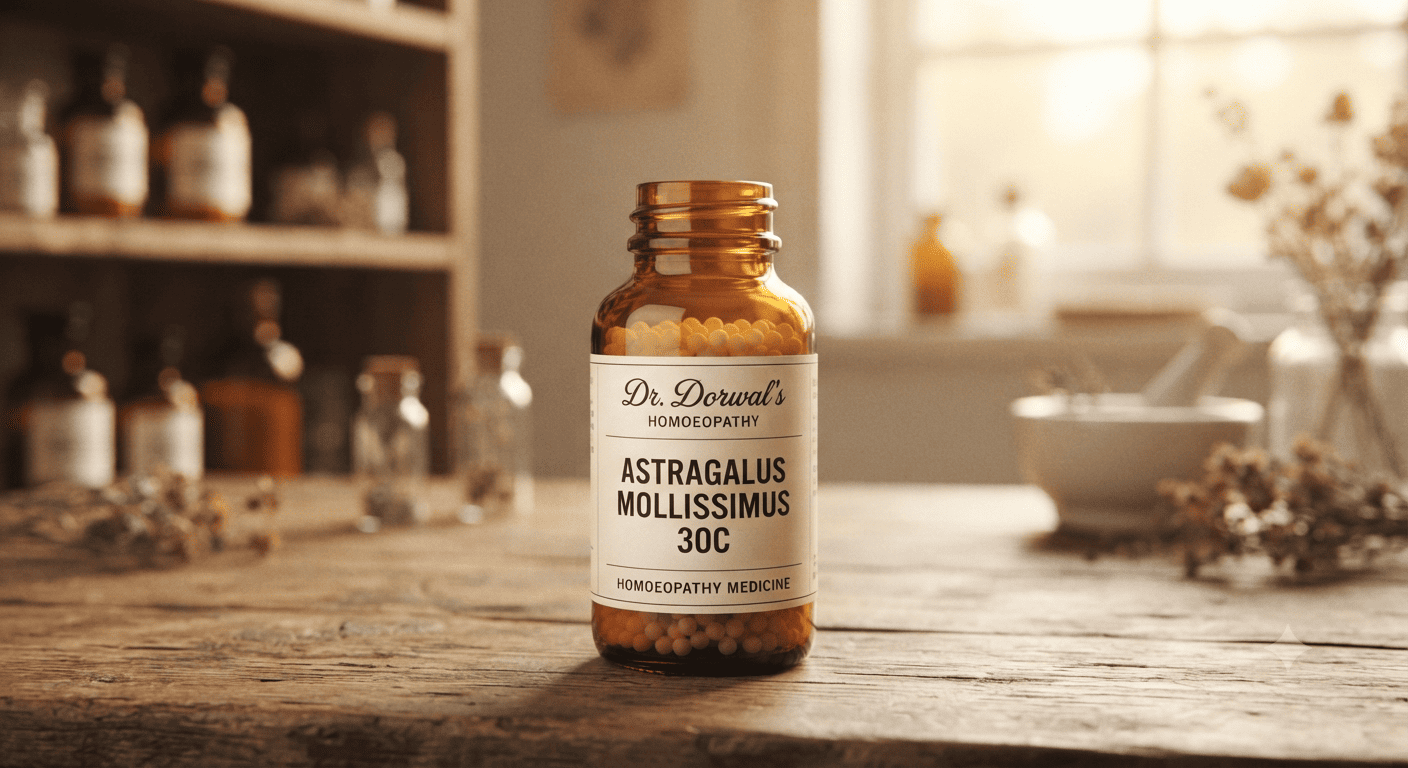
Astragalus Mollissimus, commonly known as Woolly Loco-weed, is a substance of profound toxicological interest. In homoeopathic context, it provides a vivid picture of severe neurological impairment, emaciation, and sensory derangement. While its clinical application is limited, its pharmacological profile offers significant insights into the patterns of progressive nervous system degeneration.
Key Clinical Indications & Uses
Therapeutic profile of Astragalus Mollissimus is defined by a biphasic progression of symptoms, moving from acute psychological disturbances to profound physical wasting:
- The “Loco” Syndrome: It is best known for its mimicry of chronic intoxication—resembling the effects of substances like alcohol, tobacco, or morphine. First stage is characterized by hallucinations, manic behavior, and significant visual disturbances, during which the subject performs impulsive, erratic actions.
- Second Stage (Degeneration): Following the initial excitation, clinical picture shifts toward profound emaciation, sunken eyeballs, lusterless appearance, and extreme feebleness. This stage is marked by the onset of paralytic affections, including loss of muscular coordination and significant irregularities in gait.
- Localized Neuralgic & Sensory Symptoms:
- Cephalic: Sensation of fullness in right temple and upper jaw, accompanied by pressive pain and dizziness.
- Gastrointestinal: A persistent sensation of emptiness and weakness, with burning sensations extending through the esophagus into the stomach.
- Extremities: Peculiar localized sensory phenomena, such as a “purring” sensation in the outer side of right foot and distinct, icy coldness in the left calf.
Administration & Dosage
- Dose: Where indicated in literature, 30C potency is cited as the standard for addressing these states.
Dr. Dorwal’s Perspective
In practice of medicine, we often study remedies that define the edges of pathological change. Astragalus Mollissimus is such a remedy; it is a “loco-weed,” a substance that fundamentally alters an organism’s perception of reality and its ability to coordinate basic movement.
While the “loco” syndrome is a fascinating academic study in toxicology and the progression of neural decay, it is not a remedy that I include in my active medical protocols. In clinical practice, we prioritize substances with a broad base of proven, reproducible success in restoring systemic health. However, understanding the Astragalus picture—the transition from manic, hallucinating state to the state of total physical and neurological “starvation”—is a valuable exercise for practitioner.
Disclaimer: This content is for informational purposes only. Homoeopathic medicines should be taken under the guidance of a qualified homoeopathic physician. Do not self-medicate for chronic or serious medical conditions, and always seek professional advice for any health concerns.
Frequently Asked Questions (FAQs)
Syndrome is biphasic: it begins with mania, hallucinations, and erratic behavior, and progresses to severe emaciation, paralytic symptoms, and loss of muscular coordination.
Patient may report a “purring” sensation along the outer edge of right foot or an intense, icy coldness in the left calf.
It causes a persistent sensation of internal weakness and emptiness, accompanied by burning pains from esophagus down into the stomach.
No. It is a highly specific, toxicological remedy with a very limited range of application, and it does not form a part of Dr. Dorwal’s standard homoeopathic clinical practice protocols.
