
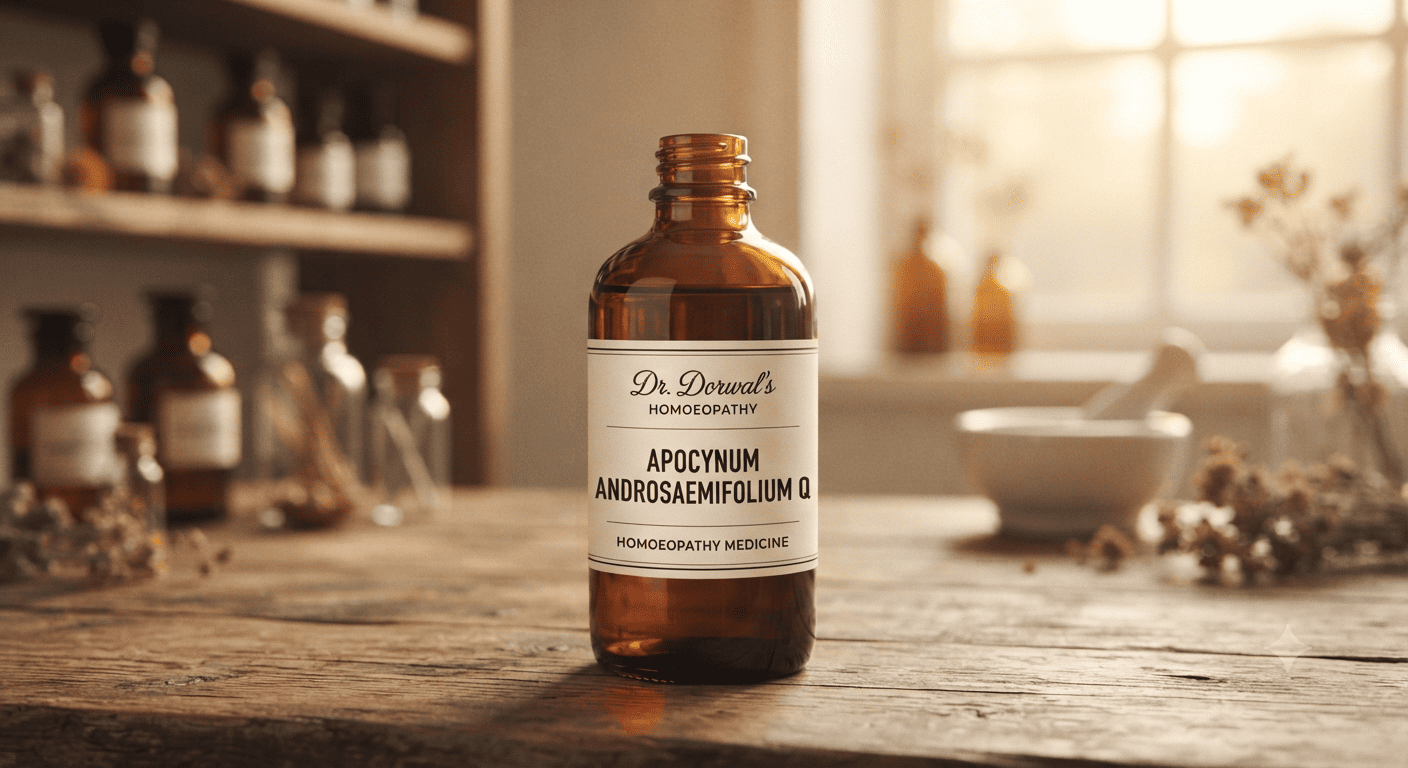
Apocynum Androsaemifolium, commonly known as Dogbane, is a targeted remedy of significant clinical value, particularly in the management of rheumatic conditions and localized neuro-muscular discomfort. While it shares the botanical lineage of the Apocynum family, its therapeutic profile is distinctly characterized by wandering pains and unique sensory aberrations.
Key Clinical Indications & Uses
Therapeutic profile of Apocynum Androsaemifolium is defined by its action on joints, extremities, and the sensory perceptions:
- Wandering Rheumatism: Premier indication for this remedy is rheumatic pain that is migratory or “wandering” in nature, accompanied by marked stiffness and a sensation of drawing in the muscles.
- Joint and Extremity Affections: It is highly effective for pain affecting all joints, with a specific predilection for the soles of feet and the toes. Symptoms include cramping in soles, tingling pains in the toes, and a sensation of swelling in the hands and feet.
- Localized Heat and Perspiration: Patients often report a sensation of violent heat in soles of the feet, frequently accompanied by profuse perspiration in same area.
- Sensory Peculiarities: A defining clinical hallmark of this remedy is that “everything smells and tastes like honey.”
- Constitutional States: It addresses states of general trembling and prostration, and it has historical utility in the treatment of parasitic infections (worms).
Administration & Dosage
- Dose: In clinical practice, it is typically utilized in Mother tincture (Q) or 30C potency to achieve the desired therapeutic effect in acute and sub-acute rheumatic conditions.
Dr. Dorwal’s Perspective
In my clinical practice, Apocynum Androsaemifolium is a specialist tool for the “restless rheumatic.” When a patient complains that their pain moves from joint to joint, never settling in one place, and that their muscles feel perpetually drawn and stiff, I find this remedy to be exceptionally reliable.
What I find most clinically instructive—and often quite memorable for the patient—is the specific sensory change where they perceive a honey-like taste or smell. It is one of those classic homoeopathic “keynotes” that, when present, makes the prescription both simple and highly effective. For the practitioner, this remedy is a reminder that we must always listen for “odd” or “peculiar” symptoms, as they are often the signposts leading us to the most curative remedy. Whether you are treating a patient with joint inflammation or a mysterious tingling in the extremities, Apocynum Androsaemifolium is a robust addition to your homoeopathic armamentarium.
Disclaimer: This content is for informational purposes only. Homoeopathic medicines should be taken under the guidance of a qualified homoeopathic physician. Do not self-medicate for chronic or serious medical conditions, and always seek professional advice for any health concerns.
Frequently Asked Questions (FAQs)
Its hallmark is “wandering” nature of pain and the associated sensations of drawing and stiffness, coupled with the unique symptom that everything tastes or smells like honey.
Violent heat in the soles, accompanied by profuse sweating, is a characteristic feature that helps differentiate this remedy in cases of foot pain, cramping, or generalized rheumatic discomfort.
While joint and extremity pain are its primary indications, it is also useful for generalized sensations of swelling, trembling, and prostration, and has historical applications for intestinal parasites (worms).
Mother tincture (Q) or 30C potency is typically utilized to manage the localized inflammatory and rheumatic states for which this remedy is best suited.
