
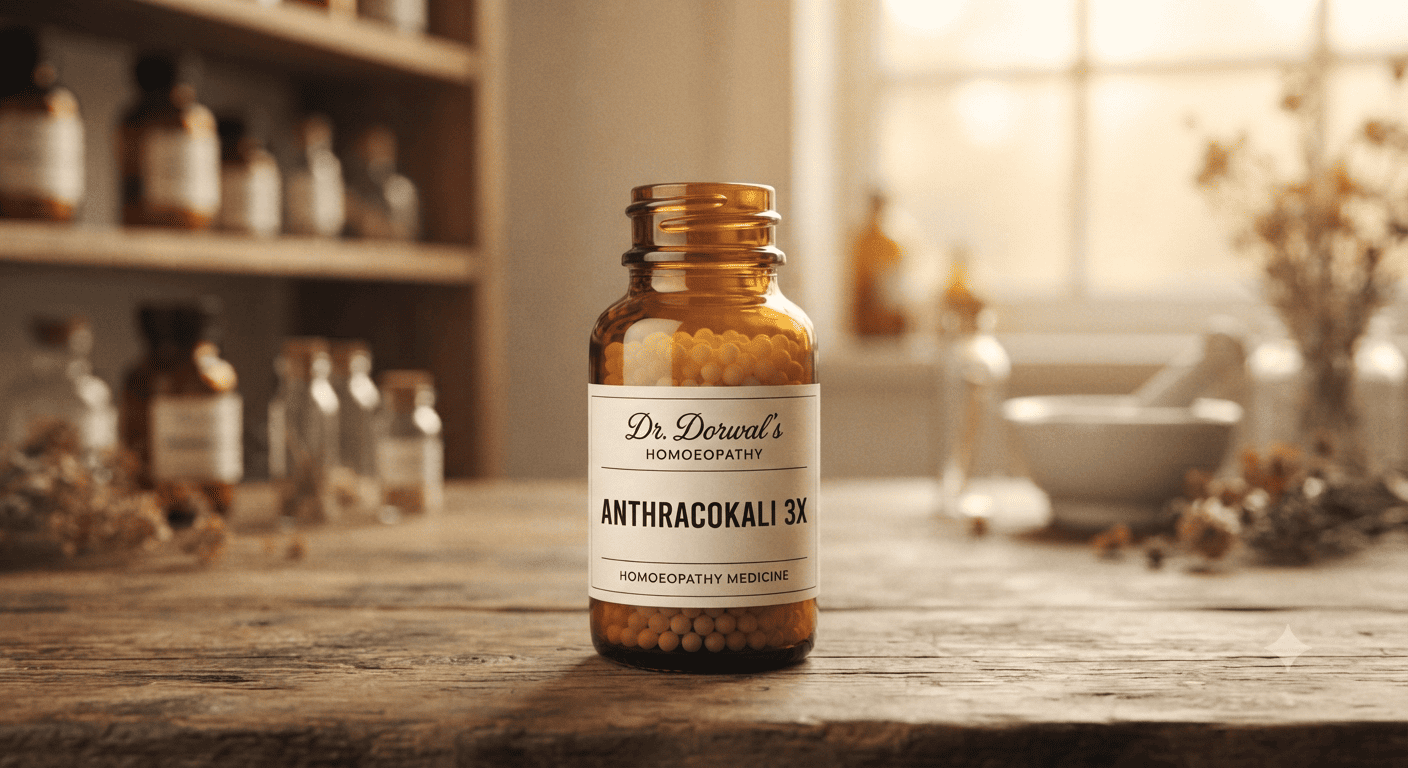
Anthracokali (Anthracite Coal dissolved in boiling caustic potash) is a specialized dermatological and constitutional remedy. While it remains a niche agent in the modern homoeopathic apothecary, its clinical profile offers a targeted approach to chronic, resistant skin pathologies and specific systemic imbalances.
Key Clinical Indications & Uses
Therapeutic profile of Anthracokali is defined by its action on integumentary system and its support for gastrointestinal and rheumatic stabilization:
- Dermatological Precision: This remedy is primarily indicated for chronic, stubborn skin affections, including scabies, prurigo, and chronic herpes. It is particularly effective for papular eruptions that show a secondary tendency to form vesicles. These eruptions are characteristically localized to the scrotum, hands, tibia, shoulders, and the dorsum of the feet. It is also an indicated remedy for painful skin cracks and ulcerations.
- Systemic and Gastrointestinal Support: Beyond the skin, Anthracokali addresses constitutional states marked by intense, unquenchable thirst. It is also indicated in bilious attacks characterized by the vomiting of bile and significant tympanic distention (bloating) of the abdomen.
- Rheumatic Affections: It serves as a consideration in the management of chronic rheumatic conditions where constitutional dryness and skin involvement may be present.
Administration & Dosage
- Dose: In clinical practice, it is typically utilized in low triturations to ensure the remedy’s action is sufficient to address these chronic, often deep-seated, conditions.
Dr. Dorwal’s Perspective
In continuous study of our Materia Medica, Anthracokali represents a fascinating, albeit less commonly used, tool. While I have not yet integrated this specific remedy into my active, everyday clinical protocols, it is a remedy that warrants respect for its specific dermatological indications. The combination of intense thirst with localized papular-vesicular eruptions on areas such as the scrotum and the dorsum of the feet is a highly specific clinical picture that we should always keep in mind.
In homoeopathy, we often find that the most specific “small” remedies are the ones that finally break the deadlock in a chronic, treatment-resistant case. If a patient presents with a history of recurrent herpes or prurigo that fails to respond to our more common dermatological agents, and they also report significant digestive bloating or bilious tendencies, Anthracokali may be the missing piece. It reminds us that our therapeutic reach is vast, and that even substances as simple as coal can be transformed into agents of profound healing when applied with the precision of our law of similars.
Disclaimer: This content is for informational purposes only. Homoeopathic medicines should be taken under the guidance of a qualified homoeopathic physician. Do not self-medicate for chronic or serious medical conditions, and always seek professional advice for any health concerns.
Frequently Asked Questions (FAQs)
It is useful for scabies, prurigo, chronic herpes, and papular-vesicular eruptions.
They are frequently found on the scrotum, hands, tibia, shoulders, and the dorsum of the feet.
Patient typically experiences intense, unquenchable thirst.
It covers bilious attacks, vomiting of bile, and significant tympanic distention of the abdomen.
